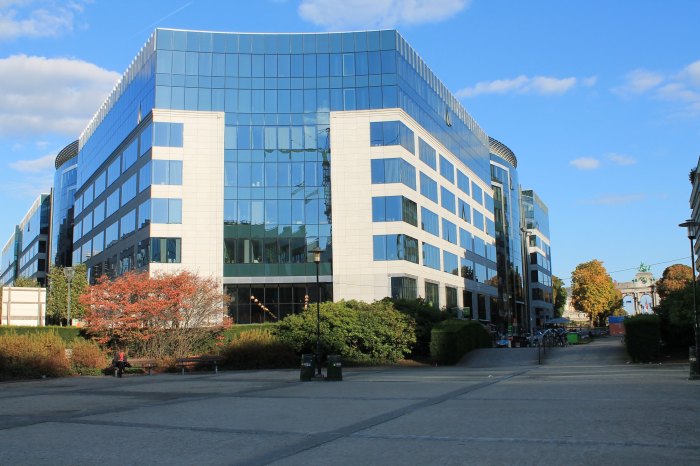
European External Action Service Headquarters in Brussels.

The Myanmar junta should have no place at the ASEAN-EU Human Rights Dialogue

Last week, soldiers of the Myanmar/Burma military reportedly beheaded three men in Pale Township in the Sagaing Region of Myanmar. Two of them were civilians, and the third a member of a People’s Defense Force in Nyaunggon Village.

A witness told The Irrawaddy news website that the men had been killed as they returned to their village on 27 September, thinking that the junta troops who had occupied it for the past two and half weeks had left. One man’s head was hung on a fence, another placed on a chair, and the third ‘had his abdomen cut open, intestines taken out, limbs cut off and [then] put into his abdomen.’

The same day, at least 19 children and their teacher were injured when the regime shelled a monastic school in Wuntho Towsnhip, also in the Sagaing Region. Most were aged between five and eight, and seven of them were critically wounded.

Continue reading “The Myanmar junta should have no place at the ASEAN-EU Human Rights Dialogue”
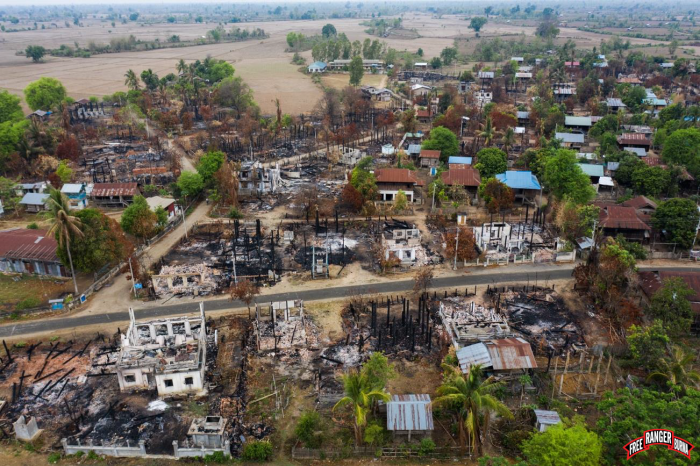
Ruins of Nan Lan Village in Myanmar. Credit: Free Burma Rangers.

The brutal ‘Four Cuts’ strategy is causing untold suffering in Myanmar, yet the international community remains slow to react

The ‘Four Cuts’ strategy, designed to sever insurgents’ supplies of food, funds, information and recruits, is an approach that has been used for decades by a series of military dictatorships in Myanmar/Burma. This devastating tactic is once again being employed, but in one of its bloodiest forms yet.  

Breaking society 

In a remarkable piece of reporting, in a country where foreign journalists have no official access to the true story of Myanmar’s civil war, Sky News recently released details of an undercover mission deep into southeastern Myanmar. Chief correspondent Stuart Ramsay encountered first-hand the Myanmar military regime’s devastating campaign of violence. 

Ramsay and his team discovered shocking evidence of sustained attacks on civilian homes and infrastructure, including daily artillery and aerial bombardment as well as arson attacks, which are forcing people from their homes with over 1.5 million people currently displaced and in desperate need of humanitarian assistance. 

Continue reading “The brutal ‘Four Cuts’ strategy is causing untold suffering in Myanmar, yet the international community remains slow to react”
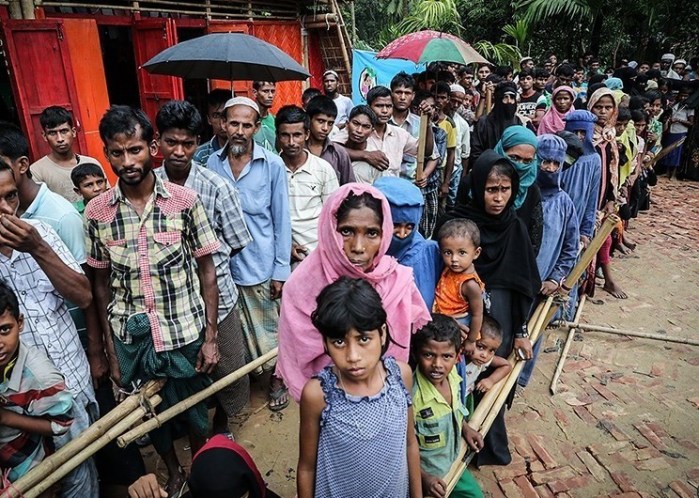
Rohingya Muslims displaced from Myanmar/Burma.

We must not let the Rohingya people slip to the bottom of the international agenda

On 2 December 2022 a group of approximately 180 Rohingya refugees boarded a boat in Cox’s Bazar in Bangladesh. Their intended destination was Malaysia, where many hoped to be reunited with family and loved ones, or to build a better life than the one available to them in the overcrowded, unsanitary and increasingly dangerous camps in Bangladesh.

They never made it.

In a statement issued on 25 December, the United Nations expressed concern that the boat had sank after it went missing in the Andaman Sea. Relatives of those onboard told the Guardian that they had little hope that their family members were still alive, and if confirmed it would bring the number of Rohingya refugees who have died on sea crossings to Malaysia in 2022 close to 400.

Continue reading “We must not let the Rohingya people slip to the bottom of the international agenda”
A man holds a sign that says 'Free Uighur' as part of a protest against China's actions in the Xinjiang Uyghur Autonomous Region.

After the UN’s allegations of crimes against humanity, the world must mobilise on China’s actions in the Xinjiang Uyghur Autonomous Region

In April 2020, CSW published a guest blog written by an expert on Uyghur culture who outlined the pervasive human rights crisis in the Xinjiang Uyghur Autonomous Region. Over two years later, the situation remains unchanged, and as we hear from the same expert, the need for international action grows more pressing with every passing day.

“Kamil is a broken young man. Wrenched from his home at dead of night five years ago, hooded, shackled and shoved into the back of a police van, he disappeared. Two years ago, he re-emerged. Via friends of friends we heard with immense relief that he was alive, but the message we received was that he feared nothing anymore, such had been the terror he had faced daily during his incarceration. Yes he was alive, but barely.

More than two years have passed since my last blog, and there are hundreds of thousands of Kamils. Some have been ‘released’ to forced labour, many making cheap clothing for Western brands; others have been sentenced for spurious crimes in secret courts to draconian prison terms; others are still unaccounted for, and many have died.

The Chinese government has been working overtime garnering support around the world to justify incarcerating up to three million Uyghur and Turkic minority citizens from the Xinjiang Uyghur Autonomous Region, its North Westernmost province, in a network of at least 380 razor-wire clad and watchtower-surrounded so-called ‘Vocational Training Schools’.

Continue reading After the UN’s allegations of crimes against humanity, the world must mobilise on China’s actions in the Xinjiang Uyghur Autonomous Region

One year on from the coup in Myanmar, today must be a turning point

By Benedict Rogers

A year ago today, Senior General Min Aung Hlaing, Commander-in-Chief of Myanmar/Burma’s military, ordered his troops to take over government buildings, raid the offices of the governing party, arrest members of Myanmar’s democratically elected government and Parliament, shut down independent media, take control of the state media and seize power in a brutal coup d’etat. His decision turned the clock back by more than a decade, reversing ten years of fragile democratisation in which the country had seen credible elections, an independent media, the release of political prisoners, a vibrant civil society and opening up to the international community.

Of course, that decade of reform was far from perfect – not least because it included the genocide of the Rohingyas, continued conflict in ethnic states, particularly Kachin, Shan and Rakhine, and the rise of extreme religious nationalism leading to increased religious discrimination and persecution. But nevertheless, it allowed some seeds of political liberalisation to grow, and enabled the people of Myanmar to vote freely.

Twice – in 2015 and 2020 – Aung San Suu Kyi and her National League for Democracy (NLD) won an overwhelming mandate to govern. After years under house arrest, prison, hiding or exile, the NLD – whose mandate from the 1990 elections was never accepted by the military – was now in government.

Continue reading “One year on from the coup in Myanmar, today must be a turning point”