‘Make the difference there’: Why we have to keep eyes on Sudan

Sorry guys, horrible stat incoming.

I was on a call with two of my colleagues to discuss potential poster designs that would catch people’s attention at a Christian festival, and encourage them to participate in our ‘Eyes on Sudan’ campaign, about the war in Sudan.

I had been Googling various facts and figures relating to the ongoing conflict in the country and had come across one that I found so upsetting that I felt I should at least give my friends – neither of them strangers to hearing distressing information – a moment’s warning so that they could steel themselves for what I was about to say:

Continue reading “‘Make the difference there’: Why we have to keep eyes on Sudan”
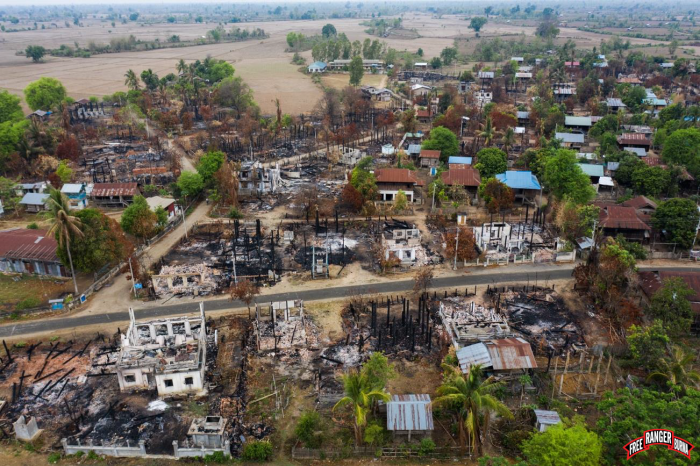
Ruins of Nan Lan Village in Myanmar. Credit: Free Burma Rangers.

The brutal ‘Four Cuts’ strategy is causing untold suffering in Myanmar, yet the international community remains slow to react

The ‘Four Cuts’ strategy, designed to sever insurgents’ supplies of food, funds, information and recruits, is an approach that has been used for decades by a series of military dictatorships in Myanmar/Burma. This devastating tactic is once again being employed, but in one of its bloodiest forms yet.  

Breaking society 

In a remarkable piece of reporting, in a country where foreign journalists have no official access to the true story of Myanmar’s civil war, Sky News recently released details of an undercover mission deep into southeastern Myanmar. Chief correspondent Stuart Ramsay encountered first-hand the Myanmar military regime’s devastating campaign of violence. 

Ramsay and his team discovered shocking evidence of sustained attacks on civilian homes and infrastructure, including daily artillery and aerial bombardment as well as arson attacks, which are forcing people from their homes with over 1.5 million people currently displaced and in desperate need of humanitarian assistance. 

Continue reading “The brutal ‘Four Cuts’ strategy is causing untold suffering in Myanmar, yet the international community remains slow to react”

Towards an inclusive Sudan

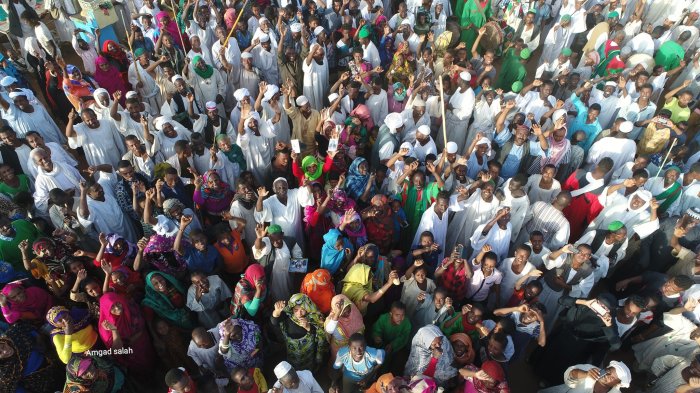
The people of Sudan have endured a long and winding road towards realising their dream of a free, just and peaceful country.

Since the arrest of former President al Bashir in April, protesters organised under the Forces for Freedom and Change (FFC), have been engaged in negotiations with the Transitional Military Council (TMC) over the creation of a civilian led transitional administration.

What is clear is that human rights like freedom of religion or belief (FoRB) must be upheld in order for such a transition to be successful. FoRB is a vital right in the context of a democratic society. Being able to live in a diverse society, where a plurality of opinions, beliefs, cultures and expressions are accommodated is key to promoting tolerance, peace, and development.

Continue reading “Towards an inclusive Sudan”

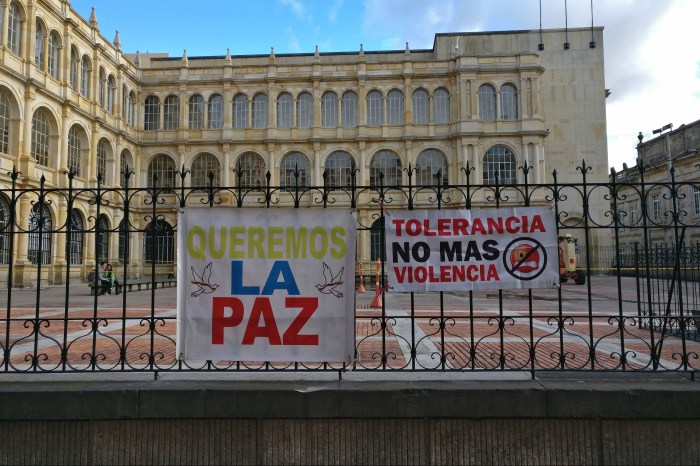
The cost of backtracking: delays in Colombia’s peace process risk a return to violence

In November 2016 a revised peace agreement was signed between the government of Colombia and the Revolutionary Armed Forces of Colombia–Army of the People (FARC-EP). The deal was considered a big win by many, bringing an end to a conflict which spanned over five decades and claimed hundreds of thousands of lives.

This celebration has been considered both “justified and premature.” In the following years parts of Colombia have enjoyed a somewhat fragile peace, but recent developments have raised concerns that this peace could shatter altogether.

Government foot-dragging

Particularly concerning is the current government’s approach to the 2016 agreement. Since his election in June 2018, the President Iván Duque Márquez-led administration has consistently slowed down the process of implementation.

Continue reading “The cost of backtracking: delays in Colombia’s peace process risk a return to violence”

Central African Republic: is justice being sacrificed for the illusion of peace?

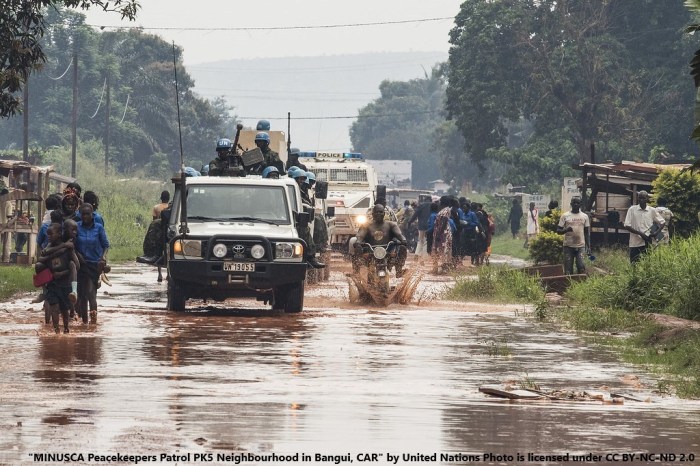
On 21 May, over 26 people were killed and dozens injured when an armed group attacked two villages in the north west of the Central African Republic (CAR). The attacks were reported by the UN peacekeeping mission in CAR, MINUSCA, which confirmed that twelve people were killed in Koundjili village and 14 in Djoumjoum village. 

Whilst reports of violent and devastating attacks on civilians in CAR are not new, these attacks represent a new challenge for the recently re-constituted government following the latest peace agreement between the government and armed groups.

The alleged perpetrator of the attacks on the two villages is the rebel group known as 3R (Return, Reclamation and Reconciliation). The group was formerly part of the Seleka alliance that took over the country following a coup in March 2013.  The alliance was subsequently disbanded, but armed groups fragmented and seized territories outside of the capital, Bangui.

Continue reading “Central African Republic: is justice being sacrificed for the illusion of peace?”