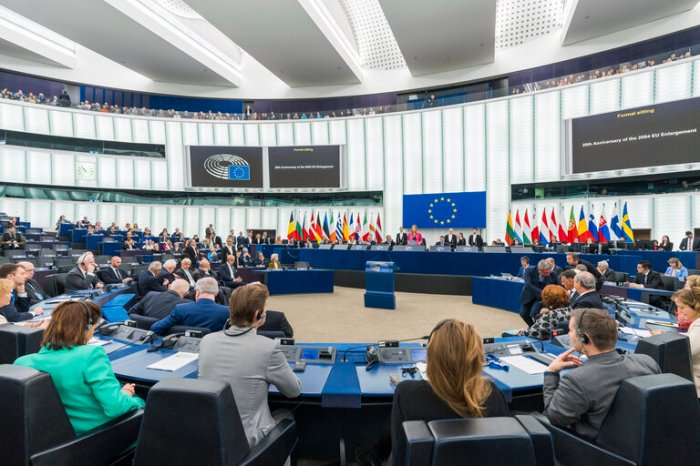
La démocratie européenne est-elle assez mûre pour aborder la question de la liberté de religion ou de conviction? 

Si la situation des populations d’autres pays est trop rarement un enjeu électoral prioritaire, une certaine politisation de la question du respect des droits humains est néanmoins fréquente. Pour un défenseur de la liberté de religion ou de conviction, l’engagement politique des partis politiques pour ce droit, lorsqu’il est fait correctement et de manière appropriée, est certainement une bonne chose. Dans le meilleur des cas, cet engagement peut attirer l’attention du public sur les injustices souvent graves, commises à l’étranger et représenter une plate-forme politique solide pour débattre de la façon dont ces questions seront traitées après les élections. Mais, dans le pire des cas, ces mêmes questions peuvent devenir l’objet de manœuvres politiques ou de tactiques électorales souvent marquées par un manque de sincérité, de nuance, voire, de bonne volonté élémentaire. 

Autant les conservateurs que les progressistes sont pris en défaut sur ce sujet. Cet article résume certaines des actions passées, bonnes et mauvaises, des deux blocs politiques. Il vise à la fois à sensibiliser les électeurs aux tractations qui se déroulent dans les coulisses des QG des partis mais aussi, à attirer l’attention de ceux qui sont directement impliqués dans la campagne, en les invitant à réfléchir de manière plus critique et constructive à leur approche. 

Malheureusement, il semblerait que la démocratie européenne ne soit pas encore assez mûre pour distinguer la « religion » du « droit humain à la liberté de religion ou de conviction » ici dénommé FoRB.1 Pour preuve, il n’y a qu’à constater le manque de qualité du travail récent des différents partis politiques sur ce droit fondamental au niveau européen. Même si la promotion d’une « religion » et la promotion de la « liberté de religion » constituent des sujets clairement différents, politiquement, ils sont trop souvent confondus et mélangés. Rares sont les conservateurs qui n’utilisent pas, à mauvais escient, la promotion de FoRB comme cheval de Troie pour les questions religieuses conservatrices; de même que les progressistes, dans leur grande majorité, choisissent tout simplement de ne pas s’engager sur FoRB, parce qu’ils estiment qu’il est plus facile de laisser ce sujet aux partis politiques de droite. 

Continue reading “La démocratie européenne est-elle assez mûre pour aborder la question de la liberté de religion ou de conviction? “
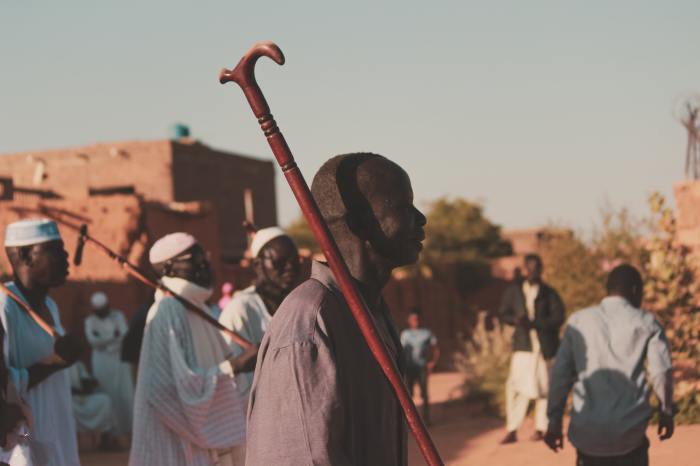
Man in black and white long sleeve shirt holding red stick in Sudan.

As Sudan forms a new transitional government, the international community must not repeat its mistakes

April has become a significant month for the nation of Sudan. This year, after more than 18 months under the leadership of a military junta that seized power in October 2021, the month will hopefully see the formation of a new transitional government, and the possible dawn of a new chapter for the country.

But we have been here before. On 11 April 2019, after months of unprecedented nationwide protests, Sudan’s president of nearly 30 years, Omar al Bashir, was ousted.

It was hoped that his removal would bring an end to three decades of oppressive rule characterised by widespread violations of human rights, including of the right to freedom of religion or belief (FoRB) – and to some extent it did.

Continue reading “As Sudan forms a new transitional government, the international community must not repeat its mistakes”

India at 75: A nation under siege

India celebrates its 75th year of independence from the British on 15 August. Every year this day is commemorated by remembering the innumerable sacrifices Indians made in their pursuit of freedom and self-rule. But year after year the question of whether this is the vision of India that the nation’s forefathers and freedom fighters gave their lives for becomes ever more pressing.

Even as there was much to celebrate on 15 August 1947, independence came with a heavy price. Just a day before, on 14 August, India was torn into two; the painful partition of India and Pakistan along the lines of religion has continued to have profound effects on the lives of people on both sides.

If anything, 75 years later, these communal divides seem to be growing bigger. There has been much debate on the partition in the intervening decades – who is to blame, what went wrong and what could have been done. But just as the debates continue, the hatred continues to grow.

Continue reading India at 75: A nation under siege

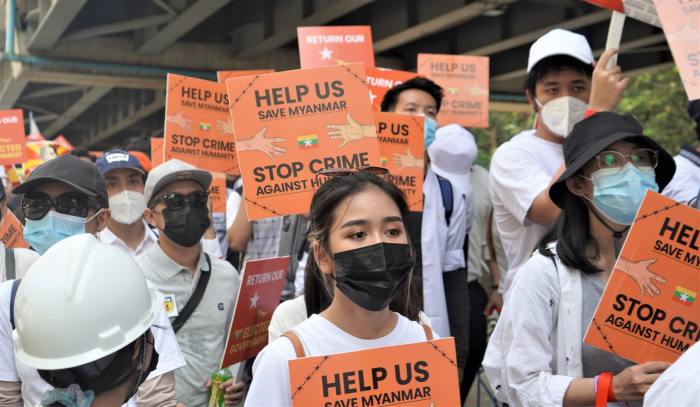
One year on from the coup in Myanmar, today must be a turning point

By Benedict Rogers

A year ago today, Senior General Min Aung Hlaing, Commander-in-Chief of Myanmar/Burma’s military, ordered his troops to take over government buildings, raid the offices of the governing party, arrest members of Myanmar’s democratically elected government and Parliament, shut down independent media, take control of the state media and seize power in a brutal coup d’etat. His decision turned the clock back by more than a decade, reversing ten years of fragile democratisation in which the country had seen credible elections, an independent media, the release of political prisoners, a vibrant civil society and opening up to the international community.

Of course, that decade of reform was far from perfect – not least because it included the genocide of the Rohingyas, continued conflict in ethnic states, particularly Kachin, Shan and Rakhine, and the rise of extreme religious nationalism leading to increased religious discrimination and persecution. But nevertheless, it allowed some seeds of political liberalisation to grow, and enabled the people of Myanmar to vote freely.

Twice – in 2015 and 2020 – Aung San Suu Kyi and her National League for Democracy (NLD) won an overwhelming mandate to govern. After years under house arrest, prison, hiding or exile, the NLD – whose mandate from the 1990 elections was never accepted by the military – was now in government.

Continue reading “One year on from the coup in Myanmar, today must be a turning point”

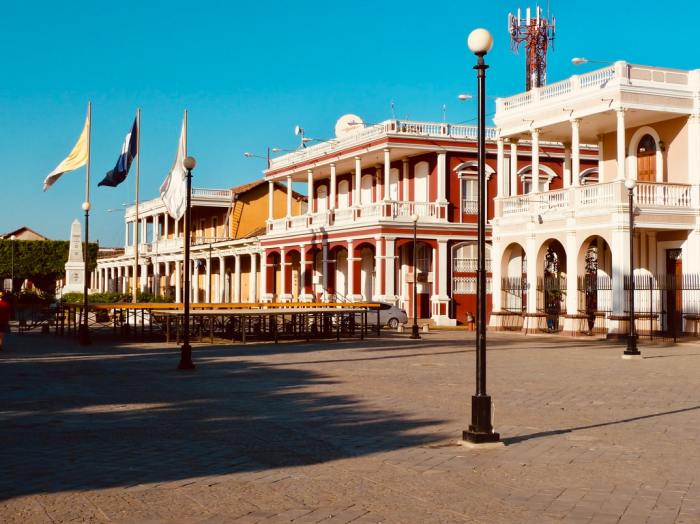
A mockery of democracy: The international community must maintain firm pressure on Nicaragua

On 7 November 2021, Daniel Ortega was re-elected President of Nicaragua after months of government repression and violence against protesters. On 10 January 2022 he was inaugurated. This long read on the government’s history of repression against the citizens of Nicaragua was informed by testimonies from several individuals whose names have been withheld for security reasons.

In the first week of June 2021, the political landscape of Nicaragua transformed overnight when police arrested five opposition candidates who were on the ballot for the country’s November 2021 elections. What began as covert government repression of opposition candidates in the election burst into the open as many of them were suddenly detained.

In Nicaragua, the will of a repressive leader is above the law.

The most flawed election in Nicaragua’s history

Since the re-election of Daniel Ortega on 7 November 2021, analysts have contended that the electoral process was one of the most flawed in the country’s history as a democracy, as it was characterised by the arrests of numerous opposition candidates. To many, the scenario for Nicaragua seems hopeless.

Continue reading “A mockery of democracy: The international community must maintain firm pressure on Nicaragua”