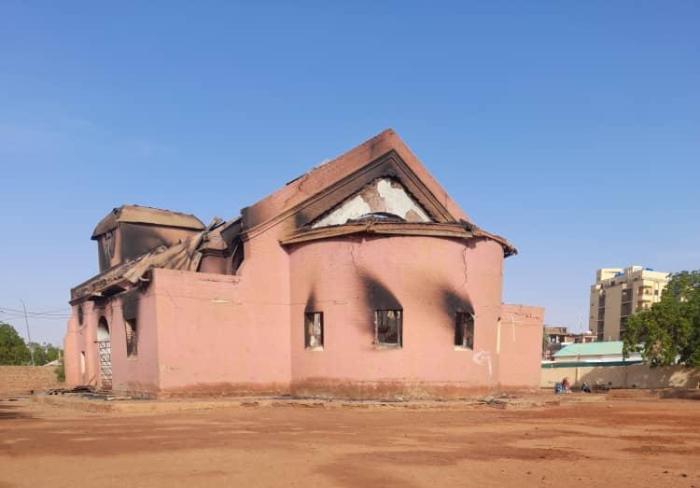
The Episcopal/Evangelical Church in Omdurman, which was shelled on 1 November 2023.

Sudan must not be allowed to slip off the international agenda

‘The land is valuable, and it will be easier to seize it if the buildings have been destroyed by war.’

This was the reaction of a CSW source to the bombing of churches and properties in Omdurman and Khartoum El-Shajara in Sudan at the start of the month.

On 1 November the Sudanese Armed Forces (SAF) shelled and completely destroyed a church that was used by the Episcopal and Evangelical denominations in Omdurman. It was the largest and second oldest church in the area, and its destruction came just three weeks after the Evangelical Commercial School and the Evangelical Secondary School were also bombed.

Continue reading “Sudan must not be allowed to slip off the international agenda”
European External Action Service Headquarters in Brussels.

The Myanmar junta should have no place at the ASEAN-EU Human Rights Dialogue

Last week, soldiers of the Myanmar/Burma military reportedly beheaded three men in Pale Township in the Sagaing Region of Myanmar. Two of them were civilians, and the third a member of a People’s Defense Force in Nyaunggon Village.

A witness told The Irrawaddy news website that the men had been killed as they returned to their village on 27 September, thinking that the junta troops who had occupied it for the past two and half weeks had left. One man’s head was hung on a fence, another placed on a chair, and the third ‘had his abdomen cut open, intestines taken out, limbs cut off and [then] put into his abdomen.’

The same day, at least 19 children and their teacher were injured when the regime shelled a monastic school in Wuntho Towsnhip, also in the Sagaing Region. Most were aged between five and eight, and seven of them were critically wounded.

Continue reading “The Myanmar junta should have no place at the ASEAN-EU Human Rights Dialogue”

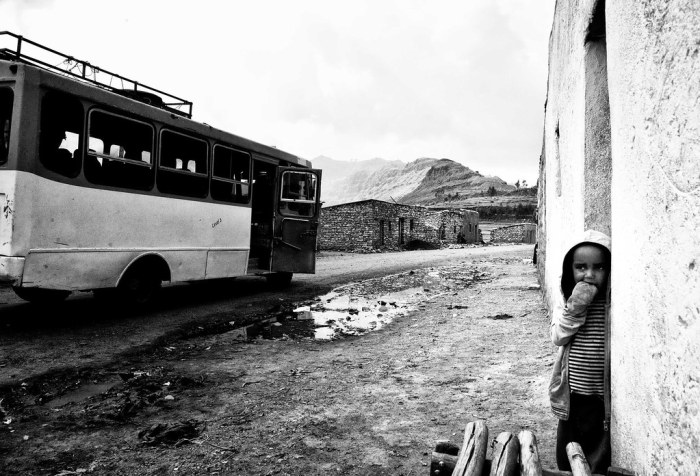
365 days and counting: The international community still needs to end the suffering of Tigray

On 4 November 2020 Ethiopian Prime Minister Abiy Ahmed ordered a military offensive against the Tigray Peoples’ Liberation Front (TPLF) forces in response to an attack on a federal army base which the Tigrayan authorities described as pre-emptive. Troops from Eritrea and Somalia joined the ENDF in launching a pincer movement against the Tigrayans, and communications to the region were cut and remain disrupted to this day. 

The attack marked the beginning of a conflict which is still ongoing, one in which over 52,000 people have died, and an estimated 1.7 million have been displaced internally. One year on and the crisis in Tigray is showing no signs of coming to an end, with Prime Minister Abiy pledging to “bury this enemy with our blood and bones and make the glory of Ethiopia high again” in a statement on 3 November – hardly the words expected from a Nobel Peace Prize winner.

Along with the Eritrean leader, PM Abiy and his government are responsible for a horrific campaign of violence against the people of Tigray which a joint investigation by the Ethiopian Human Rights Commission (EHRC) and the UN Human Rights Office (OHCHR) recently found may have involved war crimes and crimes against humanity, a finding they attribute to both sides of the conflict.

Continue reading “365 days and counting: The international community still needs to end the suffering of Tigray”

Massacres, famine et destruction gratuite : La communauté internationale doit agir rapidement pour sauver la région du Tigré en Éthiopie

Il y a des signes inquiétants qui indiquent que des atrocités sont commises au Tigré, où les civils sont les principales victimes du conflit opposant les armées d’Ethiopie, d’Erythrée, de Somalie et d’une milice alliée de l’ethnie Amhara aux forces de l’ancienne administration régionale. 

Par une tragique ironie, le gouvernement d’Ethiopie, l’une des premières nations à avoir signé la Convention sur le génocide de 1948, est actuellement accusé d’avoir permis et participé à des violences qui pourraient être assimilées à un génocide et à des crimes contre l’humanité.

Tout aussi ironique est le fait que l’avenir d’un prix Nobel qui professe le christianisme évangélique, est désormais inextricablement lié à celui du dirigeant dont le régime est réputé avoir commis des crimes contre l’humanité, y compris le crime de persécution religieuse qui vise en grande partie les chrétiens évangéliques érythréens.

Pour le dirigeant érythréen, Isais Afewerki, la guerre contre le Tigré est l’accomplissement d’une vendetta de longue date contre le Front de libération du peuple du Tigré (TPLF). Il a efficacement rallié à sa cause les dirigeants de l’Éthiopie et de la Somalie, aidé dans cette entreprise par l’antipathie que nourrit le Premier ministre éthiopien Abiy Ahmed à l’égard des dirigeants du Tigré et par ses ambitions de centralisation du pouvoir.

Continue reading “Massacres, famine et destruction gratuite : La communauté internationale doit agir rapidement pour sauver la région du Tigré en Éthiopie”

Burma’s much needed ceasefire presents a valuable opportunity, provided the military keeps its promises

By Benedict Rogers

Burma’s Cardinal Bo has repeatedly called for peace for a long time. In a statement last month in support of Pope Francis’ plea for a global ceasefire, he warned that during the COVID-19 pandemic continued armed conflict in Burma (officially known as Myanmar) would have “catastrophic consequences for our nation.”

He urged the military – known as the Tatmadaw – and ethnic armed resistance groups to “lay down all weapons and acts of aggression. Be armed instead with sincerity and truth. Let us take the more difficult path of overcoming differences face to face with courage and intelligence. Don’t hide humanity behind guns. In the end that is sheer weakness.”

The Cardinal, who is also President of the Federation of Asian Bishops Conferences, argued that: “Soldiers are unnecessarily endangered by exposure to the unseen viral assassin. Civilians are endangered, even by bombardments purportedly aimed at military targets. Peace negotiations are endangered by continued aggressive threats. An economy under severe strain is put at risk by military adventures. Any spike in contagion in IDP camps, among detained persons, or in crowded spaces, gravely threatens the surrounding populations as well.”

Continue reading “Burma’s much needed ceasefire presents a valuable opportunity, provided the military keeps its promises”