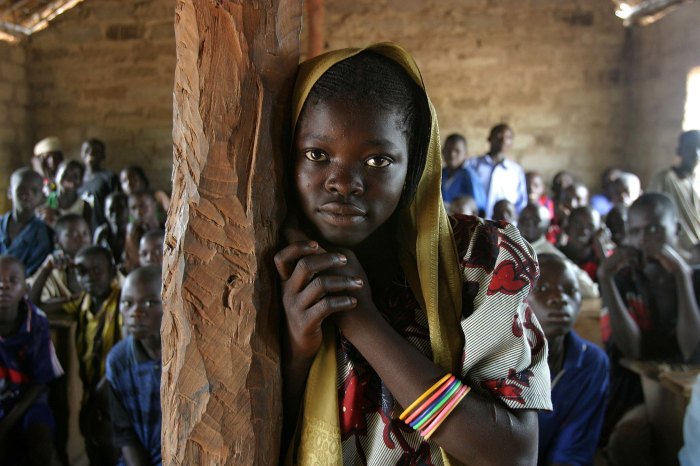
School children in the Central African Republic.

Diez años después del encuentro en la República Centroafricana, las alianzas armadas han cambian, pero los civiles siguen sufriendo

El 23 de marzo de 2013, el mundo se despertó con la noticia de que el presidente François Bozizé de la República Centroafricana (RCA) había huido del país y una Coalición rebelde había tomado la capital. La respuesta algo automática de la Unión Africana (UA) condenando la entrega inconstitucional del poder fue igualada por el caos resultante en el país cuando una Coalición flexible de grupos rebeldes, predominantemente del norte del país y ampliamente musulmanes, lucharon por quién se convertiría en presidente. Finalmente, fue Michael Dijotida quien tomó el timón y supervisó el país durante nueve meses.

Fue durante esos primeros nueve meses que se perpetraron algunos de los abusos más graves contra los Derechos Humanos, mientras los líderes mundiales reflexionaban sobre su respuesta. A medida que la Coalición rebelde, conocida como Seleka, avanzó sobre la capital, dejaron muerte y destrucción a su paso. Mientras tanto, los líderes religiosos de todas las religiones viajaban a las comunidades,  donde a veces los cuerpos aún yacían en el suelo, para consolar a los dolientes e instarlos a no vengarse.

La UA lideró en gran medida la respuesta global, con la excepción de Francia, que decidió poner tropas sobre el terreno mientras la ONU negociaba la creación de una misión para mantener la paz.

Continue reading “Diez años después del encuentro en la República Centroafricana, las alianzas armadas han cambian, pero los civiles siguen sufriendo”
School children in the Central African Republic.

Ten years on from coup in the Central African Republic; armed alliances shift but civilians continue suffering

On 23 March 2013 the world awoke to the news that President François Bozizé of the Central African Republic (CAR) had fled the country and a rebel coalition had taken the capital. The somewhat automatic response from the African Union (AU) condemning the unconstitutional handover of power was matched by ensuing chaos in the country as a loose coalition of rebel groups, predominantly from the north of the country and broadly Muslim, battled over who would become president. Eventually it was Michael Dijotida who took the helm and oversaw the country for nine months.

It was during that first nine months that some of the most serious human rights abuses were perpetrated, while global leaders pondered their response. As the rebel coalition, known as the Seleka, advanced on the capital, they left death and destruction in their wake. Meanwhile, religious leaders of all faiths would travel to communities, where at times bodies still lay on the ground, to comfort mourners and urge them not to take revenge.

The AU largely led the global response, with the exception of France, which decided to put troops on the ground while the UN negotiated the creation of a peacekeeping mission.

Continue reading “Ten years on from coup in the Central African Republic; armed alliances shift but civilians continue suffering”
Afghan refugees in Pakistan.

Forced to flee Afghanistan, the struggle of many refugees does not end there

‘The return of the Taliban meant a return of terror for the Hazara people.’

Surraya, whose name means ‘Brightest Star’, is a 33-year-old Afghan Hazara woman currently living as a refugee in Pakistan. Born to refugee parents who fled to Iran following the Soviet invasion of Afghanistan in 1980, Surraya and her family returned to their country in 2004 in hope of peace, security and development.

And, for a decade and a half, while she and members of her fellow Hazara community did face some challenges and discrimination, those hopes seemed genuinely within reach.

Continue reading “Forced to flee Afghanistan, the struggle of many refugees does not end there”
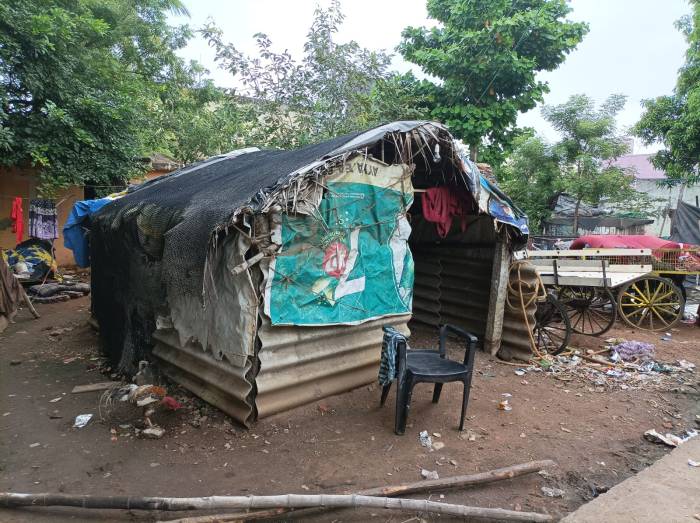
A hut in Mappedu, on the outskirts of Chennai, India.

Los Narikuravar: Una comunidad que necesita protección

En enero de 2023, CSW visitó la comunidad de Narikuravar en Mappedu, en las afueras de Chennai, y se reunió con miembros de una comunidad que durante décadas ha sufrido discriminación por motivos de género y, más recientemente, también por motivos de religión. El siguiente blog ofrece algunas reflexiones sobre la visita. por razones de seguridad los nombres han sido cambiados.

Radhika, madre de tres niñas, se sentó en una pequeña habitación con techo de paja. Con las manos cruzadas y un pañuelo sobre la cabeza, se arrodilló y oró fervientemente antes de volverse para hablar conmigo. Como mujer de una comunidad ignorada que también está sujeta a tradiciones restrictivas específicas de género, normalmente se lamentaría por su lamentable circunstancia, pero dice que su nueva fe le da la esperanza de vivir cada día.

Radhika pertenece a la comunidad Narikuravar, una tribu seminómada que originalmente eran cazadores y recolectores. Vive con otras 30 familias de Narikuravar en una pequeña colonia en Mappedu, en las afueras de Chennai. Los Narikuravar se han enfrentado y siguen enfrentándose a la discriminación en todas las esferas de la vida, incluida la educación, el empleo e incluso en la búsqueda de un lugar donde vivir.

Continue reading “Los Narikuravar: Una comunidad que necesita protección”
A hut in Mappedu, on the outskirts of Chennai, India.

The Narikuravar: A community in need of protection

In January 2023, CSW visited the Narikuravar community in Mappedu, on the outskirts of Chennai, and met with members of a community who for decades have suffered discrimination on the grounds of gender, and more recently on the grounds of religion as well. The following blog offers some reflections on the visit. Please note that the names have been changed for security reasons.

Radhika, a mother of three young girls, sat inside a little room with a thatched roof. With folded hands and a scarf over her head, she knelt down and prayed earnestly before turning to speak with me.  As a woman from a disregarded community who is also subject to restrictive gender-specific traditions, she would be excused for lamenting her circumstances but says that her new-found faith gives her the hope to live each day.

Radhika belongs to the Narikuravar community, a semi-nomadic tribe who were originally hunters and gatherers. She lives with around 30 other Narikuravar families in a tiny colony in Mappedu on the outskirts of Chennai. The Narikuravars have faced and continue to face discrimination in all spheres of life, including education, employment and even in securing accommodation.

Continue reading “The Narikuravar: A community in need of protection”