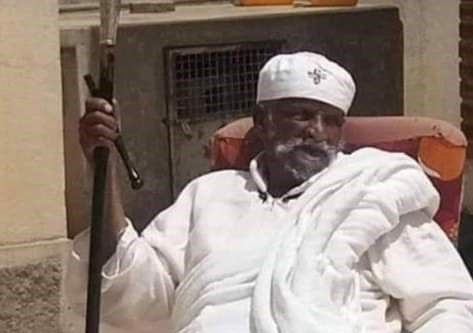
A man prays in a church in Ogbomosho, Nigeria.

Nigeria’s Muslim-Muslim ticket has implications for national cohesion

Nigeria’s ruling All Party Congress (APC’s) decision to do away with traditional convention and opt for a same faith ticket, which would result in a same faith presidency, feeds into a religious exclusivism that is inconsistent with the healing balm that a major political party such as the APC – or any other party – should be deploying at this crucial stage of the country’s political development, when instability and insecurity are at such unprecedented levels.

The nation is heavily fragmented along tribal and religious lines, among others. Therefore, political leaders from all parties ought to be advocates of unity through inclusivity, as a reflection of the country’s diversity.

This diversity holds many advantages for the strengthening mutual understanding, oneness, ensuring social cohesion, and fostering sustainable development, when handled correctly. Unfortunately, the APC’s decision to adopt a Muslim-Muslim ticket runs the risk of undermining the remaining gains of harmonious coexistence that the country has been battling to entrench.

Continue reading “Nigeria’s Muslim-Muslim ticket has implications for national cohesion”
A restricted area in Chhattisgarh, India.

Las comunidades cristianas tribales de Chhattisgarh (India) continúan viviendo con miedo

Para las comunidades cristianas tribales en el estado de Chhattisgarh en India, el Año Nuevo no ha comenzado realmente con la esperanza de un futuro mejor o más seguro.

El 2 de enero, una mafia nacionalista hindú irrumpió en el campus de la Escuela Cristiana Vishwa Dipti en el distrito de Narayanpur y destrozó una iglesia ubicada dentro de las instalaciones de la escuela. Los videos de los agresores golpeando repetidamente estatuas de Jesús y María, y los destrozos a los muebles aparecieron en Internet. Los miembros de la mafia y los feligreses pertenecían a las tribus locales en Narayanpur, de las cuales las dos más destacadas son las tribus Gond y Muria.

Pero lo que sobresalió en los titulares nacionales y se volvió viral en las redes sociales fue la imagen de un oficial de policía de alto nivel que fue atacado por los agresores cuando intentó intervenir. El Superintendente de la policía de Narayanpur, Sadanand Kumar, fue llevado de urgencia al hospital después de sufrir una lesión grave en la cabeza. Los cristianos en Chhattisgarh han sufrido ataques como estos durante varios meses con casi ningún interés de los medios de comunicación, pero fue hasta que una persona de poder resultó herida que alguien prestó atención.

Continue reading “Las comunidades cristianas tribales de Chhattisgarh (India) continúan viviendo con miedo”
A restricted area in Chhattisgarh, India.

Chhattisgarh’s tribal Christian communities continue to live in fear

For tribal Christian communities in India’s Chhattisgarh State, the new year hasn’t really come with hopes of a better or safer future.

On 2 January a Hindu nationalist mob barged into the Vishwa Dipti Christian School campus in Narayanpur district and vandalised a church located within the premises of the school. Videos of the mob repeatedly hitting statues of Jesus and Mary, and scattering furniture surfaced on the internet. Both members of the mob and the churchgoers belonged to local tribes in Narayanpur, the two most prominent of which are the Gond and Muria tribes.

But what grabbed national headlines and went viral on social media was the image of a bleeding senior police official who was attacked by the mob when he tried to intervene. Narayanpur’s Superintendent of Police Sadanand Kumar was soon rushed to the hospital after suffering a serious head injury. Christians in Chhattisgarh have suffered attacks like these for several months with hardly any interest from the media, but it was only when a person of power was injured that anyone paid any attention.

Continue reading “Chhattisgarh’s tribal Christian communities continue to live in fear”
Vehicles carry ballistic missiles in a Victory Day parade in North Korea.

Kim Jong-Un cares more about his weapons than the people of North Korea

Last year, North Korea launched over 90 ballistic, cruise and hypersonic missiles – more than any other year in the country’s history. 

Its annual volley of weapons testing began on 5 January 2022 with the successful launch of a hypersonic missile. By 30 January, the state had conducted its biggest missile launch since 2017, and in September, it passed a law declaring itself to be a nuclear weapons state.

In November, North Korea launched an intercontinental ballistic missile into the Sea of Japan, 210km west of the island of Hokkaido. Japan’s defence minister declared that, launched at a lower trajectory, the missile had the range to hit the US mainland carrying nuclear warheads.

Continue reading “Kim Jong-Un cares more about his weapons than the people of North Korea”
Rohingya Muslims displaced from Myanmar/Burma.

No debemos permitir que el pueblo Rohingya pase al fondo de la agenda internacional

El 2 de diciembre de 2022, un grupo de aproximadamente 180 refugiados Rohingyas abordaron un barco en Cox’s Bazar, Bangladesh.  Su destino previsto era Malasia, donde muchos esperaban reunirse con familiares y seres queridos, o construir una vida mejor que la que tienen en los campamentos superpoblados, insalubres y cada vez más peligrosos de Bangladesh.

Ellos nunca lo lograron

En una declaración emitida el 25 de diciembre, las Naciones Unidas expresaron su preocupación de que el barco se hubiera hundido después de que desapareció en el mar de Andamán.  Los familiares de quienes estaban a bordo dijeron a The Guardian que tenían pocas esperanzas de que sus familiares todavía estuvieran vivos, y si se confirma, el número de refugiados Rohingya que han muerto en travesías marítimas a Malasia en 2022 se acercaría a 400.

Continue reading “No debemos permitir que el pueblo Rohingya pase al fondo de la agenda internacional”