CHN Tongxin Great Mosque in Wuzhong, Ningxia Hui Autonomous Region. FREE TO USE

When the facts and the law don’t matter, a guilty verdict is only a matter of time

‘There has been a powerful hand behind the scenes interfering and manipulating the trial of my case.’

– A quote from Ma Yanhu’s appeal letter, seen by CSW

For two decades, Ma Yanhu worked as a tour organiser for hundreds of Chinese Muslims looking to make the Hajj pilgrimage to the Islamic holy city of Mecca in Saudi Arabia.

Based in the Ningxia Hui Autonomous Region in north-central China, and originally trained as an Islamic theologian, Ma’s work involved booking flights, arranging essential travel documents, and even leading private tour groups to the city until the Chinese Communist Party (CCP) prohibited it.

Continue reading “When the facts and the law don’t matter, a guilty verdict is only a matter of time”

Why don’t they just come here legally?

They are called illegals, migrants, aliens, refugees, immigrants, asylum seekers, invaders, displaced – each word carrying with it a subtext of who they are, what they want, and where they fit. They have been accused of bringing disease, ‘poisoning the blood’ of a nation, participating in a massive invasion that aims to bring about violent anarchy, and even eating people’s beloved pets. In this discourse each of ‘them’ rarely has a face, a name, and much less their own story (unless they do something terrible that pushes their name and face into the headlines).

The question ‘Why don’t they just come here legally?’ is asked over and over. Again, there is a subtext to that question – an implication that if ‘they’ were good people, they would seek out and follow the rules. The question also assumes that there are legal, and presumably safe, channels for those in genuine distress to request and receive asylum in a safe country, as allowed for under international law, primarily under the UN Refugee Convention. However, the reality is that even those countries that recognise and uphold the Refugee Convention, (and there are many which do not), maintain byzantine systems, set up to make it as difficult as possible for someone, especially an asylum seeker, to petition for and be granted the right to start a new life in a safe country.

The vast majority of those ‘safe’ countries require visas for individuals traveling there from much of the world. The quickest way to ensure that a visa is denied, is to respond truthfully – that the motive for travelling is to request asylum upon arrival – and when a visa is denied on those grounds, the individual is almost always put on a blacklist for future requests.

Continue reading “Why don’t they just come here legally?”
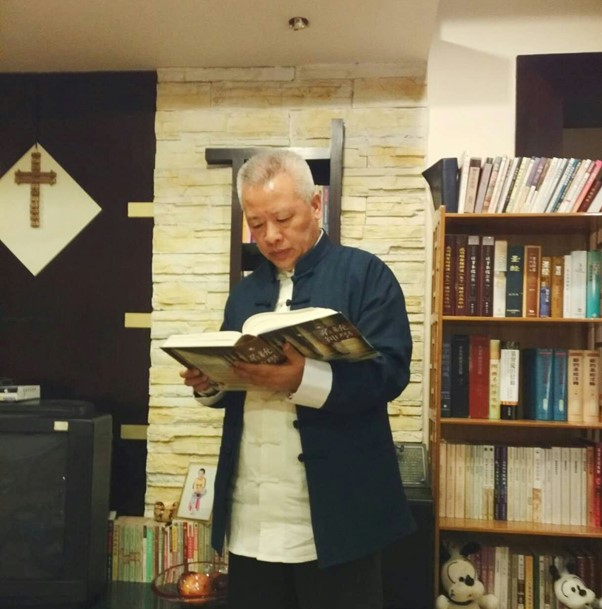
‘In handcuffs, without paper or pen, I rely on others to convey my safety’ – a call for the release of Elder Zhang Chunlei

Zhang Chunlei has been detained by the Chinese authorities since 16 March 2021. An elder of Love (Ren’ai) Reformed Church in Guiyang in Guizhou Province, his detention began when he visited a police station in Guiyang to ask about ten Christians from his church who had been taken away during a police raid on a privately rented property where they were holding a retreat.

Upon his inquiry, police officers raided Zhang’s home, and those of several other church members, subsequently accusing him and three others of ‘illegally operating as an association’. Chen Jianguo, Li Jinzhi and Li Lin were released several days later on 20 March, but Zhang has remained in detention ever since.

Presumably by design, Zhang’s case has proven typically hard to disentangle over the past three years, with the charges against him changing on multiple occasions. On 28 March 2021 reports emerged that he had been criminally detained – meaning that any time he spent in detention from that date on would count towards any jail term if he was convicted – at this point on suspicion of ‘fraud’.

Continue reading “‘In handcuffs, without paper or pen, I rely on others to convey my safety’ – a call for the release of Elder Zhang Chunlei”

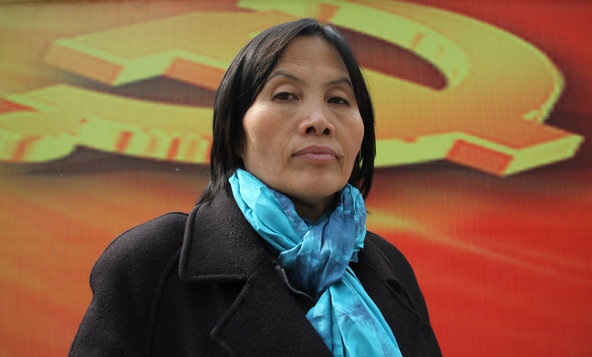
The world must honour the memory of Cao Shunli by standing up for human rights defenders in China

Ten years ago today, Cao Shunli died in a military hospital in Beijing.

A prominent human rights activist, Ms Cao fought injustice in China for over a decade prior to her passing at the age of 53. In 2002, she was fired from a government job after she raised concerns about corruption in her department. Over the next 12 years she became a vocal advocate for human rights and anti-corruption, her work often specifically focused on the mistreatment of human rights defenders and petitioners (citizens who petition authorities for the redress of their grievances) by the Chinese authorities.

As is the case for so many others like her in China, Ms Cao’s work frequently put her at odd with the Chinese Communist Party (CCP). She was regularly subjected to arbitrary detention, house arrest and enforced disappearance, and served two stints in the country’s notorious labour camps for a total of 27 months.

Continue reading “The world must honour the memory of Cao Shunli by standing up for human rights defenders in China”
Police van and cyclist in Beijing, China

Vague definitions and arbitrary crackdowns make the struggle of China’s religious minorities that much harder

‘I have asked investigative officers, prosecutors and judges: Where can you find me a document in which a department has designated, let’s say, the Shouters as a xie jiao or a xie jiao organisation? I have asked the prosecution dozens of times in court whether there is such a thing. No one has ever said “Yes, I can find it for you” or showed me such a document.’

Chinese human rights lawyer

To be designated xie jiao is to be openly pursued and persecuted by the Chinese Communist Party (CCP). Under the rule of Xi Jinping the situation for almost every religion or belief community in China has deteriorated amid a worsening picture for human rights across the country, but for groups labelled xie jiao, this has been a reality for decades.

What is xie jiao?

Xie jiao – usually translated into English as ‘heterodox teachings’ or ‘evil cults’ – has been illegal in China since October 1997. It is criminalised under Article 300 of the Criminal Law, which prohibits ‘organizing/using xie jiao to undermine implementation of the law’ and carries a punishment of three to seven years imprisonment, ‘or more’.

Continue reading “Vague definitions and arbitrary crackdowns make the struggle of China’s religious minorities that much harder”