Arrests, torture, violence and oppression, and yet there is still hope for Myanmar/Burma

By Benedict Rogers

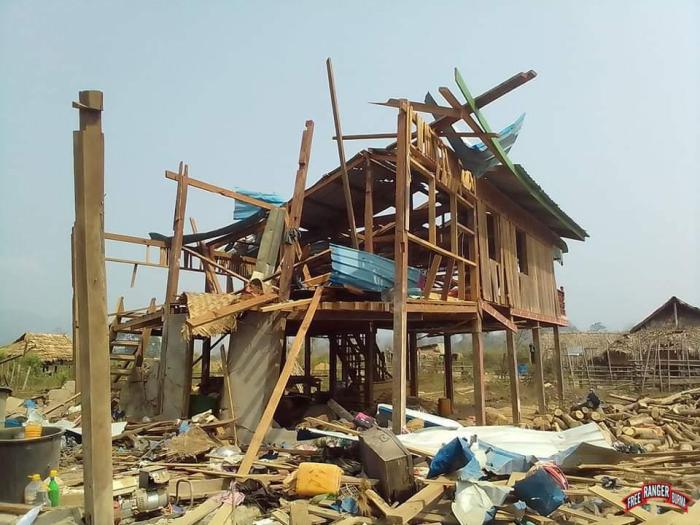
Last week, people in Myanmar/Burma marked 100 days since the military coup with yet more protests. For over three months since General Min Aung Hlaing seized power on 1 February, overthrowing the democratically-elected civilian government, people have courageously taken to the streets throughout the country. Almost 5,000 have been arrested, just under 4,000 are currently in jail, and almost 800 have been killed, yet still the demonstrations continue.

Myanmar now stands on the brink of a humanitarian disaster. The economy has collapsed, and a Civil Disobedience Movement (CDM) by public sector workers has led to thousands losing their homes and salaries. Many are facing extreme poverty and starvation.

For those detained by the military, torture is “almost ‘automatic’” according to survivors and eyewitnesses in evidence documented by the Chin Human Rights Organisation (CHRO). “Systematic torture practices are used by Burmese soldiers to extract information or forced confessions from people arrested for exercising their right to peaceful protest or other anti-junta activities,” CHRO report.

According to one former detainee, “Once inside the interrogation center, we are made to kneel down, hands tied behind our backs, blindfolded and forced to lie on our belly on the ground. That’s when the interrogation and beatings begin. Depending on how quickly the soldiers obtain the information they want, detainees are caned with up to 40 lashes, some detainees are made to dig holes in the ground to make them think that they are about to be killed and they are digging their own grave.”

Continue reading “Arrests, torture, violence and oppression, and yet there is still hope for Myanmar/Burma”

Seek the truth at all costs: A call for the release of Zhang Zhan on the first anniversary of her detention

“We should seek the truth and seek it at all costs. Truth has always been the most expensive thing in the world. It is our life.”

These are the words of the brave Chinese citizen journalist and former lawyer Zhang Zhan. For her, seeking the truth meant travelling to China’s Wuhan in February 2020, right at the outset of the COVID-19 pandemic. There, she published videos and articles reporting on the crisis to both Twitter and YouTube, both of which are blocked in China.

Zhang’s reporting, and particularly her questioning of whether the Chinese authorities’ response to the pandemic had infringed on human rights unsurprisingly provoked the ire of the Chinese Communist Party (CCP). On 14 May 2020, a year ago today, she was seized by Shanghai police in her hotel room in Wuhan and taken to a detention centre in Shanghai.

She subsequently spent seven months in detention, during which time concerns were repeatedly raised over her health and wellbeing – particularly as she remained on hunger strike in protest of her treatment.

Continue reading “Seek the truth at all costs: A call for the release of Zhang Zhan on the first anniversary of her detention”

राष्ट्र जीतने के लिए घर वापसी का सहारा

२०१४, में जब भारतीय जनता पार्टी सत्ता में आई, तब विश्व हिन्दू परिषद् के पूर्व अध्यक्ष प्रवीन तोगड़िया ने कहा कि उनकी संस्था भारत को १००% हिन्दू देश बनाने में कार्य करती रहेगी। पिछले छह वर्षों में हिंदूवादी राष्टवाद के दर्शन को लेकर बयानबाज़ी और भी तेज़ होती जा रही है। उन पुराने कथनों के आधार पर कि सभी भारतीय अपने धर्मों और आस्थाओं के बावजूद हिन्दू है, मुस्लिम लव जिहाद अभियान का डर कि कहीं इस्लामिक प्रभाव मजबूत न हो जाए और मसीहियत को बढ़ाने के लिए पश्चिमी देशों से प्राप्त सहयोग का डर।

विदेशी मिशनरियों के बारे में (गलत) जानकारी, जिसके कारण ऑस्ट्रेलियाई मिशनरी,ग्राहम स्टेंस और उनके दो बेटो की 1999 में उड़ीसा (अब ओडिशा) में भयावह हत्या कर दी गयी, यह ईसाइयों के प्रति संदेह और हिंसा में वृद्धि का चिन्ह है। झारखंड (२०१७),उत्तराखंड (२०१८) और उत्तर प्रदेश (२०२०), और मध्य प्रदेश (२०२१) और गुजरात (२०२१) में मौजूदा कानूनों में कठोर संशोधन करने वाले कानूनों को लागू किया गया, आस्था की सीमाएं बड़ी तेज़ी से राज्य {सरकार} की रूचि में शामिल हो गयी हैं। अन्य राज्यों द्वारा इस रुझान को आगे बढ़ाने की संभावना है, जिसके तहत भारतीय जनता पार्टी (बीजेपी) को राज्यों में होने वाले चुनावों में अधिक वोट पाने की आशा है

Continue reading “राष्ट्र जीतने के लिए घर वापसी का सहारा”

The death of secularism in India: ‘Homecoming’ in the name of the Hindu rashtra

In 2014, months after the Bharatiya Janata Party (BJP) came into power, Praveen Togadia, the former President of the Visha Hindu Parishad (World Hindu Council [VHP]), said that his organisation will work towards making India a 100% Hindu nation.

This vision of a Hindu rashtra (nation) has continued to intensify over the past six years, with rhetoric promoting old narratives that all Indians are Hindus despite their religion or belief, as well as suggestions that Muslims in the country are perpetrating a “love jihad” campaign to strengthen Islamic influence, and that Western governments are providing support for the proselytisation of Christianity.

Misinformation and disinformation have been rife in India for decades. In 1999, false assertions about foreign missionaries preceded the horrific killing of the Australian Graham Staines and his two sons in Orissa (now Odisha). This marked a rise in suspicion towards and violence against Christians, which has continued to date.

Continue reading “The death of secularism in India: ‘Homecoming’ in the name of the Hindu rashtra”

Criminalised, killed and cursed: The plight of Pakistan’s Ahmadiyya community

On 11 February, Abdul Qadir, a 65-year-old Ahmadi homeopathic doctor, was shot dead outside his homeopathic clinic in the Bazikhel area of Peshawar in north-western Pakistan. His killing marked the latest in a concerning uptick in religiously motivated attacks on Ahmadis, particularly in Peshawar.

Last year, CSW documented at least five other instances in which Ahmadis were killed, including an incident in which 31-year-old doctor, Tahir Mahmood, was murdered in front of his family at his home in Murch Balochan in Nankana Sahib District, Punjab.

The fact that Pakistan’s Ahmadiyya community has a long history of experiencing harassment, discrimination, violence and other human rights violations within Pakistani society leaves little doubt that these murders are religiously motivated. A pattern is also clearly emerging whereby prominent doctors and academics have been specifically singled-out by extremists.

Continue reading “Criminalised, killed and cursed: The plight of Pakistan’s Ahmadiyya community”