“Souls were scarred that day”: Remembering the Gulshan-e-Iqbal Park Easter Sunday bombings

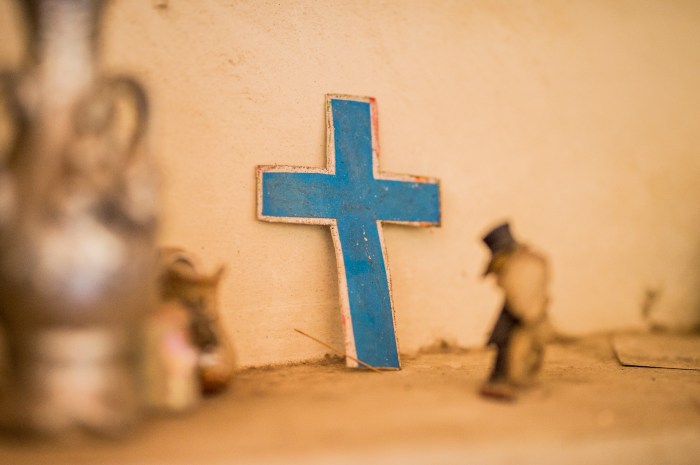
Last weekend, as Christians around the world celebrated Easter Sunday, many in Pakistan were no doubt remembering a day of similar celebration five years ago – one that sadly turned into a day of horror and mourning.

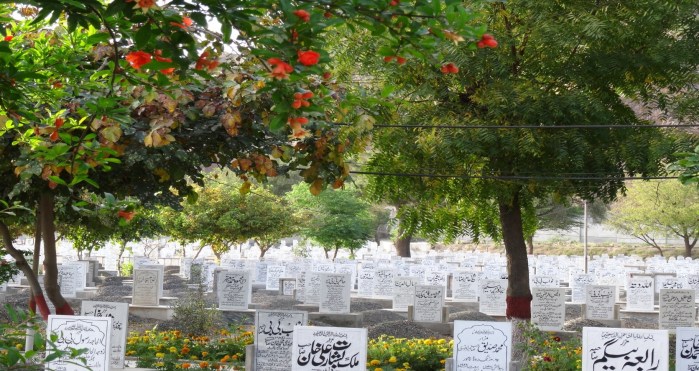
On that day in 2016, suicide bombers carried out an attack targeting Christians who had gathered to celebrate in the Gulshan-e-Iqbal Park in Lahore. Over 72 people were killed, and around 300 more were injured.

On the fifth anniversary of the attacks, CSW spoke to several of those whose lives were changed forever on that day, and who continue to await justice.

Continue reading ““Souls were scarred that day”: Remembering the Gulshan-e-Iqbal Park Easter Sunday bombings”

A long road to recovery: Sri Lanka’s Easter Sunday Bombings two years on

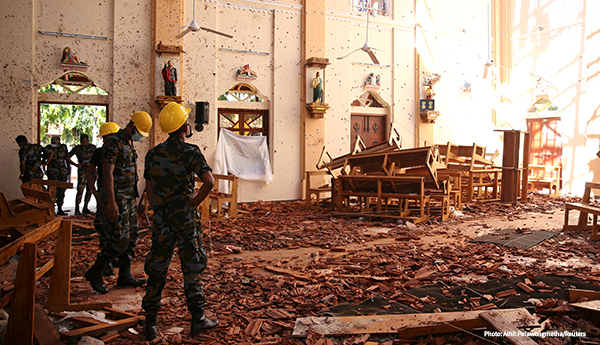
On Easter Sunday 2019, suicide bombers launched a series of coordinated attacks on churches and hotels across Sri Lanka. Over 250 people were killed, and some 500 more were injured.

The attacks destabilised already tense ethno-religious relations in the country, with intolerance and violence towards Muslims particularly increasing in their wake.

Today, CSW remembers all those who lost their lives to these senseless killings. We stand with those who continue to mourn the loss of their friends, fathers, mothers, brothers, sisters and loved ones. We also remember those for whom the road to recovery in the two years since has been long and arduous, some of whose stories are shared below. Their names have been changed for security reasons.

Continue reading “A long road to recovery: Sri Lanka’s Easter Sunday Bombings two years on”

North Korea and the Xinjiang Uyghur Autonomous Region: Grim parallels in two of the most repressive parts of the world

On 3 March the China-focused information platform SupChina published translated extracts from a 16-hour discussion in a “room” on the app Clubhouse called “Is there a concentration camp in Xinjiang?” The room attracted an incredible 4,000 participants, but the truly remarkable thing about the conversation was that it brought together Uyghurs and Han Chinese people – both inside and outside China – in a space momentarily beyond government restrictions.

Reliable information about what is happening to the Uyghurs is heavily censored in China; the only news about the Xinjiang Uyghur Autonomous Region is from state media, which paints Uyghurs as either potential terrorists or grateful recipients of the government’s “re-education” programme.

Before it was banned, Clubhouse briefly provided a brand-new channel for open discussion of one of the most sensitive issues in China today. SupChina described the conversation as “historic,” and it was; historic, moving, tragic and illuminating.

Continue reading “North Korea and the Xinjiang Uyghur Autonomous Region: Grim parallels in two of the most repressive parts of the world”

World NGO Day: Standing up for those who stand up for others

27 February marks World NGO Day – a day to celebrate the work of non-governmental organisations (NGOs) around the world. As a key part of civil society, NGOs help to drive positive change, protecting and promoting fundamental human rights, democracy, and rule of law.

CSW networks and collaborates with hundreds of NGOs around the world, empowering communities whose concerns may often be overlooked, amplifying these issues in international advocacy arenas, and whenever possible, providing a platform for them to address policy makers directly.

Even as the world celebrates the invaluable work of civil society, there are many countries, including several on which CSW focuses, where the work of NGOs is not celebrated, but is instead stifled or shut down by state or non-state actors.

India: Civil society suffocated

Perhaps one of the most restrictive environments for NGOs to operate in is in India. In recent years, the country’s ruling Bharatiya Janata Party (BJP) and other Hindu nationalist groups have increasingly attempted to label dissent as damaging to India’s national interests, arguing that those who speak up about human rights are ‘anti-nationals.’

Continue reading “World NGO Day: Standing up for those who stand up for others”

“We are not safe anymore”: Burma’s coup shatters hopes for democracy, religious tolerance and human rights

By Benedict Rogers

Images of tanks and soldiers on the streets of Burma’s cities, and the sound of gunfire against peaceful protesters take us back in time almost 14 years, and reverse a decade of fragile reform and democratization in the country. From the scenes of her release from house arrest in November 2010 via her talks with Burma’s then-President Thein Sein in August 2011, and through to her subsequent election to Parliament, victory in a nationwide election and the past five years as de facto head of government, Aung San Suu Kyi is now back where she started: in detention.

The generals have remained in power throughout, but now they have abandoned any pretense and seized direct control once more.

The coup on 1 February stunned the world. Although it had been rumoured, few expected the military to really do it. It is true that the army in Burma has a history of staging coups – in 1958, 1962 and 1988 – and it isn’t keen on losing elections, as it showed in 1990 when it refused to accept Suu Kyi’s first victory, consigning her to 15 years under house arrest, and her colleagues to prison or exile. In 2008 it drafted a new constitution designed to keep Suu Kyi out of power, rammed it through in a sham referendum and two years later heavily rigged the country’s first elections in two decades. Nevertheless, since then it had appeared that the military had come to some kind of accommodation with Suu Kyi and her National League for Democracy (NLD).

Continue reading ““We are not safe anymore”: Burma’s coup shatters hopes for democracy, religious tolerance and human rights”