From Pledges to Action: Human Rights Defenders play a vital role in advancing justice

Moving from official commitments to tangible changes people’s lives remains a key challenge in the realisation of human rights. I am reminded of the wonderful quote from African-American civil rights campaigner, Philip Randolph, who said, “Freedom is never granted; it is won. Justice is never given; it is exacted.”

“Freedom is never granted; it is won. Justice is never given; it is exacted.” – Philip Randolph

This quote draws attention to the importance of promoting human rights while reminding us that very rarely do human rights “just happen”; they are regularly contested, challenged and often only progressed through the active work of individual human rights defenders (HRDs) and NGOs who promote and defend human rights through activities such as advocacy, campaigning, demonstrations, and human rights journalism – whether paid or unpaid and regardless of geographical location.

The right and responsibility to promote human rights – either individually or in association with others – is the cornerstone of all human rights work.

Continue reading “From Pledges to Action: Human Rights Defenders play a vital role in advancing justice”

NGOs in Partnership with International Parliamentarians

LONG READ: “NGOs in Partnership with International Parliamentarians” is the speech delivered by CSW’s Chief Executive Mervyn Thomas at the UK’s Foreign and Commonwealth’s (FCO) Conference,  ‘Preventing violent extremism by building inclusive and plural societies: How freedom of religion or belief can help’, 19 -20 October 2016. 


As we’ve already heard today, the fundamental human right to Freedom of Religion or Belief (FoRB), embedded in Article 18 of the International Covenant on Civil and Political Rights is one that at first can appear daunting and difficult to raise. Professor Heiner Bielefeldt, UN Special Rapporteur on FoRB has said that “it is the most challenging of all human rights, it is the spice in the soup of human rights.” However, although daunting it is extremely important to intensify our joint efforts to promote it.

The latest information from the Pew Research Center stated that in 2014, 74% or roughly ¾ of the world’s population, live in countries with either high or very high restrictions on religious freedom. That means that over 5.1 billion people in this world are not able to fully recognise their inalienable human right to practice or change the religion or belief system of their choice.

Furthermore, FoRB is part and parcel of peace and stability; a cornerstone of democratic societies, and it can provide an important antidote to rising violent extremism. High-levels of discrimination based on religion or belief and FoRB restrictions can undermine peaceful development and in fact increase the grounds for the rise of extremism.

It is clear that some of the most significant foreign affairs challenges the international community are currently grappling with, involve violent extremism, and many of the challenges are deeply rooted in violations of the right to freedom of religion or belief.

Continue reading “NGOs in Partnership with International Parliamentarians”

Can the UN be true to its democratic principles without reforming the NGO Committee?

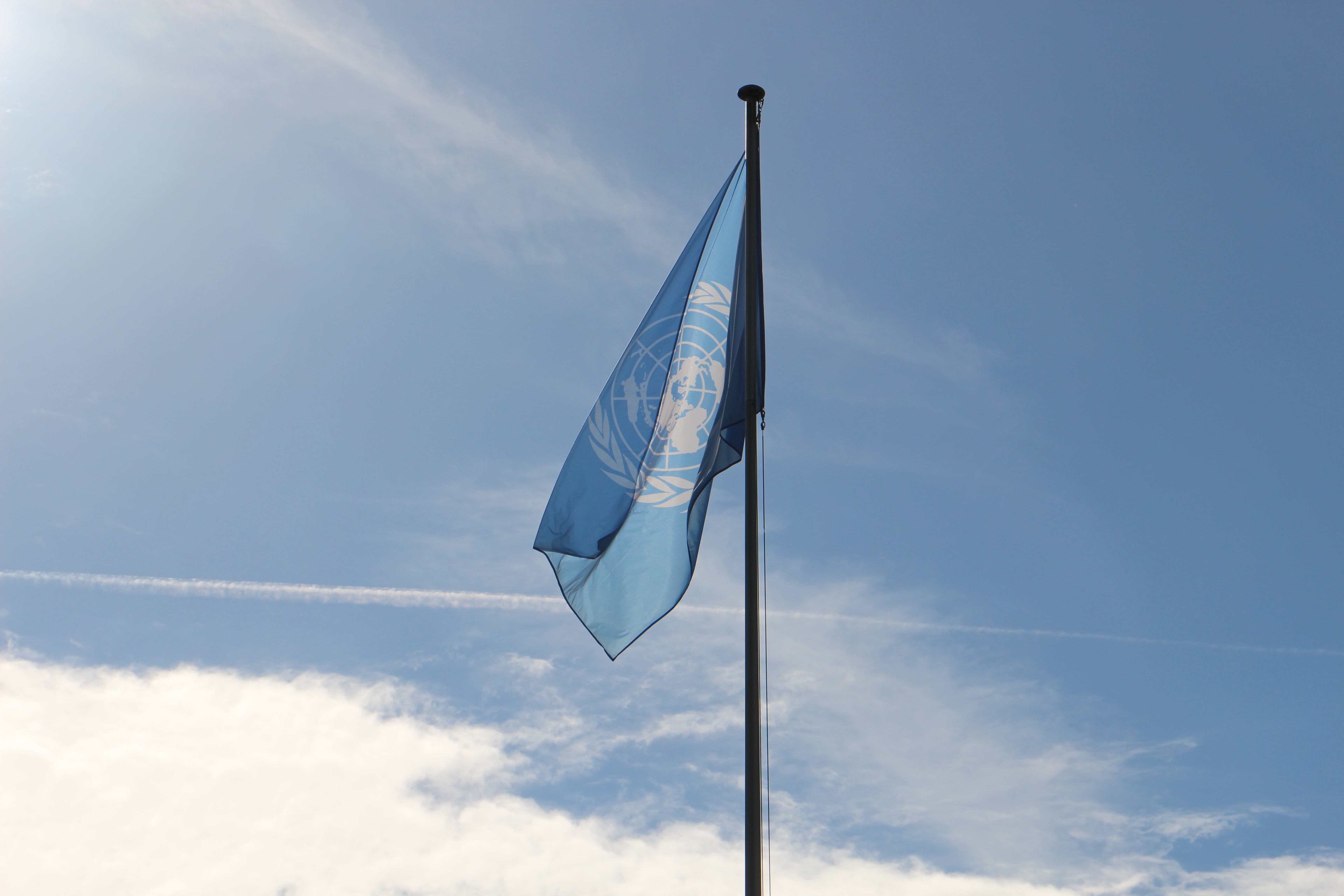
3_un-flag

Broad participation and representation, including vibrant civil society participation, are essential prerequisites for democratic development. However, as the United Nations (UN) marks the International Day of Democracy today, it is clear that the UN system faces severe internal challenges on this front.

Importance of ECOSOC NGO Committee

The access a number of NGOs have to the UN has been continuously blocked by the The Economic and Social Council (ECOSOC) Committee on NGOs through arbitrary deferrals and denial of ECOSOC consultative status.

Continue reading “Can the UN be true to its democratic principles without reforming the NGO Committee?”

Brexit Wounds – The UK’s Post-EU Human Rights Challenges

As the Prime Minister assembled her new cabinet following the UK referendum on its membership of the European Union (EU), attention was rightly being paid to the how the new-look Government would deal with Britain’s decision to leave. Those appointed by Theresa May know that, whatever their brief, a significant proportion of the Government’s work will be negotiating, executing and accounting for the UK’s withdrawal from EU.

While it is understandable that this unprecedented task will be time consuming for the UK Government, this must not be allowed to supersede its obligation to promote and protect human rights worldwide.

Human Rights within the European Union

For all the debated successes and failures of the EU, what is undeniable is that its various institutions engage in significant human rights work.

Continue reading “Brexit Wounds – The UK’s Post-EU Human Rights Challenges”

The Plight of the Rohingya – His Eminence Cardinal Charles Maung Bo Addresses the Houses of Parliament, London, 25 May 2016

On May 25th Cardinal Charles Maung Bo of Burma, spoke before a meeting chaired by Lord Alton and hosted by the All Party Parliamentary Group on Burma, the All Party Parliamentary Group on International Freedom of Religion or Belief, and the Catholic Legislators Network. Below are sections from that speech, on freedom of religion or belief (FoRB) in Burma and the plight of Rohingya Muslims in Burma. Please contact CSW‘s office for a copy of the full speech and further recommendations. 


My country, Myanmar, now stands on the threshold of hope. We were once a Good Friday people, enduring our crucifixion as a nation on the cross of inhumanity and injustice, with five nails: dictatorship, war, displacement, poverty and oppression. Easter seemed a distant dream. My country was buried in the tomb of oppression and exploitation for six decades.

But today, we can perhaps begin to say that we are an Easter people. A new dawn has arisen. But it brings with it fresh challenges: reconciliation and peace-making, religious intolerance, land grabbing, constitutional limitations, and the fragile nature of a nascent democratic transition. And the old dangers have not gone away: the military remains powerful, corruption is widespread, and ethnic conflict continues in some parts of Myanmar.

“We were once a Good Friday people, enduring our crucifixion as a nation on the cross of inhumanity and injustice (…) But today, we can perhaps begin to say that we are an Easter people. A new dawn has arisen.”

Despite winning an enormous mandate from the people, Aung San Suu Kyi is barred by the Constitution from becoming President. The military, under the Constitution, retain control of three key ministries – Home Affairs, Border Affairs and Defence – and 25% of the seats in Parliament reserved for them. One of the two Vice-Presidents is a military appointee. So the new government is constrained, the military is still very powerful, and the country continues to face enormous challenges. Our journey has not ended; we are simply entering into a new chapter in our continuing struggle for freedom, democracy, human rights, human dignity and peace.

Continue reading “The Plight of the Rohingya – His Eminence Cardinal Charles Maung Bo Addresses the Houses of Parliament, London, 25 May 2016”