Bridging the gap: The importance of finding common ground between religious groups and secular human rights organisations 

Oppressive governments depend, in part, on two things: unity among those who support them and divisions within the communities that do not. One of the greatest challenges in addressing freedom of religion or belief (FoRB) in countries where that right is regularly violated is bridging divisions between different groups within the religious sector, as well as the gap that often exists between the religious sector and secular human rights and other independent civil society organisations. 

Religious groups often occupy a unique position within larger independent civil society. They are networked and organised, to different extents, with members who regularly attend and participate in their activities. They often possess a dedicated physical space, where they are able to hold their activities with minimal outside interference. Some religious groups will run outward focused activities, providing social services. In many cases, religious leaders not only hold a significant decree of influence within their respective community – they may also be perceived as moral adjudicators more widely even by people who do not share their religious beliefs.  

Oppressive regimes are sensitive to the danger posed to them by a socially engaged religious sector and outspoken religious leaders who are willing to work hand in hand with larger civil society in defending civil and political rights. Division, therefore, is deliberately encouraged and stoked, often by intelligence and security agencies, with the goal of neutralising or coopting organised independent civil society, including the religious sector.  
Continue reading “Bridging the gap: The importance of finding common ground between religious groups and secular human rights organisations “

Where justice fails: How cultures of impunity lead to forced displacement in India and Mexico

On 11 June the families and loved ones of Neelkant and Pushpa Verma gathered for what should have been a day of celebration. The young Christian couple were due to marry in Raipur in India’s Chhattisgarh State, no doubt filled with excitement at what should have been one of the happiest days of their lives, and all the joy to follow in the years to come. 

But this excitement was cut short when three villagers in in their early twenties stormed the wedding venue, cutting off the electricity supply and declaring that Christians were not allowed to hold celebrations in the village. When Neelkant’s family attempted to contact the electricity board, over 30 villagers gathered outside of the venue, vandalising guests’ vehicles and setting the building on fire.  

The mob proceeded to hurl abuse at the women and tear some of their sarees. When the women’s children tried to defend their mothers, they were pelted with stones and forced to seek refuge in a nearby house. Once the victims were inside, they called the police who arrived quickly and escorted them to safety, managing to disperse the attackers.  

Continue reading “Where justice fails: How cultures of impunity lead to forced displacement in India and Mexico”

A year since over 170 Protestants were forced from their homes, authorities in Mexico’s Hidalgo State must take action to protect religious minorities 

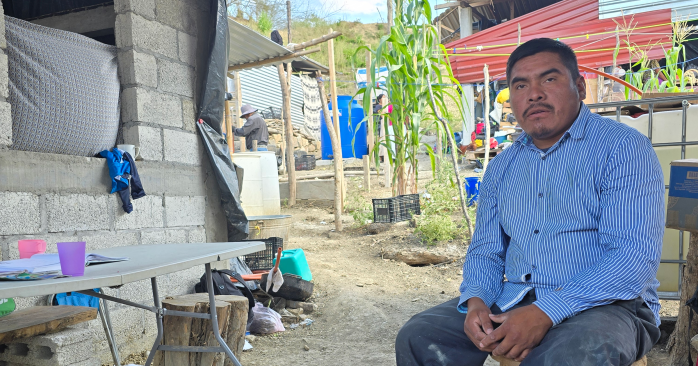
It was the end of 2015 when Rogelio Hernández Baltazar returned to his community in Rancho Nuevo in the Huejutla de Reyes Municipality of Hidalgo State. He had spent several months working in the fields of Coahuila in Northern Mexico, because there were no opportunities for work or to generate income to support his family in his own village. 

This time things were different; he returned to his community transformed after having struggled for years with alcohol addiction and anger management. While he was working in Coahuila a colleague had invited him to the local Fundamental Baptist Church, where he made the decision to convert to Christianity. What he did not know was that it would have serious consequences within his community. 

When Rogelio returned home things seemed not to have changed much, but something inside him had. He had only been attending the church in Coahuila for two months, but when he returned to his indigenous Nahuatl community, people noticed such a significant change in him that they began to wonder what had happened to him in his workplace. With the little understanding that he had, Rogelio began to explain that his radical change was due to what he had read in the Bible, so he invited people to Bible studies in his home.  

Continue reading “A year since over 170 Protestants were forced from their homes, authorities in Mexico’s Hidalgo State must take action to protect religious minorities “

Why don’t they just come here legally?

They are called illegals, migrants, aliens, refugees, immigrants, asylum seekers, invaders, displaced – each word carrying with it a subtext of who they are, what they want, and where they fit. They have been accused of bringing disease, ‘poisoning the blood’ of a nation, participating in a massive invasion that aims to bring about violent anarchy, and even eating people’s beloved pets. In this discourse each of ‘them’ rarely has a face, a name, and much less their own story (unless they do something terrible that pushes their name and face into the headlines).

The question ‘Why don’t they just come here legally?’ is asked over and over. Again, there is a subtext to that question – an implication that if ‘they’ were good people, they would seek out and follow the rules. The question also assumes that there are legal, and presumably safe, channels for those in genuine distress to request and receive asylum in a safe country, as allowed for under international law, primarily under the UN Refugee Convention. However, the reality is that even those countries that recognise and uphold the Refugee Convention, (and there are many which do not), maintain byzantine systems, set up to make it as difficult as possible for someone, especially an asylum seeker, to petition for and be granted the right to start a new life in a safe country.

The vast majority of those ‘safe’ countries require visas for individuals traveling there from much of the world. The quickest way to ensure that a visa is denied, is to respond truthfully – that the motive for travelling is to request asylum upon arrival – and when a visa is denied on those grounds, the individual is almost always put on a blacklist for future requests.

Continue reading “Why don’t they just come here legally?”

Where the laws don’t apply: Rural Christian communities in Laos and Mexico face similar challenges

Pastor Mum and five members of his church – Liang, Pa, Laen, Lan and Khoon – have been prisoners in their own village since 22 June. 

The six Christians were arrested by the chief of Tahae village, in Laos’ Khammouane Province, after they held a small church service in Pastor Mum’s home, which was deemed ‘illegal’ as their church is not officially registered. 

It has proven challenging to get updates since – perhaps as to be expected of a small remote village in a rural province in central Laos – however when CSW first reported on the arrests five days after they took place, the group had not been formally charged or permitted to see their families or access legal counsel.  

Continue reading “Where the laws don’t apply: Rural Christian communities in Laos and Mexico face similar challenges”