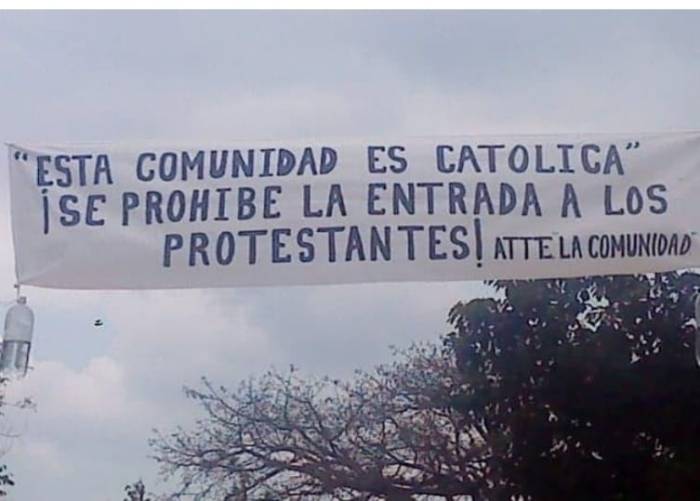
A sign prohibiting the entry of Protestants into the community of Cuamontax in Huazalingo Municipality of Hidalgo State, Mexico.

Revictimization in the search for a solution to conflicts related to religious freedom

Uriel Badillo is a father of a family who has been affected by the lack of religious freedom in the community of Cuamontax in Huazalingo Municipality of Mexico’s Hidalgo State. His father Gilberto Badillo, a native of the community, converted to Christianity in 2009, and in 2010 he went public with his new faith before his community as he began to conduct Bible studies and invite people to his house.

The community prohibited these activities and placed a banner at the entrance to the village that explicitly said, ‘No entry to Evangelicals’, which remained until 2021. I had the opportunity to see it on a visit to the state of Hidalgo in 2020.

The majority religion in Cuamontax is Roman Catholic; they hold parties and celebrations for various saints during the year but the most important party in the area that lasts a week is “Xantolo”1 (Day of the Dead) and all members of the community are required to participate physically and financially.

Continue reading “Revictimization in the search for a solution to conflicts related to religious freedom”
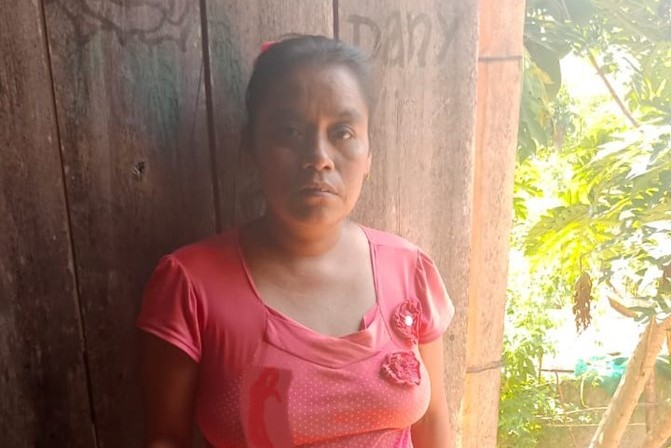
Maria Concepción, a member of the Great Commission Baptist Church in Rancho Nuevo in the Huejutla de los Reyes Municipality of Hidalgo state, Mexico.

After a brutal attack on one of their own, a religious minority community in Mexico is waiting for justice and religious freedom

Maria Concepción began 2023 in hospital recovering from a brutal physical attack that was linked to her membership of a religious minority in her community. On 1 January she was admitted to intensive care due to constant vomiting that meant she was unable to keep food down. She spent ten days there before she was briefly released only to be returned to intensive care due to vomiting blood on 18 January.

As doctors did not report any improvement at first, her family did not see much hope at all, to the point that members of her church in Rancho Nuevo in the Huejutla de los Reyes Municipality of Hidalgo state, Mexico, had cleared a piece of land for her burial.

Mercifully, she pulled through. She returned home on 9 February, and today she walks with the help of her son and a cane. She still suffers from persistent back pain caused by being forcefully thrown into the trunk of a tree, but her recovery remains nothing short of miraculous.

Continue reading “After a brutal attack on one of their own, a religious minority community in Mexico is waiting for justice and religious freedom”
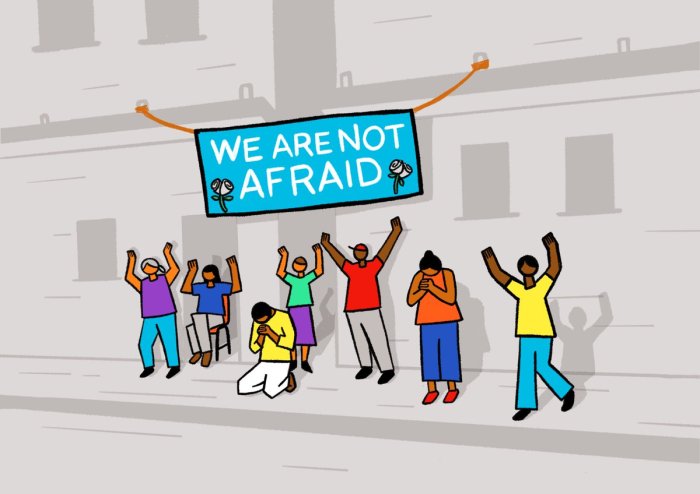
Cartoon depiction of protests in Cuba.

The international community must support the bravery of the Cuban people

‘I don’t think that any man can get used to this place, and even more so when one knows that one is here unjustly.’

– Pastor Lorenzo Rosales Fajardo

Pastor Lorenzo Rosales Fajardo has been a prisoner of the Cuban government for over 18 months. He was arrested, among many others, on 11 July 2021 in the midst of unprecedented nationwide protests in Cuba, and he is currently serving a seven-year prison sentence on completely fabricated charges of ‘disrespect’, ‘assault’, ‘criminal incitement’ and ‘public disorder’.

He is one of many political prisoners on the island, his continuing detention just one reminder of the Cuban authorities’ relentless hostility towards religious groups it views with suspicion and fear.

Continue reading “The international community must support the bravery of the Cuban people”

‘I will not beat other people; I am a Christian’ – Cuba’s new criminal code outlaws freedom of conscience 

Faced with a growing number of protests in Cuba on the part of its citizenry, the Cuban regime has needed to forcibly recruit men1 into the ranks of its military. They are not being brought in to bring peace or mediate in the middle of the protests, exactly, but rather to violently repress and neutralize the protests, of which 5,164 separate incidents have been recorded since demonstrations broke out on 11 July 2021, also known as 11J. The new recruits have also been made to participate in the creation of false evidence, which has been used to lock up more than 1,000 political prisoners since 11J.  

The Cuban Conflict Observatory reports that 589 protests took place in October 2022; this was the month with the highest number incidents since demonstrations first broke out on 11J. The regime has had to resort to raids, using various means of deception and often  force, to increase the numbers of enlisted young people.  

‘Do you know what they did to a group of young people?’ a pastor asked CSW. ‘They phoned them to arrange the handover of their degrees and grades, [but really] the people from the military committee were waiting for them to enlist them.’ 

Continue reading “‘I will not beat other people; I am a Christian’ – Cuba’s new criminal code outlaws freedom of conscience “
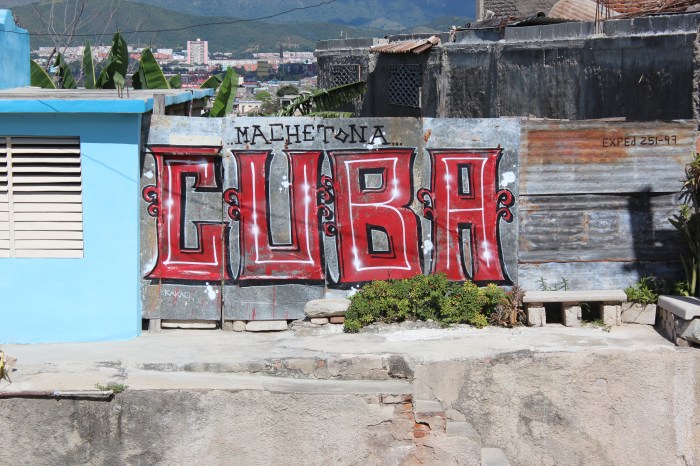
A street in Trinidad, Cuba.

Cuba’s referendum on 25 September is about far more than gay marriage

On 25 September Cubans will go to the polls to vote in a popular referendum on a new Family Code, which, if approved, will become law. Media coverage, in and outside of Cuba, including in the UK and US press, has presented the referendum as a vote on gay marriage. The truth is that the proposed family code runs over 100 pages; only a handful of the 474 articles are relevant to LGBTQ+ rights.

Presenting it as a referendum on gay rights is not only incorrect but also dangerous. It allows the Cuban government to obscure some of the highly problematic aspects of the code, which have the potential to violate the fundamental rights of all Cubans and would give the authorities another, and very effective, way of silencing independent or critical voices.   

Most worrying is Article 191 which would allow for the removal of children if their parents fail to fulfil a list of responsibilities detailed in Article 138. These include the duties to instill in their children love for the homeland, respect of its symbols, and respect for the authorities (Article 138 (ñ)).

Continue reading Cuba’s referendum on 25 September is about far more than gay marriage