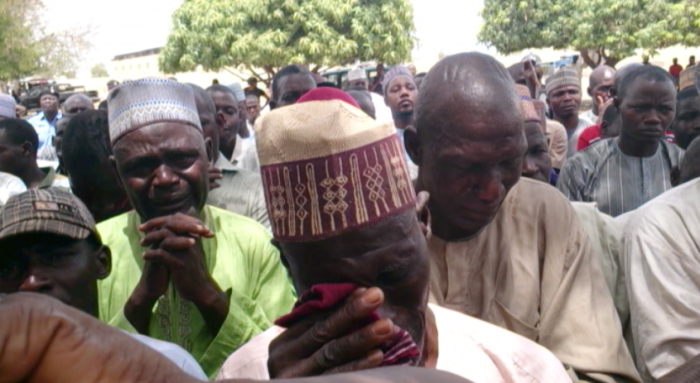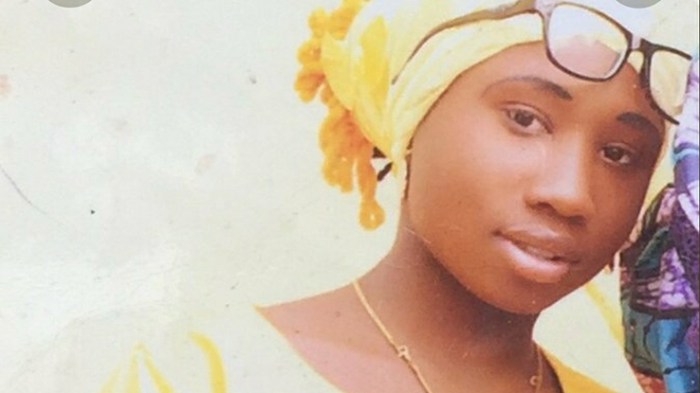
The international community must not allow the Nigerian government to fail Leah Sharibu any longer

Today is Leah Sharibu’s 22nd birthday. 

Anyone who has been following the work of CSW for some time will likely be familiar with some of the details surrounding her case: the fact that this is the eighth consecutive birthday that she has marked as a prisoner of the Islamic State West Africa Province (ISWAP); the fact that she was one of 110 girls abducted from the Government Girls Science and Technical College in Dapchi in Nigeria’s Yobe State on 19 February 2018; the fact that she was the sole Christian among them and was therefore denied her freedom because she refused to convert to Islam as a pre-condition for release – even as government negotiations saw all of her surviving classmates returned to their families in March 2018. 

Over the past seven years, successive administrations have failed to deliver on official promises to secure Leah’s release, including a personal pledge by former President Muhammadu Buhari made directly to Leah’s mother Rebecca. In January 2022 – over three years ago – Nigeria’s then Chief of Defence Staff General Lucky Irabor assured Nigerian media that there were plans and processes in place ‘to ensure that not just Leah Sharibu but every other person held captive is released.’  

And yet she remains in captivity, having been declared a ‘slave for life’, renamed, forcibly ‘married’ to ISWAP fighters, and given birth to three children. 

Continue reading “The international community must not allow the Nigerian government to fail Leah Sharibu any longer”
‘They realised their guns weren’t fast enough’

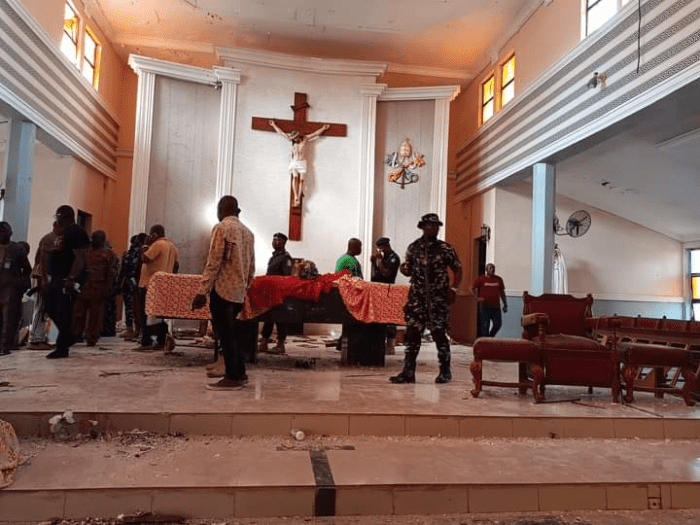
As we mark the second anniversary of the Pentecost Sunday massacre in Ondo State, Nigeria, the UK government needs to be doing more to advance FoRB through its foreign policy commitments. 

As Margaret is invited to speak, the room falls silent. We are in Parliament, off the side of Westminster Hall. It is the day of the Autumn budget and the news is flooded with discussion on whether a tax cut of 1% will be announced, how it will happen, and who it will benefit. Experts are pontificating on inflation and Conservative Party posing ahead of the 2024 general election. Seats to watch PMQs and the Chancellor’s statement are fully booked. The overflow queue stretches past the lobby and into St Stephen’s Chapel. There is no real possibility of those at the end of the queue getting in before the Chancellor is back at No. 11; but there is a small glimmer of hope, and so they stay. 

But Margaret is not standing in the queue. In fact, she couldn’t if she’d wanted to. Margaret lost her legs in the massacre at St Francis Xavier Catholic Church in Owo, Ondo State, Nigeria, on 5 June 2022 in the first ever terror attack on a church in the south of the country. This is her first time in the UK. She is supported by her husband Dominic to give a face to this year’s Red Wednesday, an event coordinated by Aid to the Church in Need aimed at raising awareness of Christian persecution. 

Continue reading “‘They realised their guns weren’t fast enough’”

A criminal shouldn’t benefit from his/her criminal activities

This article was originally published on the CSW-Nigeria website.

Christian Solidarity Worldwide Nigeria (CSWN) came across an article written by the British Broadcasting Corporation (BBC) titled: Nigeria’s Chibok Girls: Parent of Kidnapped Children Heartbroken – Again, dated 1st April, 2024. There was also an Arise News programme on April 3rd, 2024, on the morning show, titled: Freed Chibok Girls Wed Captors in Borno. The Arise news program dwells on the BBC article but expands it with more insight.

What the two media outlets were saying is that some of the freed/rescued Chibok secondary school girls, abducted on April 14, 2014, by Boko Haram, have chosen to remain with their de-radicalized, former insurgent husbands at an accommodation provided by the Borno State government under its de-radicalisation program.

The BBC article added that seven of such girls are staying in the government-provided accommodation with their de-radicalised insurgent husbands, while other girls are engaged to former fighters they met at the de-radicalisation camp.

Continue reading “A criminal shouldn’t benefit from his/her criminal activities”

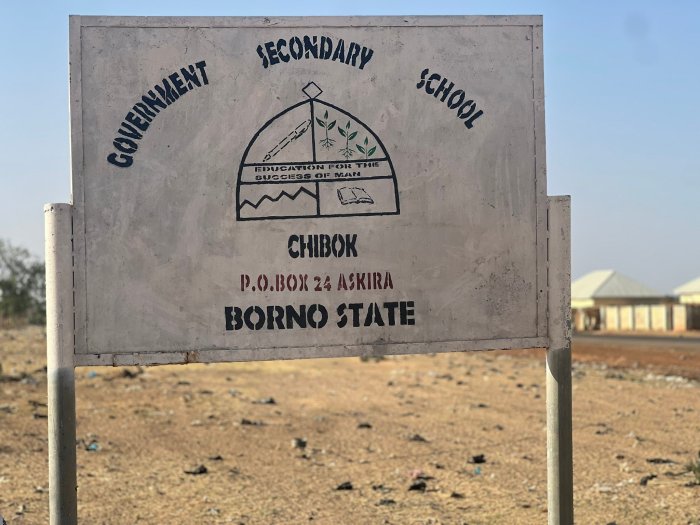
Ten years since the abduction of the Chibok Girls, the Nigerian government must finally protect vulnerable communities

Last month, 137 families in Kuriga in Nigeria’s Kaduna State breathed a collective sigh of relief as their sons and daughters returned home after over two weeks in terrorist captivity.

The children were abducted from their school on 7 March when armed assailants descended on the premises just as classes were about to commence. The school reported that 287 students were taken; however Kaduna State Governor Uba Sani has since attempted to dismiss the figure as being a ‘figment of someone’s imagination’, despite initially citing the same number himself.

Several questions emerge from this: what is being done to confirm that all of the students have indeed been freed? What about the thousands of other individuals who have been abducted by terrorist groups in recent years? And finally, how can this still be happening a decade after mass kidnappings in Nigeria first landed on the international agenda?

Continue reading “Ten years since the abduction of the Chibok Girls, the Nigerian government must finally protect vulnerable communities”
Daffodils in front of the UK Houses of Parliament

Combatting impunity is essential for the realisation of the right to freedom of religion or belief 

Violations of freedom of religion or belief (FoRB) take many forms: harassment, discrimination, threats, imprisonment or even death on account of one’s religion or belief. The impunity that generally surrounds these violations undercuts the rule of law, denies justice to victims, and perpetuates an environment conducive to further violations. The issue is multifaceted and nuanced, with socio-political, legal, and psychological dimensions.

Socio-political implications

When state or non-state actors perpetrate FoRB violations without facing repercussions, it critically erodes public trust in the institutions responsible for upholding the rule of law. This erosion of trust threatens social cohesion and contributes to societal fragmentation.

Continue reading “Combatting impunity is essential for the realisation of the right to freedom of religion or belief “