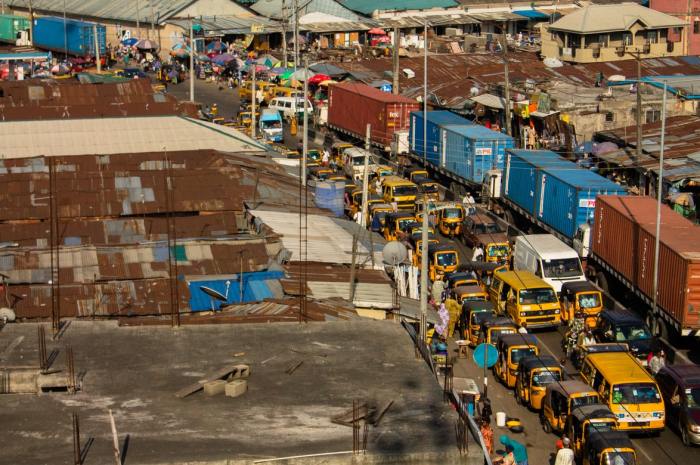
Long Read: One year since the Lekki Toll Gate massacre, Nigeria continues its slide into failed statehood

On 20 October 2020 Nigerian security forces at the Lekki Toll Gate in Lagos opened fire on unarmed and peaceful demonstrators who had gathered to protest the notorious police unit, the Special Armed Robbery Squad (SARS) and call for good governance. The soldiers opened fire just as the protestors finished singing the national anthem.  When they withdrew, the police arrived and also opened fire.

Estimates of those killed are variable, ranging from nine to over 70. The real number could be higher still, with video footage subsequently emerging which appeared to confirm allegations by survivors that the military had evacuated bodies from the scene in armoured vehicles, as had occurred in 2015 when soldiers attacked Islamic Movement of Nigeria (IMN) facilities in Zaria, Kaduna state, and more recently, during an armed raid on the home of a Yoruba activist in Ibadan.  

Prior to attacking, engineers had arrived at the toll gate earlier that afternoon and removed and disabled the CCTV. Just before the attack began, the lights in the area were switched off. 

The Nigerian army, which was ostensibly enforcing a curfew announced by the Lagos state government just hours before the attack, initially attempted to deny responsibility, and even claimed soldiers were not in the area, despite footage from mobile phones proving otherwise.  The Governor of Lagos also attempted to distance himself from responsibility for the incident, visiting some of the wounded in hospital. However, he later claimed in a television address that there had been no casualties, enraging survivors, families of victims, and all who had followed livestreaming of the massacre on social media. Regardless of the number of casualties, these deaths amount to cynically executed extrajudicial killings of young people merely for demanding good governance and rule of law.

Continue reading “Long Read: One year since the Lekki Toll Gate massacre, Nigeria continues its slide into failed statehood”
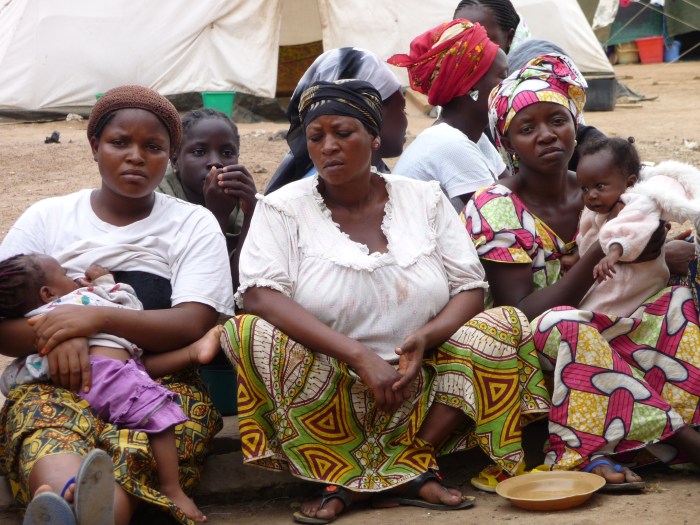
Long Read: Removing the Obstacles to Freedom of Religion or Belief in Africa

Religion-related tensions continue to arise in many African countries. They come in varying forms and degrees of intensity, and can be intra-religious or occur between religious communities.

Religion is either instrumentalised as a rallying point or is the raison d’étre of armed non state actors seeking to enforce an extremist interpretation of their creed or to gain material advantage. It is used by individuals or political parties as a bridge to power and rallying point.  In addition, some governments view religion, or certain religious or non-religious groups, as threats, exercising control through excessive registration requirements or more forcible means. 

Every country on the African continent is a signatory to the International Covenant on Civil and Political Rights (ICCPR), with its expanded articulation of the right to freedom of religion or belief (FoRB), and to the African Charter on Human and Peoples Rights (ACHPR), where the right to change or refuse one’s religion or belief as an act of conscience can be inferred from Article 8. However, in parts of the continent, human rights in general, and FoRB in particular, are challenged by arguments about cultural relativism and frequent but erroneous assertions that they are a Western construct. 

Thus, despite being parties to international and regional treaties, many African countries either do not give legal effect to them, or create exemptions for their implementation. This has further exacerbated their already poor profile on human rights protection.

Continue reading “Long Read: Removing the Obstacles to Freedom of Religion or Belief in Africa”

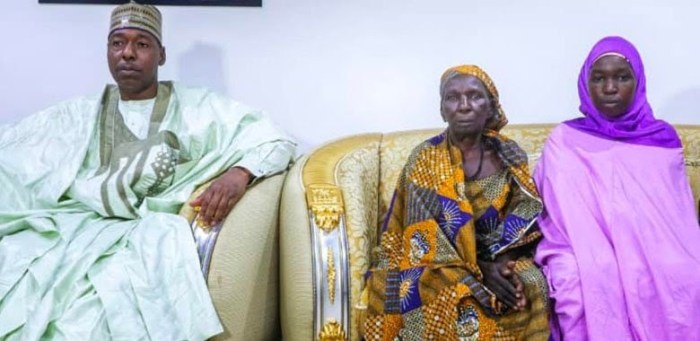
Ruth Ngladar Pogu’s release is welcome, but the man with her is not her ‘husband’

On 8 August, the state governor of Nigeria’s Borno State confirmed that Ruth Ngladar Pogu, one of around 276 girls infamously abducted from their school in Chibok, was free.

Ms Ngladar is the 108th Chibok Girl to regain some form of freedom. Several are thought to have died whilst in captivity, with an estimated 111 reported to still be in the hands of the now amalgamated terrorist group.

Ms Ngladar had reportedly surrendered herself to the military alongside one of her captors and two children she had given birth to while in captivity at the end of July, and while her freedom after over seven years is good news, the challenges that lie ahead of her and her family remain extensive.

Continue reading “Ruth Ngladar Pogu’s release is welcome, but the man with her is not her ‘husband’”
Sudan City View

Beyond the headlines: Freedom of religion or belief and women’s rights in Sudan

The political shifts in Sudan from the authoritarian rule of Omar al Bashir to the transitional government (a mix of civilians and the military), has garnered many positive headlines. The welcome changes and relief that there is a reservoir of political will to address the root causes of the country’s conflicts have indeed been positive.

In particular, the pledges of reform, the recent announcement that the government will accede to the Convention for the Elimination of Discrimination Against Women (CEDAW), the changing of some public order laws that infringed on the rights of women, especially women from marginalized communities, as well as the removal of apostasy have been warmly received.

However, beneath the headlines are simmering social hostilities which have already generated a series of violations that have not been sufficiently investigated or addressed. These violations threaten to undermine the positive steps taken so far, and both the transitional government and supporters of this new political arrangement in the international community need to note and address them.

Continue reading “Beyond the headlines: Freedom of religion or belief and women’s rights in Sudan”

Call for Action to Address Conflict-Related Sexual Violence in Ethiopia’s Tigray Region from Women from Africa and of African Descent

As women from Africa or of African descent, we are marking the International Day for the Elimination of Sexual Violence in Conflict by signing this open letter in solidarity with the women and girls in the Tigray region of Ethiopia, who are being targeted in a campaign of sexual violence which the UN Special Representative on Sexual Violence in Conflict has described as being of “a level of cruelty beyond comprehension.”

During a disturbing briefing to the Nations (UN) Security Council in April, the UN Under-Secretary-General for Humanitarian Affairs and Emergency Relief Coordinator Sir Mark Lowcock reported an unspecified agency operating in Tigray had estimated that 30% of all incidents against civilians involved sexual violence, which he confirmed is being used “as a weapon of war, as a means to humiliate, terrorize and traumatize an entire population today and into the next generation.” The perpetrators were identified as members of the “Ethiopian National Defence Forces, Eritrean Defence forces, Amhara Special Forces, and other irregular armed groups or aligned militia,” and nearly a quarter of the cases involved gang rape over an extended period of time.

Reports continue to emerge from Tigray of wives being raped in front of their husbands; mothers raped in front of their children and vice versa; family members forced to choose between raping female relatives or death, and of women themselves being forced to choose between rape or death. Several victims report their assailants boasted of “cleansing” their bloodline, while others arrive at medical facilities having suffered additional traumatic injuries to their reproductive organs inflicted by attackers to prevent them from bearing children. Researchers from Ghent University in Belgium have concluded this campaign of mass rape fits “a pattern that has been evident in previous genocidal actions, and [is] reminiscent of events in Bosnia and Rwanda.”

Continue reading “Call for Action to Address Conflict-Related Sexual Violence in Ethiopia’s Tigray Region from Women from Africa and of African Descent”