In the Lead up to the G20 Summit, Questions Must be Asked About the Direction China is Taking.

When leaders of the G20 nations arrive in Zhejiang Province, China, next week for the G20 summit, they will be greeted by a different skyline than they might have seen five years ago.

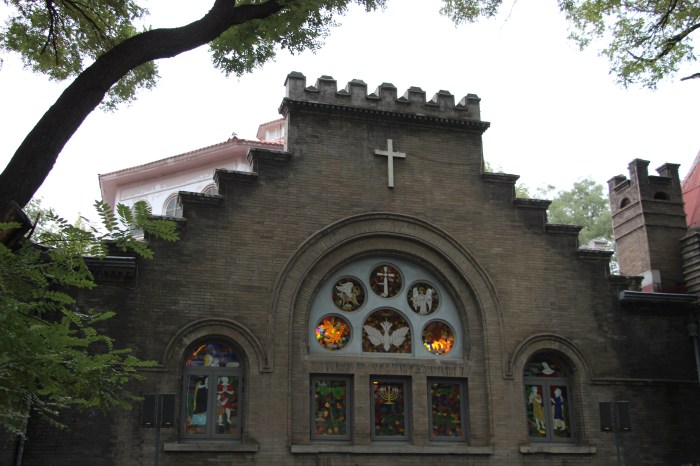
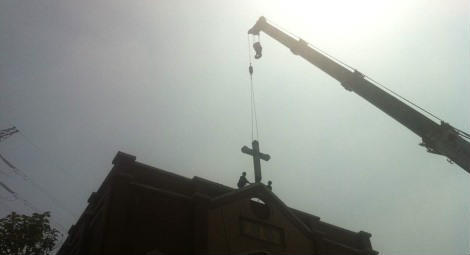
The sky scrapers and shopping malls that have become the hallmark of China’s phenomenal economic growth will still be there, but the bright red Christian crosses which were once just as much a feature of Zhejiang have been taken down.

Removal of crosses in Zhejiang Province

Hundreds of crosses have been removed by the authorities since early 2014, as part of a campaign allegedly introduced to rid the province of structures which violate building regulations. Under draft regulations, crosses now have to be flat against outer walls, and their size and colour are restricted. The authorities have sometimes employed violent tactics in the face of protests by church members. Christian leaders who have opposed the cross removals through letters or peaceful gatherings have been arrested and accused of economic crimes.

It may be no coincidence that the site of the cross removal campaign is the same province selected to host the G20.
Continue reading “In the Lead up to the G20 Summit, Questions Must be Asked About the Direction China is Taking.”

The Lawyers That Were Left

It has been a year since over 300 human rights lawyers, activists, as well as those connected to them (including their friends and family), were detained by the Chinese government. That’s equivalent to one person harassed or disappeared every day since last July. Some of these lawyers have since vanished into China’s prison system. Others were released, but have lived with the threat of re-arrest hanging over them ever since.

Continue reading “The Lawyers That Were Left”

The Power of Personal Testimony: A Mexican Delegation Visits Congress

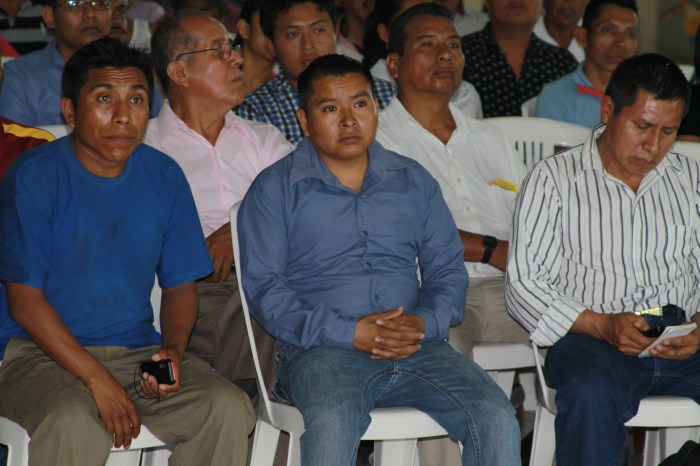
Casto Hernandez Hernandez and Fidel Lopez Hernandez are from indigenous ethnic groups in Mexico, speak Spanish as second language and live in remote, subsistence farming communities. Both were forcibly displaced because of their religious beliefs. This year, they made an unprecedented trip to Washington DC, facilitated by CSW, to give their testimony to Congress in person – the first time victims of similar offences from Mexico have done so.

Their stories are depressingly similar. Fidel Lopez Hernandez was one of a group of 47 protestant Christians violently expelled from their village by the Roman Catholic majority in July 2012. In March 2015 the group were able to return to their homes and only then under an agreement which included a fine of 10,000 pesos per family (equivalent to 530 US dollars). Additionally, in their absence, the villagers had used their homes as rubbish dumps and the government did not follow through with promised funds to restore their houses.*

Casto’s case will be familiar to regular readers of this blog; read more about him here and here. Casto and his cousin were illegally arrested in their town in Hidalgo State in March 2015 by the local authorities and held for 30 hours with no water, food or access to sanitary facilities in an effort to pressure them to renounce their faith. Although an agreement established by the Hidalgo State Public Ministry allowed the men to return home in February 2016, they, like Fidel, are still subject to illegal restrictions on their right to freedom of religion or belief (FoRB) in their hometown.

Continue reading “The Power of Personal Testimony: A Mexican Delegation Visits Congress”

In China, the Cross is Once Again a Symbol of Dissent

Saturday 4 June will mark 27 years since the Tiananmen Square Massacre, also referred to as the Tiananmen Square Protests, or simply the June Fourth Incident. On 3 June 1989, Chinese army tanks rolled into Beijing’s famous square and began to fire at unarmed protesters who had been camping out there for weeks to call for democratic reform. Students, workers and bystanders were shot down by their own “people’s army”, at the command of their country’s leaders. Estimates of the number of people killed range from hundreds to several thousand. More deaths followed as workers were tried and executed for their part in the protests.

Tiananmen as a turning point

The protesters were not calling explicitly for the right to freedom of religion or belief. Yet the massacre had a significant impact on some of the most prominent defenders of religious freedom in China today. A disproportionate number of human rights lawyers in China are Christian, and many veteran lawyers say that June Fourth had a profound effect on their personal journey towards both the Christian faith and the defence of human rights. Christian activists living outside China, and influential pastors inside, also refer to 1989 as a personal turning point. The intervening 27 years have seen rapid growth in the Protestant church; as some space opened up for religious activities, the church grew in leaps and bounds both in terms of size and visibility. Part of the reason was a rising curiosity among the urban young, not only about Christianity but about religion, belief and spirituality more broadly. Religion has also played an important and visible role in charity work and in some cases addressing social injustices.

Continue reading “In China, the Cross is Once Again a Symbol of Dissent”

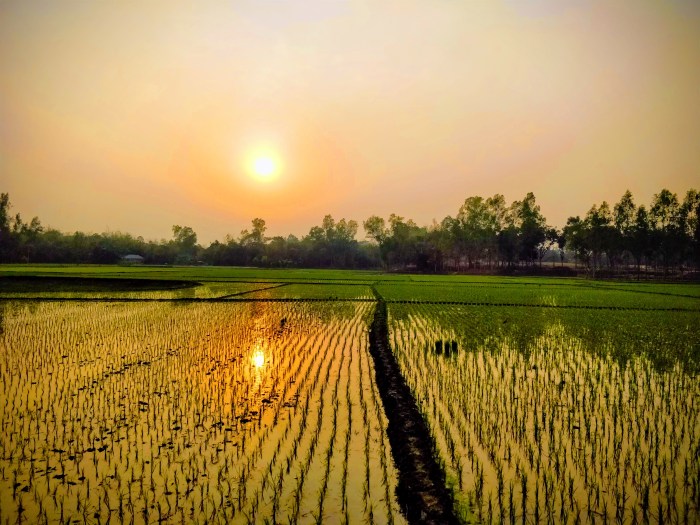
Dare I speak? Defending freedoms in Bangladesh

The voices of extremism and violence infiltrating Bangladesh’s society have delivered a clear and frightening message: independent expressions on religious issues will not be tolerated.

A pattern of appalling attacks that began in 2013 and took the lives of four secular bloggers in 2015 shocked the nation and caught the attention of international media. The stream of violence reflects a forceful assault on freedom of religion or belief and freedom of expression, theoretically enshrined in Bangladesh’s secular constitution and ratified international conventions.

The need for a clear counter-narrative to fundamentalism

If the values of a secular democracy are to be protected, fundamentalism must be met with a positive counter narrative from governing authorities. Unfortunately, in Bangladesh, neither political leaders nor members of the police force have succeeded in articulating a message of tolerance safeguarding the human rights and freedoms of its citizens.

On 8 August 2015, Niloy Chatterjee was the fourth blogger to be brutally murdered that year following the killings of Avijit Roy on 27 February 2015, Washiqur Rahman Babu on 30 March 2015 and Ananta Bijoy Das on 12 May 2015.

Continue reading “Dare I speak? Defending freedoms in Bangladesh”