Remembering Kandhamal: a legacy of institutional failure

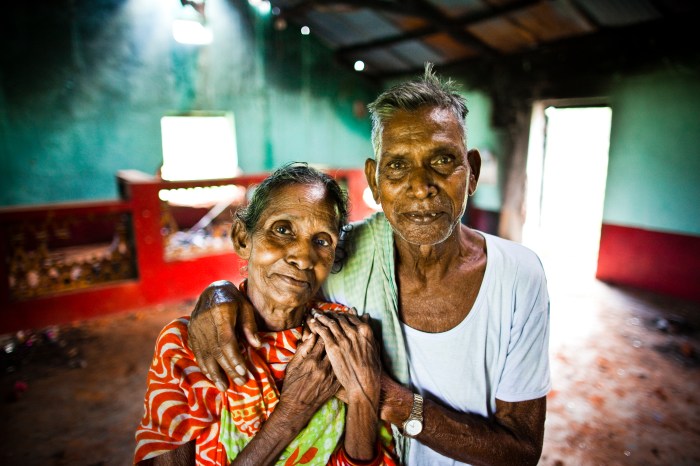
Featured image: Minasi (75) and his wife Sartabati (68) have seen their church in Mukundipur village attacked on five occasions, in 1966, 1975, 1998, 2007 and 2008. They said they did not think they could cope with another attack. Gajapati District, Orissa. Marcus Perkins/CSW 2009.

25 August 2016 is the eighth anniversary of India’s worst instance of communal violence against Christians. Many of the victim-survivors in Kandhamal, Odisha State, continue to wait for justice.

It is estimated that over 90 people were killed, 600 villages ransacked and 5,600 houses looted and burned in the 2008 attack. Approximately 54,000 people were left homeless, while 295 churches and places of worship were destroyed. Furthermore, an estimated 13 schools, colleges and philanthropic institutions for the sick were looted and burned. Approximately 2,000 Christians were forced to renounce their faith during the violence and 10,000 children were robbed of their education.

At every stage, the response of government, law enforcement and the criminal justice system to this tragedy has been woefully inadequate, undermining justice for the victim-survivors.
Continue reading “Remembering Kandhamal: a legacy of institutional failure”

Interview with a Sri Lankan Human Rights Advocate – Part 1

Patterns of discrimination against religious minorities

CSW spoke to a human rights advocate in Sri Lanka whose identity for security reasons has been withheld. This post has been edited for clarity.

Q: Could you comment on religious extremism in Sri Lanka?

A: A recent surge of religious extremism in Sri Lanka began sometime in 2012 during the tenure of the previous government, with the emergence of extremist groups such as Bodu Bala Sena (Buddhist Force Army), or the Sinhala Ravaya, or Hela Bodu Pawura. These groups emerged after the ethnic war, which ended in May 2009. These extremist groups led violent attacks against religious minorities. Most violent attacks were led with impunity and tacit approval. The judiciary was also very much biased.

For example, there was one particular case that was filed against the General Secretary of the Bodu Bala Sena. There was video-document evidence submitted in the High Court of Colombo in that particular case. Even after video evidence was submitted, the General Secretary was released, and the case came to a settlement. The video evidence was not taken into consideration by the court – and this is the High Court of Colombo. That was [how] the situation used to be in Sri Lanka. These Buddhist extremist groups also led a lot of hate campaigns, against Muslim minorities as well. They also used the media as a tool to lead these hate campaigns. And even when they led violent attacks, they also used media to portrayed a biased attitude of the minority victim who actually got attacked rather than the perpetrators themselves.

Continue reading “Interview with a Sri Lankan Human Rights Advocate – Part 1”

Interview with a Sri Lankan Human Rights Advocate – Part 2

Part 2: Circular 2008

CSW spoke to a human rights advocate in Sri Lanka whose identity for security reasons has been withheld. This post has been edited for clarity.

Q: Would you be able to share with us what groups like yours – and other civil society organisations based in Sri Lanka – are doing at the moment to address freedom of religion or belief (FoRB) violations?

A: There are various strategies. One of the core things that we do is to document incidents. We do a lot of advocacy at a local level by meeting government officials and ministers. We also lobby with some of our international partners as well. We file cases on behalf of victims who are religious minorities, and we take up different legal interventions. For example, when there is an attack, we will not file a case immediately but we try first to send out legal letters; working with the national police commission, working with the relevant ministries, and so on. If that does not work out, then of course we will file a case against the authorities in the Supreme Court.

In most instances, we support cases that have been filed against Christians. We also do a lot of other projects where we work on broader human rights issues and we form local networks with community leaders, with pastors. We have consultation processes with them, we train them, we have advocacy seminars – making them aware of their legal rights and teaching them good practices. We also work with the media and journalists, bringing together journalists and the media on good reporting for religious violence.

Q: What can international organisations do to echo the concerns you’ve identified?

Continue reading “Interview with a Sri Lankan Human Rights Advocate – Part 2”

Dare I speak? Defending freedoms in Bangladesh

The voices of extremism and violence infiltrating Bangladesh’s society have delivered a clear and frightening message: independent expressions on religious issues will not be tolerated.

A pattern of appalling attacks that began in 2013 and took the lives of four secular bloggers in 2015 shocked the nation and caught the attention of international media. The stream of violence reflects a forceful assault on freedom of religion or belief and freedom of expression, theoretically enshrined in Bangladesh’s secular constitution and ratified international conventions.

The need for a clear counter-narrative to fundamentalism

If the values of a secular democracy are to be protected, fundamentalism must be met with a positive counter narrative from governing authorities. Unfortunately, in Bangladesh, neither political leaders nor members of the police force have succeeded in articulating a message of tolerance safeguarding the human rights and freedoms of its citizens.

On 8 August 2015, Niloy Chatterjee was the fourth blogger to be brutally murdered that year following the killings of Avijit Roy on 27 February 2015, Washiqur Rahman Babu on 30 March 2015 and Ananta Bijoy Das on 12 May 2015.

Continue reading “Dare I speak? Defending freedoms in Bangladesh”

Youhanabad: This Is Our Land, This Is Our Spirit

For 65 years we have tolerated aggression against us so something must have drastically gone wrong that day for that to happen.’

Walking into Youhanabad on the outskirts of Lahore you notice the busyness of life; children playing, street vendors selling fruit and delicious fried snacks and motorbikes and scooters whizzing pass. Two years ago that the scene was transformed – chaos, carnage and confusion ensued on the morning of Sunday 15th March in 2015 when two suicide bombers approached Christ Church and St John’s Catholic Church and blew themselves up killing 15 and injuring around 70 people. After the bombing a mob was instigated, protest turned into violence and violence resulted in two people being lynched.

‘Within a few minutes victims became aggressors’

Continue reading “Youhanabad: This Is Our Land, This Is Our Spirit”