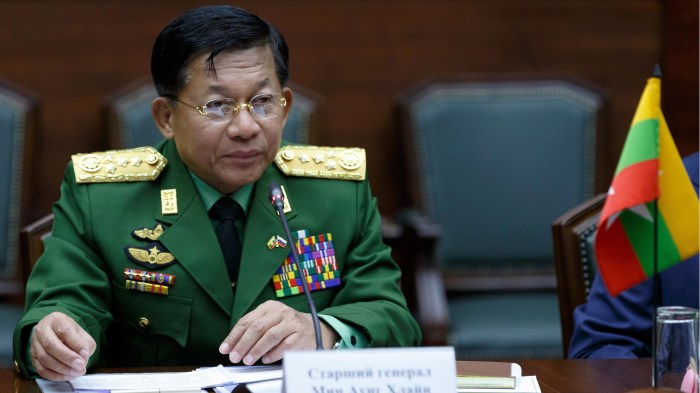
The inevitable result of Myanmar’s sham elections must not confer any legitimacy on its military regime 

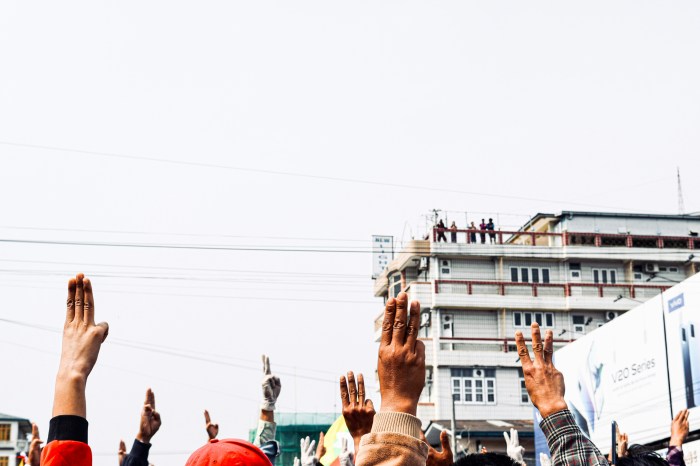
On 28 December Myanmar will begin its first general elections since its military junta seized power in a coup in February 2021. 

Of course, these elections will be neither free nor fair. They will take place against a backdrop of the continued detention of at least 22,000 political prisoners, including the country’s last freely elected leader Aung San Suu Kyi, the deregistration of numerous political parties by the military-controlled Union Election Commission (UEC), and the relentless killing of civilians. 

The outcome is guaranteed, but this can by no means be permitted to grant the regime a veneer of legitimacy on the international stage, and specifically among its neighbours in the Association of Southeast Asian Nations (ASEAN) where it seeks it most. 

Continue reading “The inevitable result of Myanmar’s sham elections must not confer any legitimacy on its military regime “

A change in government in Venezuela can only benefit the religious sector

Over the past 11 years of President Nicolas Maduro’s leadership, Venezuelan religious leaders have increasingly practiced a form of self-censorship when it comes to preaching or speaking on topics like social justice, peace, poverty, or any topic that might be perceived negatively by the dictatorship. While they may appear to have imposed this censorship on themselves, it comes from a very real fear having witnessed the cruelty that President Maduro has unleashed against those he and his regime identify as political enemies.

Elections are due to be held on Sunday, 28 July. In the run up, the Maduro regime has dedicated itself to attacking the opposition and creating an environment of terror with warnings of a ‘bloodbath’ and ‘civil war’ if Maduro does not win a third six-year term. It has been heavily implied that he could refuse to recognize the victory of Edmundo González Urrutia, the most popular candidate according to several polls.

In response to Maduro’s threats, the Inter-American Court of Human Rights (IACHR) warned that ‘this type of discourse by the highest authority of the State and the security forces has the effect of intimidating and curtailing the political freedom of the electorate… These actions affect democratic institutions and the freedoms of association, assembly, and expression, as they discourage the political participation of opposition individuals, their electorate, and the general public.’

Continue reading “A change in government in Venezuela can only benefit the religious sector”

Un Cambio de Gobierno en Venezuela podría beneficiar al sector religioso

Durante los últimos 11 años de liderazgo del presidente Nicolás Maduro, los líderes religiosos venezolanos han practicado cada vez más una forma de autocensura en sus predicaciones o discursos sobre temas como la justicia social, la paz, la pobreza, o cualquier tema que pueda ser percibido negativamente por la dictadura. Aunque puede parecer que se han impuesto esta censura a sí mismos, proviene de un temor muy real al haber presenciado la crueldad que el presidente Maduro ha desatado contra aquellos que él y su régimen identifican como enemigos políticos.

Las elecciones se celebrarán el domingo 28 de julio. En el período previo, el régimen de Maduro se ha dedicado a atacar a la oposición y a crear un ambiente de terror con advertencias de un “baño de sangre” y “guerra civil” si Maduro no gana un tercer mandato de seis años. Se ha insinuado fuertemente que podría negarse a reconocer la victoria de Edmundo González Urrutia, el candidato más popular según varias encuestas.

En respuesta a las amenazas de Maduro, la Corte Interamericana de Derechos Humanos (CIDH) advirtió que “este tipo de discurso por parte de la máxima autoridad del Estado y las fuerzas de seguridad tiene el efecto de intimidar y coartar la libertad política del electorado… Estas acciones afectan las instituciones democráticas y las libertades de asociación, reunión y expresión, ya que desalientan la participación política de las personas opositoras, de su electorado y de la ciudadanía en general.”

Continue reading “Un Cambio de Gobierno en Venezuela podría beneficiar al sector religioso”

Freedom of religion or belief and the UK general election: what do the manifestos say?

Around the world, hundreds of thousands of people face discrimination, marginalisation, harassment, intimidation, violence and even persecution for their religion or belief.  At the same time, in the policy circles of many countries, freedom of religion or belief (FoRB) is increasingly gaining prominence and being recognised as inextricably connected with wider human rights initiatives.

As the political parties in the UK release their manifestos for the July 2024 General Election, it is essential they take into account the current status of FoRB in the foreign policy landscape. This is a tricky landscape to navigate.

Foreign policy is not typically a hot electoral issue, and of course much depends on the internal and external political situations, among other considerations. Yet it is essential for parties to formulate a position on effectiveness in this field, for both ethical and practical reasons. The former lies in the responsibility of a modern democracy to have a principled approach to the world; the ethical responsibility inherent in working for the welfare of others who are less fortunate. The latter dictates that international relations and trade are best conducted with partners who respect human rights and are intolerant of any kind of inhumanity.

Continue reading “Freedom of religion or belief and the UK general election: what do the manifestos say?”

La démocratie européenne est-elle assez mûre pour aborder la question de la liberté de religion ou de conviction? 

Si la situation des populations d’autres pays est trop rarement un enjeu électoral prioritaire, une certaine politisation de la question du respect des droits humains est néanmoins fréquente. Pour un défenseur de la liberté de religion ou de conviction, l’engagement politique des partis politiques pour ce droit, lorsqu’il est fait correctement et de manière appropriée, est certainement une bonne chose. Dans le meilleur des cas, cet engagement peut attirer l’attention du public sur les injustices souvent graves, commises à l’étranger et représenter une plate-forme politique solide pour débattre de la façon dont ces questions seront traitées après les élections. Mais, dans le pire des cas, ces mêmes questions peuvent devenir l’objet de manœuvres politiques ou de tactiques électorales souvent marquées par un manque de sincérité, de nuance, voire, de bonne volonté élémentaire. 

Autant les conservateurs que les progressistes sont pris en défaut sur ce sujet. Cet article résume certaines des actions passées, bonnes et mauvaises, des deux blocs politiques. Il vise à la fois à sensibiliser les électeurs aux tractations qui se déroulent dans les coulisses des QG des partis mais aussi, à attirer l’attention de ceux qui sont directement impliqués dans la campagne, en les invitant à réfléchir de manière plus critique et constructive à leur approche. 

Malheureusement, il semblerait que la démocratie européenne ne soit pas encore assez mûre pour distinguer la « religion » du « droit humain à la liberté de religion ou de conviction » ici dénommé FoRB.1 Pour preuve, il n’y a qu’à constater le manque de qualité du travail récent des différents partis politiques sur ce droit fondamental au niveau européen. Même si la promotion d’une « religion » et la promotion de la « liberté de religion » constituent des sujets clairement différents, politiquement, ils sont trop souvent confondus et mélangés. Rares sont les conservateurs qui n’utilisent pas, à mauvais escient, la promotion de FoRB comme cheval de Troie pour les questions religieuses conservatrices; de même que les progressistes, dans leur grande majorité, choisissent tout simplement de ne pas s’engager sur FoRB, parce qu’ils estiment qu’il est plus facile de laisser ce sujet aux partis politiques de droite. 

Continue reading “La démocratie européenne est-elle assez mûre pour aborder la question de la liberté de religion ou de conviction? “