Uncertainty for Religious Minorities as Nepal Celebrates First Anniversary of its Constitution.

Notes to Editors: The eight Christians in Charikot, eastern Nepal were acquitted of all charges on 6 December 2016


“For the last two years we have been unsure about how long the doors will be open for us to practise our faith freely. We were not expecting this level of harassment”. Tanka Subedi, Christian leader and human rights defender, Kathmandu, Nepal

On 21 September, eight Christians in Charikot, eastern Nepal will attend their next (and possibly final) court hearing – one day after Nepal marks the first anniversary of the promulgation of its long awaited constitution. They all face charges of attempting to convert children to Christianity through the distribution of a comic book which explains the story of Jesus.
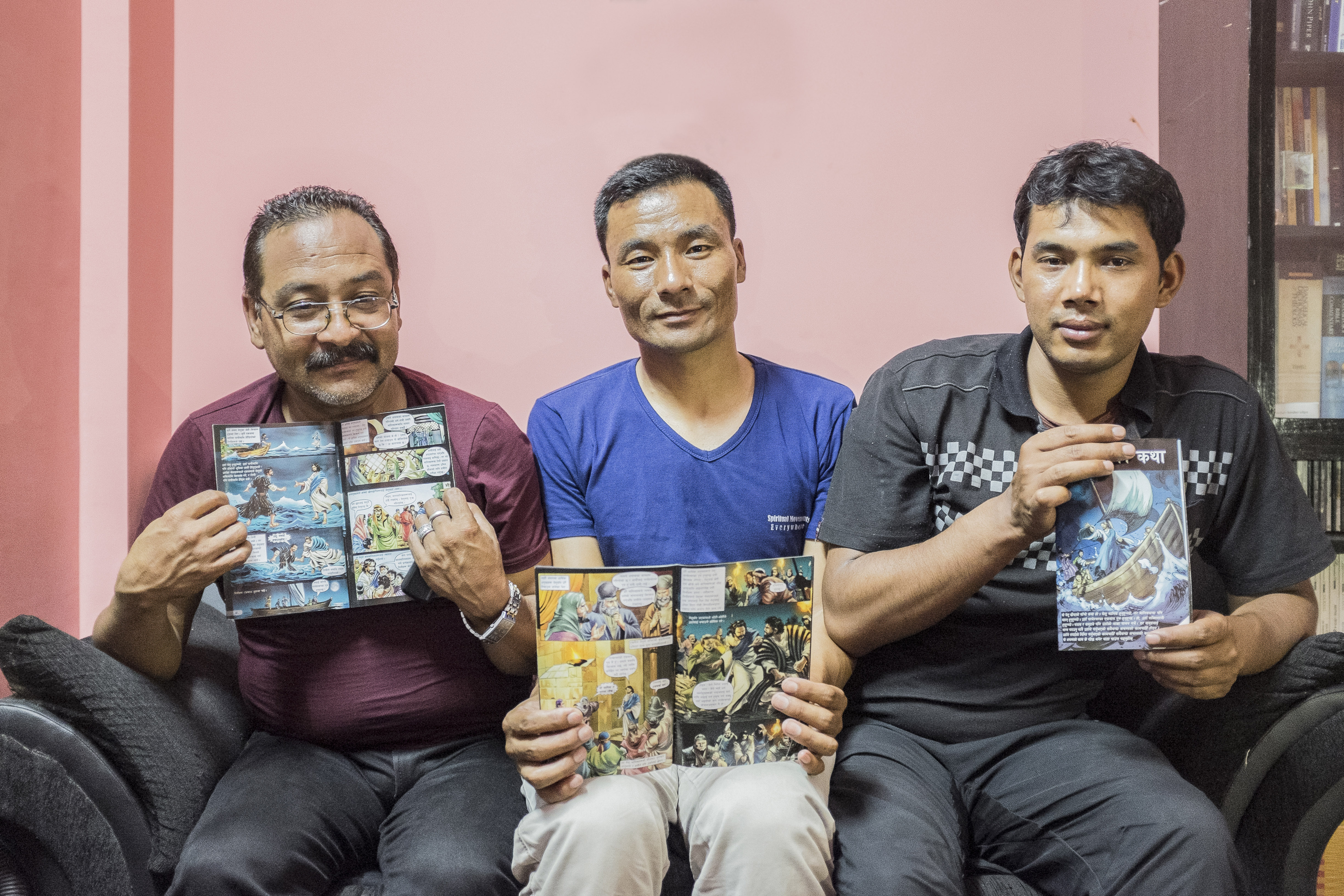
Bimal Shahi, Prakash Pradhan and Shakti Pakhrin of the Charikot group spent together 9 days in jail accused of illegal conversation because of the distribution of a small pamphlet "The Great story" with the story of Jesus explained for children
Bimal Shahi, Prakash Pradhan and Shakti Pakhrin from Charikot holding copies of “The Great Story”comic book. Photo Credit: Giulio Paletta/CSW 2016, Nepal

The arrests took place in June 2016, following two trauma counselling sessions organised by Teach Nepal, a Kathmandu-based non-governmental organisation (NGO). The sessions sought to address the psychological needs of children affected by the earthquakes that hit Nepal in April 2015 and were held on 8 and 9 June in two schools in Charikot: Modern Nepal School and Mount Valley Academy. When they finished, the organisers distributed a small gift pack to the children, which included a handkerchief and a 23-page comic book entitled The Great Story.

Continue reading “Uncertainty for Religious Minorities as Nepal Celebrates First Anniversary of its Constitution.”
Remembering Kandhamal: a legacy of institutional failure

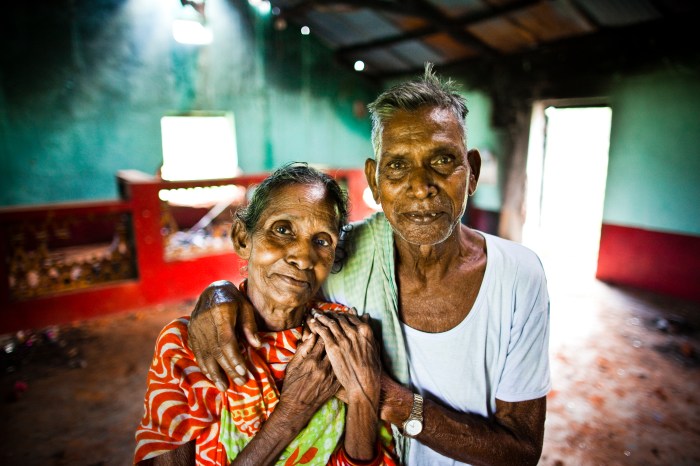
Featured image: Minasi (75) and his wife Sartabati (68) have seen their church in Mukundipur village attacked on five occasions, in 1966, 1975, 1998, 2007 and 2008. They said they did not think they could cope with another attack. Gajapati District, Orissa. Marcus Perkins/CSW 2009.

25 August 2016 is the eighth anniversary of India’s worst instance of communal violence against Christians. Many of the victim-survivors in Kandhamal, Odisha State, continue to wait for justice.

It is estimated that over 90 people were killed, 600 villages ransacked and 5,600 houses looted and burned in the 2008 attack. Approximately 54,000 people were left homeless, while 295 churches and places of worship were destroyed. Furthermore, an estimated 13 schools, colleges and philanthropic institutions for the sick were looted and burned. Approximately 2,000 Christians were forced to renounce their faith during the violence and 10,000 children were robbed of their education.

At every stage, the response of government, law enforcement and the criminal justice system to this tragedy has been woefully inadequate, undermining justice for the victim-survivors.

Continue reading “Remembering Kandhamal: a legacy of institutional failure”

A ‘New’ India? From a Secular to a Hindu Nation.

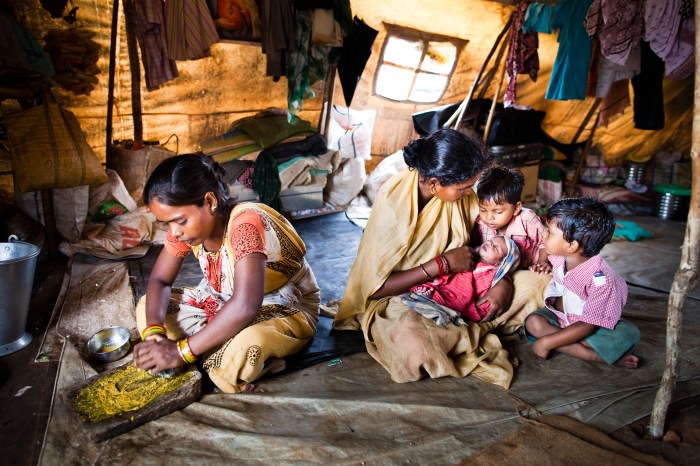
Featured Image: These women and their families are among several who share a single tent in a displacement camp housing 45 Catholic families. These families had been accommodated in five separate places since being displaced by the communal violence in August 2008. Kandhamal District, Orissa. Marcus Perkins/CSW 2009.

Rising religious intolerance is increasingly visible; be it from ghar wapis (Hindu home coming ceremonies) of religious minorities to the open incitement of hate against Muslims and Christians by senior government officials; from mob lynchings over beef consumption to attacks on places of worship; and from the distortion of historical facts in text books to the murder of renowned rationalists such as Narendra Dabholkar, Govind Pansare and M. M. Kalburgi, who questioned certain Hindu practices in their writings.

The debate about the religious intolerance sweeping India is mainstream and has drawn international news coverage as India’s distinguished scientists, rationalists, actors, academics, and historians have voiced their concerns. Some have even returned their national awards in protest, including scientists, who unlike artists are not routinely engaged in public cultural critique and protest.

A Historically Secular State

One year after the Universal Declaration on Human Rights was adopted by the United Nations General Assembly, declaring in its preamble the universality of the innate nature of human dignity, the Constitution of India was written in 1949.

The founding fathers envisioned an India where freedom of conscience would be respected by all citizens and that every Indian would live freely and without fear according to their conscience, exercising the choice to adhere to a religion or not.

The Constitution in its 42nd amendment established India as a secular state. In India, religion was intended to be kept separate from the body politic, although today the reality on the ground is starkly different as communal and religious politics are being used to polarise society.

The influence of Hindutva nationalist ideology

At the centre of this polarisation is the Hindutva ideology, which was coined by V.D Savarkar, a Hindu nationalist leader who propagated an exclusionary political ideology and promoted religious nationalism of “majoritarianism”. The aim: to make India a Hindu ‘rasthra’ (nation).

Continue reading “A ‘New’ India? From a Secular to a Hindu Nation.”