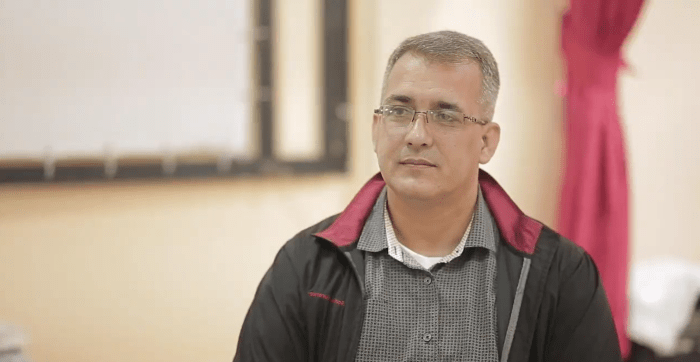
Cuban independent journalist Yoel Suárez with his wife and son.

Into Exile: Yoel Suárez

It is believed that more than 300,000 people have fled Cuba since nationwide protests swept the country on 11 July 2021. Many of them are religious leaders, journalists, human rights defenders and others who were given no choice but to leave the island under intense pressure from the Cuban government. CSW’s Into Exile series tells some of their stories.

Yoel Suárez is an independent journalist who has written extensively about human rights and freedom of religion or belief issues in Cuba. He has worked with non-state media outlets on the island since 2014.

Unsurprisingly, his work has provoked the regular ire of the Cuban government, which has subjected Mr Suárez and his family to years of harassment, fines, travel bans and threats, including the threat of the government taking custody of his young son.

Continue reading “Into Exile: Yoel Suárez”
Cuban independent journalist Yoel Suárez with his wife and son.

Al Exilio: Yoel Suárez

Se cree que más de 300.000 personas han huido de Cuba desde que las protestas a nivel nacional arrasaron el país el 11 de julio de 2021. Muchos de ellos son líderes religiosos, periodistas, defensores de los derechos humanos y otras personas que no tuvieron más opción que abandonar la isla bajo la intensa presión de el gobierno cubano. La serie Al Exilio de CSW cuenta algunas de sus historias.

Yoel Suárez es un periodista independiente que ha escrito extensamente sobre temas de derechos humanos y libertad de religión o creencias en Cuba. Ha trabajado con medios de comunicación no estatales en la isla desde 2014.

Como era de esperarse, su trabajo provocó la ira habitual del gobierno cubano, que sometió al Sr. Suárez y su familia a años de hostigamiento, multas, prohibiciones de viaje y amenazas, incluida la amenaza de que el gobierno se haga cargo de la custodia de su hijo pequeño.

Continue reading “Al Exilio: Yoel Suárez”
Graffiti in Cuba.

Why are Cuba’s religious leaders going into exile?

Following the peaceful protests of 11 July 2021, many Cuban religious leaders and members of communities of faith have joined the largest ongoing wave of emigration since the start of the Cuban Revolution in 1959.

The Cuban government requires that all religious groups and associations obtain legal registration from the Ministry of Justice, but make it almost impossible for them to do so. Since the Revolution, the government has granted legal status to only a handful of groups, and has stripped some, which had a legally recognised presence on the island prior to 1959 of their legal status. As a result, the vast majority of religious groups that did not have a legal presence on the island before 1959 exist outside the law, automatically making them targets of discrimination and harassment.

Over the past two years, Cuba has sent hundreds of dissidents to prison, where for those who hold religious beliefs, their faith often is used by prison guards as a pressure point. The government regularly violates the Nelson Mandela Rules, refusing to allow political prisoners to received religious visits, possess religious materials or participate in religious services inside the prisons. Political prisoners’ religious faith is regularly, publicly ridiculed. Among the growing number of political prisoners are leaders of unregistered religious groups.

Continue reading “Why are Cuba’s religious leaders going into exile?”
Graffiti in Cuba.

¿Por qué los líderes religiosos de Cuba escapan al exilio?

Tras las protestas pacíficas del 11 de julio de 2021, muchos líderes religiosos cubanos y miembros de comunidades de fe se han unido a la mayor ola de emigración en curso, desde el comienzo de la Revolución Cubana en 1959.

El gobierno cubano exige que todos los grupos y asociaciones religiosas obtengan el registro legal del Ministerio de Justicia, pero este organizmo les hace casi imposible obtener dicho registro. Desde la Revolución, el gobierno ha otorgado estatus legal a solo un puñado de grupos, y ha despojado de su estatus legal a algunos que tenían una presencia legalmente reconocida en la isla antes de 1959. Como resultado, la gran mayoría de los grupos religiosos que no tenían presencia legal en la isla antes de 1959 existen al margen de la ley, lo que los convierte automáticamente en objeto de discriminación y hostigamiento.

En los últimos dos años, Cuba ha enviado a cientos de disidentes a prisión, donde los guardias a menudo utilizan su fe como punto de presión para aquellos que tienen creencias religiosas. El gobierno viola regularmente las Reglas de Nelson Mandela, negándose a permitir que los presos políticos reciban visitas religiosas, posean materiales religiosos o participen en servicios religiosos dentro de las prisiones. La fe ó religión de los presos políticos es ridiculizada públicamente con regularidad. Entre el creciente número de presos políticos se encuentran líderes de grupos religiosos no registrados.

Continue reading “¿Por qué los líderes religiosos de Cuba escapan al exilio?”
Man in black and white long sleeve shirt holding red stick in Sudan.

As Sudan forms a new transitional government, the international community must not repeat its mistakes

April has become a significant month for the nation of Sudan. This year, after more than 18 months under the leadership of a military junta that seized power in October 2021, the month will hopefully see the formation of a new transitional government, and the possible dawn of a new chapter for the country.

But we have been here before. On 11 April 2019, after months of unprecedented nationwide protests, Sudan’s president of nearly 30 years, Omar al Bashir, was ousted.

It was hoped that his removal would bring an end to three decades of oppressive rule characterised by widespread violations of human rights, including of the right to freedom of religion or belief (FoRB) – and to some extent it did.

Continue reading “As Sudan forms a new transitional government, the international community must not repeat its mistakes”