Why don’t they just come here legally?

They are called illegals, migrants, aliens, refugees, immigrants, asylum seekers, invaders, displaced – each word carrying with it a subtext of who they are, what they want, and where they fit. They have been accused of bringing disease, ‘poisoning the blood’ of a nation, participating in a massive invasion that aims to bring about violent anarchy, and even eating people’s beloved pets. In this discourse each of ‘them’ rarely has a face, a name, and much less their own story (unless they do something terrible that pushes their name and face into the headlines).

The question ‘Why don’t they just come here legally?’ is asked over and over. Again, there is a subtext to that question – an implication that if ‘they’ were good people, they would seek out and follow the rules. The question also assumes that there are legal, and presumably safe, channels for those in genuine distress to request and receive asylum in a safe country, as allowed for under international law, primarily under the UN Refugee Convention. However, the reality is that even those countries that recognise and uphold the Refugee Convention, (and there are many which do not), maintain byzantine systems, set up to make it as difficult as possible for someone, especially an asylum seeker, to petition for and be granted the right to start a new life in a safe country.

The vast majority of those ‘safe’ countries require visas for individuals traveling there from much of the world. The quickest way to ensure that a visa is denied, is to respond truthfully – that the motive for travelling is to request asylum upon arrival – and when a visa is denied on those grounds, the individual is almost always put on a blacklist for future requests.

Continue reading “Why don’t they just come here legally?”
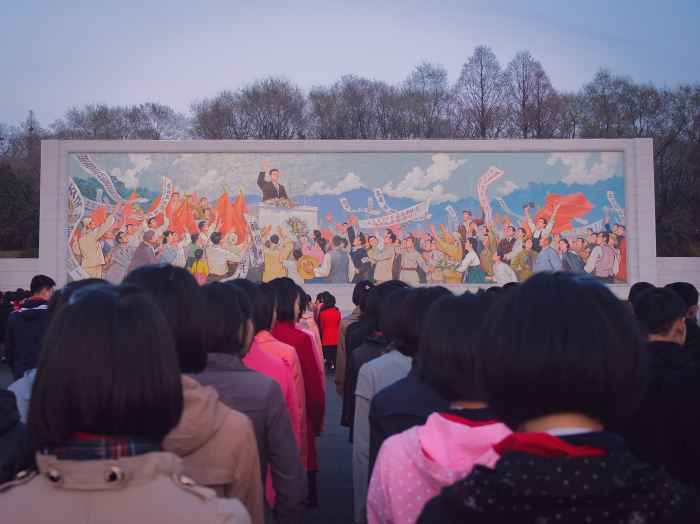
Women in front of a mural in North Korea.

Hermanas separadas por décadas: la historia de Kyu Li y Cheol-Ok

‘Todos los días la extraño, espero encontrarla. Un día la encontraré. Si es que está viva.

Kyu Li Kim no ha visto a su hermana menor Cheol-Ok desde 1997. Como muchos otros que han huido de la extrema pobreza, el hambre y las violaciones de derechos humanos en Corea del Norte, su familia ha estado separada durante décadas, con poca o ninguna idea de su paradero o siquiera saber como esta.

Kyu Li tenía sólo 20 años cuando salió de Corea del Norte. Huyó a China, donde fue vendida a un chino/coreano por 3.000 yuanes. Ella le dijo a CSW que tenía suerte de que la familia a la que la vendieron fuera amable con ella y tuviera algo de dinero, y que vivieran lejos de la frontera, lo que significaba que era menos probable que la capturaran y la devolvieran a Corea del Norte.

Continue reading “Hermanas separadas por décadas: la historia de Kyu Li y Cheol-Ok”

Living in exile: “As long as the same government is in power I do not dare to return”

Samuel1 is a Nicaraguan teacher and lawyer who was forced to flee his country in April 2019 after being repeatedly arrested in retaliation for his reporting on human rights violations committed by government forces.

For the latest instalment in our Living in exile series, CSW spoke with Samuel to hear his story.

Could you tell us a bit about yourself?

“I am a Nicaraguan citizen from the Department of Chontales. I am a teacher and a lawyer. I am currently in exile in Panama as a “Refugee in Process”, and have been since 16 April 2019 through Executive Order No. 5 for the Protection of Refugee Applicants from the Government of Panama, through the National Office for the Attention of Refugees (ONPAR).

Continue reading “Living in exile: “As long as the same government is in power I do not dare to return””

Viviendo en el exilio: “Estando el mismo gobierno no me atrevo a regresar”

Samuel1 es un profesor y abogado nicaragüense que se vio obligado a abandonar su país en abril de 2019 después de haber sido detenido repetidamente en represalia por su reportaje sobre violaciones de derechos humanos cometidas por las fuerzas gubernamentales.

Para la última entrega en nuestra serie ‘Viviendo en el exilio’, CSW habló con Samuel para aprender su historia.

¿Quién eres?

“Soy Nicaragüense del Departamento de Chontales. Soy pedagogo y abogado. Ahora estoy en Panamá exiliado en calidad de Refugiado en Trámite, desde el 16 de abril del 2019 a través de la Orden Ejecutiva N. 5 de Protección a Solicitantes de Refugio del Gobierno de Panamá, mediante la Organismo Nacional de Protección y Atención a Refugiados (ONPAR).

Continue reading “Viviendo en el exilio: “Estando el mismo gobierno no me atrevo a regresar””

Living in exile: “I am not less than any other human. I just want to be heard and seen”

Ali* is an Iranian Christian convert who was reported to the police after some of those close to him discovered he had changed his religion. In 2015 he fled to Cuba via Armenia because it was the easiest place for him to get a visa as an Iranian.

Ali hoped to be resettled quickly in an anglophone country because of his fluency in English. He has been recognized as a refugee by the UNHCR and is in the resettlement process, but this has been slowed significantly because of political issues and the COVID-19 pandemic. CSW spoke with Ali who told us of his experiences of living in exile.

Could you tell us a bit about yourself?

“I’m a young Iranian Christian citizen who has been stuck in long and exhausting limbo against my will for more than half a decade in Cuba. I’m a refugee, away from all the loved ones and abandoned in a foreign land with no sense of ‘belonging.’ I’m a university graduate with an impressive background in sales and business management that has been achieved with dedication and hard work at international companies in my country.

Continue reading “Living in exile: “I am not less than any other human. I just want to be heard and seen””