Five years is too long: the Nigerian government must deliver on its promises to secure the release of Leah Sharibu

Leah Sharibu has been the hostage of terrorists for five years now.

She was just 14 years old when she was taken – the sole Christian among a group of 110 schoolgirls abducted from their school in Dapchi, Nigeria, by members of the Islamic State West Africa Province in February 2018.

Those familiar with her case will recall that just one month later all of Leah’s surviving classmates – five died in transit – were loaded onto trucks and returned to their families following negotiations by the government. But Leah was not among them.

The terrorists told her they would only release her if she renounced her faith and converted to Islam in exchange for her freedom. At just 14 years of age, Leah refused to give in to their pressure.

Continue reading “Five years is too long: the Nigerian government must deliver on its promises to secure the release of Leah Sharibu”
Assorted houses in Abuja, Nigeria.

“We do not sleep with our eyes closed” – how long will the international community fail the people of southern Kaduna?

“We do not sleep with our eyes closed; we take a nap, then wake up and keep watch… we are just depending on the grace of God.”

These are the words of a villager from the Maro Ward of Kajuru Local Government Area (LGA) in the southern part of Nigeria’s Kaduna state. In the absence of effective security or government assistance, this is what targeted communities across the state have been forced into: spending their days and nights on alert patrolling, living in fear of terrorists who destroy their crops, take their lives, and abduct hundreds, if not thousands, for ransom.

Kaduna has been an epicentre of violence and banditry for several years now, with attacks on non-Muslim farming communities in the south increasing exponentially with the advent of the current administration amid a general deterioration in security.

Continue reading “We do not sleep with our eyes closed” – how long will the international community fail the people of southern Kaduna?
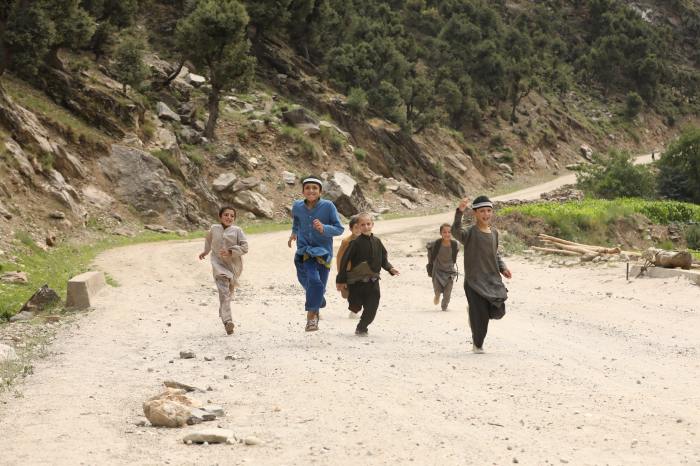
Children running on sand in Nuristan, Afghanistan.

Another terrorist attack reminds us of the Taliban’s failure to protect Afghan citizens

This piece was originally published on 14 October 2022 in Sight Magazine.

This time last year saw two shocking attacks on Afghanistan’s Shia Muslim community. First, on 8 October 2021, a suicide bomber affiliated with the Islamic State – Khorasan Province targeted a mosque in the northern city of Kunduz with an attack timed to coincide with Friday prayers which claimed at least 50 lives and injured 100 others. Some estimates placed the death toll as high as 100.

Then, exactly one week later, terrorists bombed another Shia mosque, again timed to coincide with Friday prayers, in the southern city of Kandahar. Estimates of those killed range between 47 and 65, while at least 80 others were said to have been injured.

CSW wrote at the time that the attacks “raised questions about the Taliban’s ability to offer security to citizens of Afghanistan, which they had presented as a key benefit of their rule.” And then, last month, with the anniversaries of both attacks on the horizon, the Shia community was targeted once again.

Continue reading Another terrorist attack reminds us of the Taliban’s failure to protect Afghan citizens

Understanding religious extremism in the Middle East and North Africa

Terrorism has been one of the main sources of global insecurity over the past three decades, often fuelled by sectarianism and religious extremism, as the individuals and groups responsible use religious doctrine to justify their actions.

In the Middle East and North Africa (MENA) region, the rise of political Islamist movements, which reached their zenith with the emergence of Islamic State (IS), is arguably the main cause of religiously-motivated terrorism, and is likely to remain so for a long time. In other parts of the world, however, extremism related to Christianity, Judaism, Hinduism and Buddhism has also resulted in acts of terrorism.  

While it’s clear that religiously-motivated terrorism is not confined to any one religious group, the approach to tackling this threat often focuses on one solution: security.

When it comes to understanding terrorism in the MENA region, however, there are often multiple factors at play. These include economic, theological, political and even psychosocial narratives which exploit feelings of victimhood, exclusion, and injustice to manipulate and galvanise potential recruits. Therefore a solution must also be multifaceted.

Continue reading “Understanding religious extremism in the Middle East and North Africa”

Ruth Ngladar Pogu’s release is welcome, but the man with her is not her ‘husband’

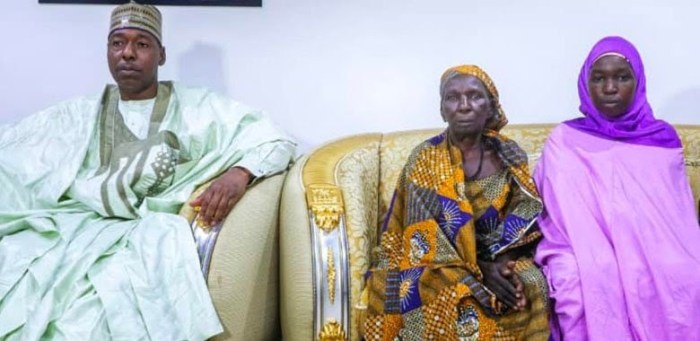
On 8 August, the state governor of Nigeria’s Borno State confirmed that Ruth Ngladar Pogu, one of around 276 girls infamously abducted from their school in Chibok, was free.

Ms Ngladar is the 108th Chibok Girl to regain some form of freedom. Several are thought to have died whilst in captivity, with an estimated 111 reported to still be in the hands of the now amalgamated terrorist group.

Ms Ngladar had reportedly surrendered herself to the military alongside one of her captors and two children she had given birth to while in captivity at the end of July, and while her freedom after over seven years is good news, the challenges that lie ahead of her and her family remain extensive.

Continue reading “Ruth Ngladar Pogu’s release is welcome, but the man with her is not her ‘husband’”