Interview with a Sri Lankan Human Rights Advocate – Part 1

Patterns of discrimination against religious minorities

CSW spoke to a human rights advocate in Sri Lanka whose identity for security reasons has been withheld. This post has been edited for clarity.

Q: Could you comment on religious extremism in Sri Lanka?

A: A recent surge of religious extremism in Sri Lanka began sometime in 2012 during the tenure of the previous government, with the emergence of extremist groups such as Bodu Bala Sena (Buddhist Force Army), or the Sinhala Ravaya, or Hela Bodu Pawura. These groups emerged after the ethnic war, which ended in May 2009. These extremist groups led violent attacks against religious minorities. Most violent attacks were led with impunity and tacit approval. The judiciary was also very much biased.

For example, there was one particular case that was filed against the General Secretary of the Bodu Bala Sena. There was video-document evidence submitted in the High Court of Colombo in that particular case. Even after video evidence was submitted, the General Secretary was released, and the case came to a settlement. The video evidence was not taken into consideration by the court – and this is the High Court of Colombo. That was [how] the situation used to be in Sri Lanka. These Buddhist extremist groups also led a lot of hate campaigns, against Muslim minorities as well. They also used the media as a tool to lead these hate campaigns. And even when they led violent attacks, they also used media to portrayed a biased attitude of the minority victim who actually got attacked rather than the perpetrators themselves.

Continue reading “Interview with a Sri Lankan Human Rights Advocate – Part 1”

Interview with a Sri Lankan Human Rights Advocate – Part 2

Part 2: Circular 2008

CSW spoke to a human rights advocate in Sri Lanka whose identity for security reasons has been withheld. This post has been edited for clarity.

Q: Would you be able to share with us what groups like yours – and other civil society organisations based in Sri Lanka – are doing at the moment to address freedom of religion or belief (FoRB) violations?

A: There are various strategies. One of the core things that we do is to document incidents. We do a lot of advocacy at a local level by meeting government officials and ministers. We also lobby with some of our international partners as well. We file cases on behalf of victims who are religious minorities, and we take up different legal interventions. For example, when there is an attack, we will not file a case immediately but we try first to send out legal letters; working with the national police commission, working with the relevant ministries, and so on. If that does not work out, then of course we will file a case against the authorities in the Supreme Court.

In most instances, we support cases that have been filed against Christians. We also do a lot of other projects where we work on broader human rights issues and we form local networks with community leaders, with pastors. We have consultation processes with them, we train them, we have advocacy seminars – making them aware of their legal rights and teaching them good practices. We also work with the media and journalists, bringing together journalists and the media on good reporting for religious violence.

Q: What can international organisations do to echo the concerns you’ve identified?

Continue reading “Interview with a Sri Lankan Human Rights Advocate – Part 2”

The Refugee Crisis: “What caused them to flee in the first place?”

On World Refugee Day, CSW explores one of the major root causes of the refugee crisis.

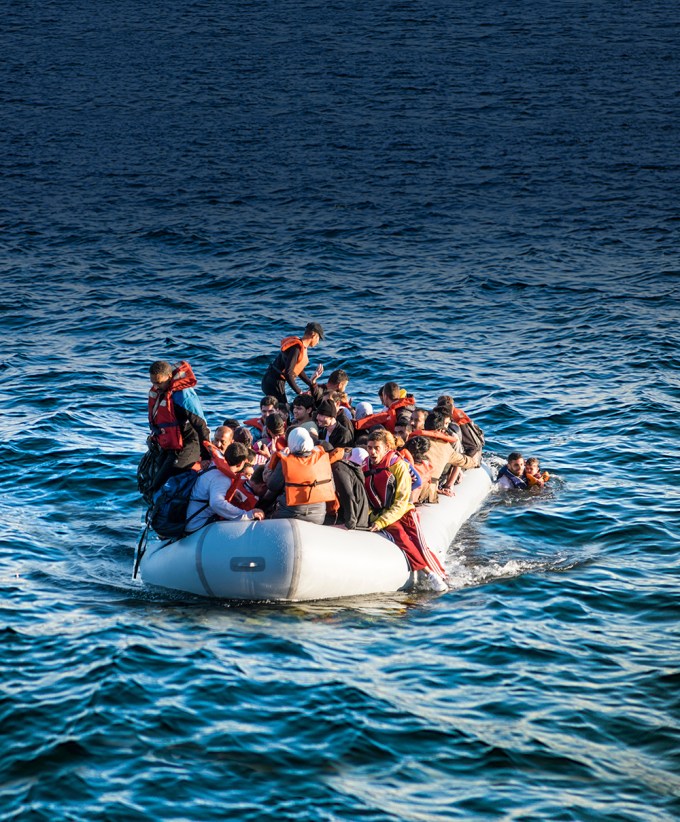
Syrian refugees cross from Turkey to land on a beach on the Greek island of Lesvos. Image shot 06/2015. Exact date unknown.
Syrian refugees cross from Turkey to land on a beach on the Greek island of Lesvos.

The current refugee crisis has become a major news story with much of the focus placed on asking, “Where will they go?”

A seeming backlash against the unprecedented influx into Europe in particular has led some to respond: “Anywhere but here”, and has unleashed what UN High Commissioner for Human Rights Zeid Ra’ad Al Hussein has termed  “widespread anti-migrant rhetoric”, which in turn has fostered “a climate of divisiveness, xenophobia and even… vigilante violence.”

Yet very few people have asked, “What caused them to flee in the first place, and how can we best address this?”

One key reason is the increase in violations of the right to freedom of religion or belief (FoRB) around the world. *Persecution and violence targeting religious communities is resulting in exceptionally high levels of population displacement, contributing to the worldwide refugee crisis.

Persecution and violence targeting religious communities is resulting in exceptionally high levels of population displacement, contributing to the worldwide refugee crisis.”

These violations often take place in societies where other human rights are being abused and in situations generally characterised by an absence of rule of law, corruption, economic disparity and authoritarian rule.

Issues of race, ethnicity, political opinion and gender usually intersect with religious persecution; consequently, religion-based asylum claims often include other grounds as well.

Religious persecution takes many forms

Continue reading “The Refugee Crisis: “What caused them to flee in the first place?””