All posts

The United States’ Board of Peace is unlikely to fix the shortcomings of the current international order

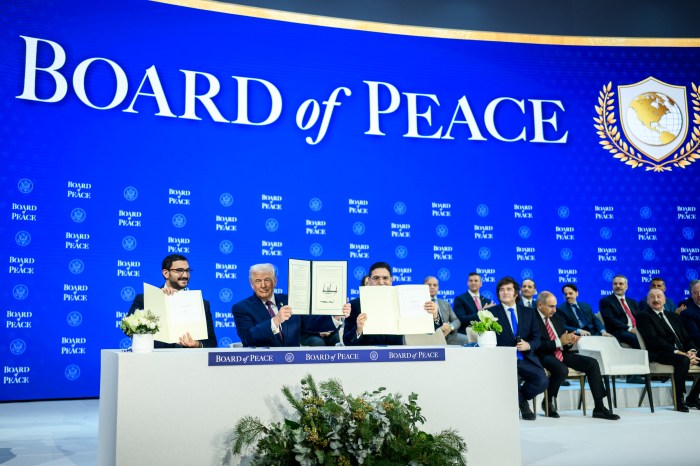
United States (US) President Donald Trump’s Board of Peace – formally established on the sidelines of the World Economic Forum in January 2026 – purports to be an intergovernmental organisation mandated to carry out peacebuilding functions under international law. However within just a few weeks of its existence multiple concerns have arisen regarding its likely impact on the international system and human rights framework, with clear implications for situations of severe crisis around the world, including Gaza and Sudan.

Firstly, despite the organisation being billed initially as a means of implementing the Gaza ceasefire plan as enshrined in UN Security Council resolution 2803, the board’s charter makes no mention of Gaza, and instead details a mandate that possibly could undermine international law, including by supplanting crucial responsibilities of the United Nations (UN), while also potentially impacting its liquidity crisis.

Citizens of almost half of the countries that have joined the board so far are impacted by US travel bans imposed by the Trump administration. The board also appears to have been created on a ‘pay for play’ basis, with no clear oversight of the organisation’s nominally voluntary membership fees, particularly the USD 1 billion fee to secure permanent membership, raising the spectre of a potential world order where access to justice and the promotion, protection and fulfilment of human rights are dependent on a nation’s wealth, its military capability, and ultimately, its standing with the US president.
Continue reading “The United States’ Board of Peace is unlikely to fix the shortcomings of the current international order”

A police attack on a place of worship is a worrying sign of the erosion of civil and political rights in Kenya

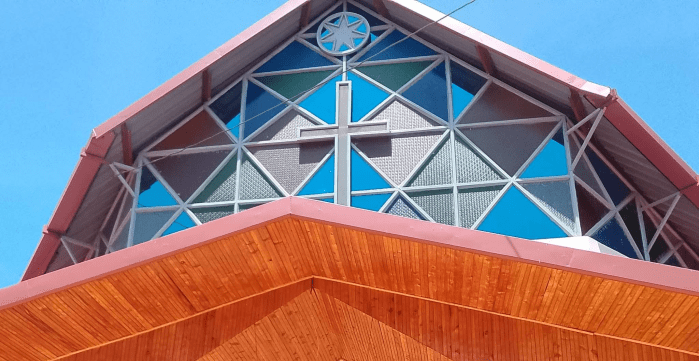
On Sunday 25 January congregants at the Anglican Church of Kenya (ACK) Witima Parish, Nyeri County, heard shots outside of the building. Some church members went outside to investigate and saw what they believed to be the police and masked assailants surrounding the premises. In addition to the firing of live rounds, teargas was thrown into the church, with images shared on social media showing congregants covering their noses and mouths, and several individuals fainting.  

Historically there has been a respect for religious institutions in Kenya, especially for Christian churches and their leadership. Political leaders have often courted the church for political advantage and sway over key voting blocks and communities. This attack contrasts starkly with this backdrop, even within the context of increasing political and security tensions that have seen an increase in police officers unlawfully invading places of worship around the country.

Responding to the 25 January attack in the press, Bishop Gerald Muriithi of the Mount Kenya West Diocese of the Anglican Church of Kenya stated: ‘As a church we feel that our right to worship was violated, little children were traumatised, aged parents were harassed, the clergy were terrified and intimidated and political leaders were harassed.’

Continue reading “A police attack on a place of worship is a worrying sign of the erosion of civil and political rights in Kenya”

‘Conscience is not the business of the state’: India’s anti-conversion legislation has turned suspicion into the default posture of the law

In today’s India, the term ‘conversion’ carries a weight far heavier than its dictionary definition. It is invoked with suspicion, folded into political rhetoric, and increasingly framed as a threat to social stability. Yet conversion, at its core, is simply a change of belief, an act that is rooted in conscience. In any democracy, this should not be controversial. It should be protected without hesitation.

As India marked 77 years as a Republic last month, the moment invites more than celebration – it calls for reflection. How did a constitutional democracy that explicitly guaranteed freedom of conscience arrive at a point where changing one’s religion is so often treated as inherently suspect?

Conversion is not a transaction. It cannot be reduced to paperwork, nor can it be meaningfully regulated by administrative oversight. It is an individual’s decision, deeply personal and shaped by experience, reflection and choice – and sometimes by profound personal transformation.

Continue reading “‘Conscience is not the business of the state’: India’s anti-conversion legislation has turned suspicion into the default posture of the law”

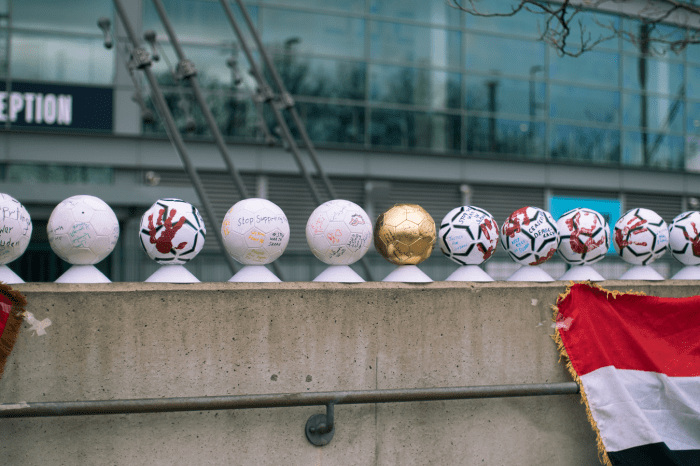
The Premier League must act on Man City owner’s involvement in the war in Sudan

In February 2021 Sheikh Mansour bin Zayed Al Nahyan, then the Deputy Prime Minister and now also the Vice President of the United Arab Emirates (UAE), received a controversial visitor. 

At the time General Mohamed Hamdan ‘Hemedti’ Dagalo was serving as Deputy Chairman of the Transitional Sovereignty Council of Sudan. He was also still the leader of the Rapid Support Forces (RSF), a group which is in reality the rebranded Janjaweed militia who were responsible for the 2003-05 Darfur genocide, and more recently, had presided over the June 2019 massacre of at least 120 pro-democracy protesters on the streets of Khartoum. 

Hemedti was already a friend to the UAE. The Emirates had reportedly paid him to send RSF fighters to Yemen as part of a Saudi-led collation to crush Houthi insurgents, in 2018. During his 2021 visit, he and Sheikh Mansour toured an arms fair, browsing exhibits of rockets and drones alongside the leader of the Chechen Republic. 

Continue reading “The Premier League must act on Man City owner’s involvement in the war in Sudan”

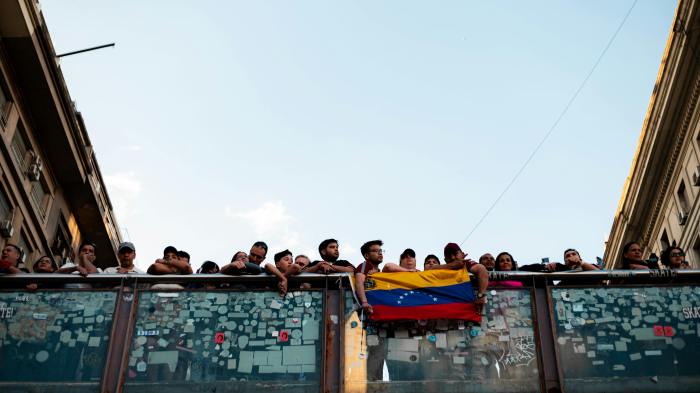
The ouster of Nicolás Maduro will bring both fresh and familiar challenges for religious leaders in Venezuela

Until 3 January 2026, Nicolás Maduro sat as the head of the Venezuelan government. He derived much, if not all, of his legitimacy because he was handpicked as successor by the late president, Hugo Chávez, with the approval of the then leader of Cuba, Raúl Castro. This superseded the normal chain of succession, under which Diosdado Cabello, as head of the National Assembly, should have assumed the presidency until elections could be held.  

At the time, speculation was rampant about possible divisions within Chávez’s inner circle, and the possibility that Cabello might make a power grab of his own. However, Cabello, and other powerful Chávez loyalists, including General Vladimir Padrino, publicly accepted Chávez’s choice, allowing Maduro to ascend to the presidency.  

The result was what has been widely, and misleadingly, referred to as ‘the Maduro Regime’, but which, in truth, is a Chavista regime – set up strategically and intentionally with a cast of key players to ensure that the Chavista party, the United Socialist Party of Venezuela (PSUV) remains in power indefinitely. Over the past 13 years, members of this cast of players have supported Maduro’s position even as they consolidated power and massive wealth for themselves.

Continue reading “The ouster of Nicolás Maduro will bring both fresh and familiar challenges for religious leaders in Venezuela”