Ten years since the abduction of the Chibok Girls, the Nigerian government must finally protect vulnerable communities

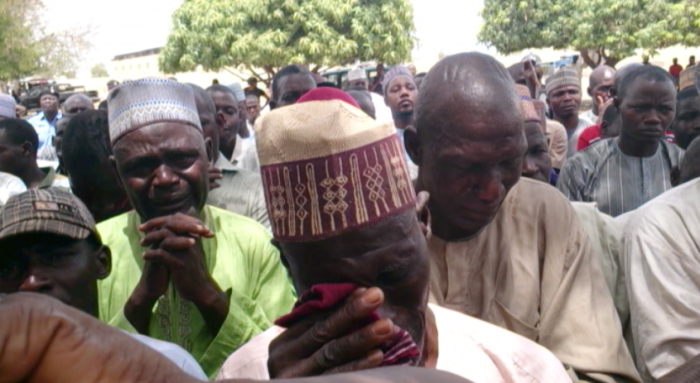
Last month, 137 families in Kuriga in Nigeria’s Kaduna State breathed a collective sigh of relief as their sons and daughters returned home after over two weeks in terrorist captivity.

The children were abducted from their school on 7 March when armed assailants descended on the premises just as classes were about to commence. The school reported that 287 students were taken; however Kaduna State Governor Uba Sani has since attempted to dismiss the figure as being a ‘figment of someone’s imagination’, despite initially citing the same number himself.

Several questions emerge from this: what is being done to confirm that all of the students have indeed been freed? What about the thousands of other individuals who have been abducted by terrorist groups in recent years? And finally, how can this still be happening a decade after mass kidnappings in Nigeria first landed on the international agenda?

Continue reading “Ten years since the abduction of the Chibok Girls, the Nigerian government must finally protect vulnerable communities”

A year of conflict in Sudan – the international community must act now

This week marks one year since war broke out between the Sudanese Armed Forces (SAF) and the Rapid Support Forces (RSF), in the culmination of tensions and contradictions that have existed between the two groups since they seized power from the transitional government in October 2021.

What has been unusual about this war is that it started in the capital, Khartoum, and spread throughout the country. Since Sudan gained independence in 1956, conflicts and even revolutions have originated outside of the capital, which has often led to the insulation of communities in the centre, and arguably the north, of Sudan from the worst ramifications of the instability. Today however, few places in the country have been spared the large-scale hostilities between the two groups, and its impact on civilians has been catastrophic.

As the conflict enters its second year, it has claimed the lives of at least 13,000 people, and more than 33,000 have been injured. With the war intensifying in populated cities, the number of internally displaced persons (IDPs) has risen to more than nine million, and the number of those facing hunger is now estimated to be as high as 20 million. In addition, there are over two million refugees, half of them Darfuri, also facing hunger. Tragically, for the second time in 20 years, there are also credible reports of atrocity crimes, with the Prosecutor of the International Criminal Court (ICC) noting that the situation now in Darfur is worse than when the Security Council referred Sudan to the court.

Continue reading “A year of conflict in Sudan – the international community must act now”

The growing cost of standing up for human rights in Nicaragua and Cuba  

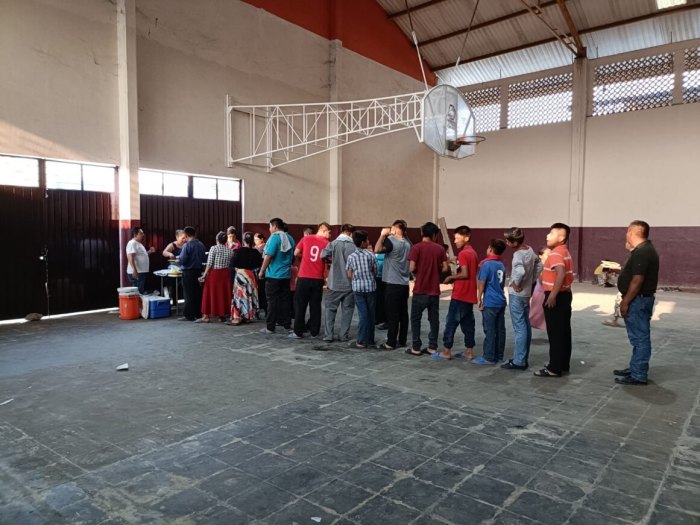
Olesia Auxiliadora Muñoz Pavon is a choir director for the Santa Ana Parish in Niquinohomo in Nicaragua’s Masaya Department. Age 52, she has been imprisoned on false charges since 6 April 2023, having previously served a sentence from August 2018 until June 2019 – also on false charges. 

Since the middle of January this year, like several others in the Women’s Holistic Penitentiary System commonly known as La Esperanza, Ms Muñoz Pavon has been denied any time outdoors where before she was allowed out once a week. 

Her crime? Praying out loud. 

Continue reading “The growing cost of standing up for human rights in Nicaragua and Cuba  “

El alto precio de defender los derechos humanos en Nicaragua y Cuba 

Olesia Auxiliadora Muñoz Pavón era la directora del coro de la Parroquia Santa Ana en Niquinohomo en el Departamento de Masaya en Nicaragua. Tiene 52 años y está encarcelada por cargos falsos desde el 6 de abril de 2023, habiendo cumplido previamente una condena desde agosto de 2018 hasta junio de 2019, también por cargos falsos. 

Desde mediados de enero de este año, como a muchos otros en el Sistema Penitenciario Integral para Mujeres comúnmente conocido como La Esperanza, a la Sra. Muñoz Pavón se le ha negado cualquier tiempo al aire libre, donde antes se le permitía salir una vez por semana. 

¿Su crimen? Orar en voz alta. 

Continue reading “El alto precio de defender los derechos humanos en Nicaragua y Cuba “

The world must honour the memory of Cao Shunli by standing up for human rights defenders in China

Ten years ago today, Cao Shunli died in a military hospital in Beijing.

A prominent human rights activist, Ms Cao fought injustice in China for over a decade prior to her passing at the age of 53. In 2002, she was fired from a government job after she raised concerns about corruption in her department. Over the next 12 years she became a vocal advocate for human rights and anti-corruption, her work often specifically focused on the mistreatment of human rights defenders and petitioners (citizens who petition authorities for the redress of their grievances) by the Chinese authorities.

As is the case for so many others like her in China, Ms Cao’s work frequently put her at odd with the Chinese Communist Party (CCP). She was regularly subjected to arbitrary detention, house arrest and enforced disappearance, and served two stints in the country’s notorious labour camps for a total of 27 months.

Continue reading “The world must honour the memory of Cao Shunli by standing up for human rights defenders in China”