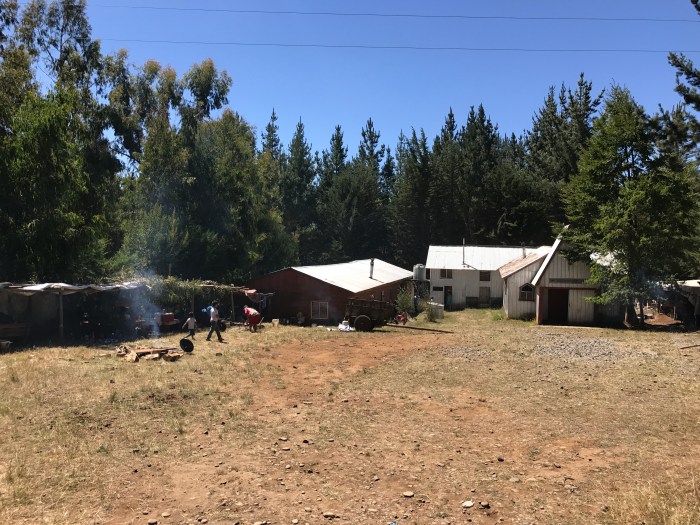
Joseph Colony in Lahore, Pakistan, which was infamously attacked in March 2013 after Sawan Masih was accused of blasphemy.

Pakistán necesita despertar a la crisis creada por la ley de blasfemia antes de que sea demasiado tarde

El mes pasado, la profanación y quema del Corán en Estocolmo, Suecia, provocó una condena mundial. Pakistán fue testigo de protestas generalizadas y calificó el acto como blasfemo y profundamente dañino para los sentimientos de la comunidad musulmana. Un grupo extremista prohibido en el país, Lashkar-e-Jhangvi, lo calificó como un ataque de cristianos contra musulmanes y pidió a sus seguidores que ataquen asentamientos cristianos y maten cristianos, al tiempo que prometen que harán de Pakistán un “infierno para los cristianos”.

La semana pasada, en la ciudad de Sargodha, en la provincia de Punjab, se encontró un cartel blasfemo cerca de una mezquita local. Esto llevó a los lugareños a reunirse en protesta y exigir que la policía encuentre a un cristiano del cercano asentamiento cristiano de Maryam Town. Desde entonces, las tensiones en el área han sido altas con una mayoría de  3.000-4.000 de familias cristianas que huyen de sus hogares debido al temor de ataques relacionados con la mafia.

Las tensiones por blasfemia ya han tenido consecuencias devastadoras en Pakistán este año. El 6 de mayo, un clérigo local de la ciudad de Mardan, provincia de Khyber Pakhtunkhwa, fue asesinado por una turba tras ser acusado de hacer una referencia blasfema durante un mitin político del partido del ex primer ministro Imran Khan. En febrero, una turba  en la ciudad de Nankana Sahib, Punjab, irrumpió en la comisaría de policía y procedió a linchar y matar a un hombre acusado de blasfemia.

Continue reading “Pakistán necesita despertar a la crisis creada por la ley de blasfemia antes de que sea demasiado tarde”
Joseph Colony in Lahore, Pakistan, which was infamously attacked in March 2013 after Sawan Masih was accused of blasphemy.

Pakistan needs to wake up to its blasphemy law crisis before it is too late

Last month, the desecration and burning of the Quran in Stockholm, Sweden sparked worldwide condemnation. Pakistan witnessed widespread protests and termed the act as blasphemous and deeply damaging to the sentiments of the Muslim community. A banned extremist group in the country, Lashkar-e-Jhangvi, labelled it as an attack by Christians on Muslims and called on their followers to attack Christian settlements and kill Christians, while further vowing that they will make Pakistan a ‘hell for Christians’.

Last week, in the city of Sargodha, in Punjab province, a blasphemous poster was found near a local mosque. It prompted locals to gather in protest and demand that the police find a Christian from the nearby Christian settlement of Maryam Town. Since then, tensions in the area have been high with most of the 3,000-4,000 Christian families fleeing their homes due to fear of a mob related attacks.

Tensions over blasphemy have already had devastating consequences in Pakistan this year. On 6 May, a local cleric in the city of Mardan, Khyber Pakhtunkhwa province, was killed by a mob after he was accused of making a blasphemous reference during a political rally of former Prime Minister Imran Khan’s party. In February a mob in the city of Nankana Sahib, Punjab, stormed the police station and proceeded to lynch and kill a man accused of blasphemy.

Continue reading “Pakistan needs to wake up to its blasphemy law crisis before it is too late”
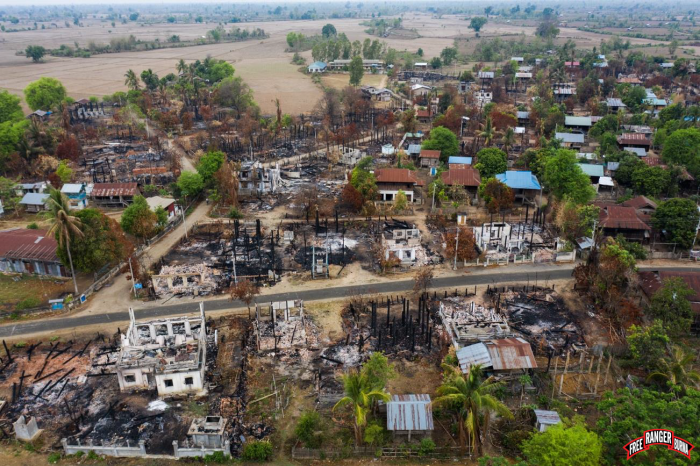
Fires in India's Manipur state.

‘We don’t know how we can restart our lives’ – stories from Manipur

‘On 3 May, around 10pm, we heard people throwing stones at our house. We didn’t understand what was happening. In the morning, we woke up and we were cooking. We saw that there was a frenzy outside. Everyone was walking out of their homes with their bags packed. They asked us why we were still at home and explained the situation. We were scared.’

Runa, Imphal

India’s Manipur State has been engulfed in violence for two and a half months now. Sparked by a protest on 3 May in which an estimated 60,000 people marched in opposition to the Manipur High Court’s request to the state government to send a recommendation to the central government to include the non-tribal Meitei community in the Scheduled Tribe (ST) category, the unrest has claimed at least 100 lives, with local sources suggesting that the death toll is significantly higher.

Thousands of homes have been burned down and tens of thousands of people have been forcibly displaced in a dispute over whether the predominantly Hindu Meitei community should be granted access to the same benefits afforded to the state’s typically more disadvantaged tribal communities.

Continue reading “‘We don’t know how we can restart our lives’ – stories from Manipur”
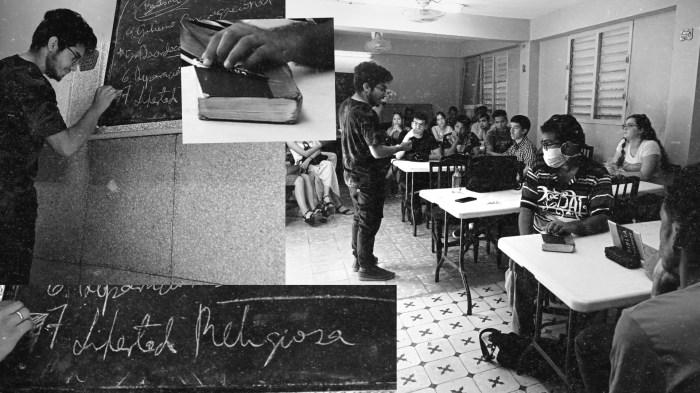
Cuban pastor Yordanys Díaz Arteaga.

Into Exile: Yordanys Díaz Arteaga 

It is believed that more than 300,000 people have fled Cuba since nationwide protests swept the country on 11 July 2021. Many of them are religious leaders, journalists, human rights defenders and others who were given no choice but to leave the island under intense pressure from the Cuban government. CSW’s Into Exile series tells some of their stories. 

Reverend Yordanys Díaz Arteaga was the pastor of Emmanuel Church, from the Reformed Christian Church of Cuba, a historic denomination with legal registration and a presence in the country since 1943. The denomination was also a member of the Cuban Council of Churches (CIC). Like most other leaders of registered religious groups in Cuba, and especially those in the CIC, Díaz and his denomination enjoyed a degree of religious freedom, provided they line cooperated with and supported the Cuban government. 

The pastor and his family began to experience harassment when the reverend began to question the motivations of his denomination for belonging to the CIC. In mid-2019 he was elected president of the denomination, much to his surprise. With the support of pastors in the denomination, he began to make various internal reforms. These were not to the liking Office of Religious Affairs of the Central Committee of the Cuban Communist Party (ORA) and soon thereafter, he received several warnings. 

Continue reading “Into Exile: Yordanys Díaz Arteaga “
Cuban pastor Yordanys Díaz Arteaga.

Al Exilio: Yordanys Díaz Arteaga 

Se cree que más de 300.000 personas han huido de Cuba desde que las protestas a nivel nacional arrasaron el país el 11 de julio de 2021. Muchos de ellos son líderes religiosos, periodistas, defensores de los derechos humanos y otras personas que no tuvieron más opción que abandonar la isla bajo la intensa presión del gobierno cubano. La serie Al Exilio de CSW cuenta algunas de sus historias. 

El Reverendo Yordanys Díaz Arteaga fue el pastor de la congregación Emmanuel, de la Iglesia Cristiana Reformada de Cuba, histórica denominación con registro legal y presencia en el país desde 1943. La denominación también fue miembro del Consejo de Iglesias de Cuba (CIC). Como la mayoría de los otros líderes de grupos religiosos registrados en Cuba, y especialmente los de la CIC, Díaz y su denominación disfrutaban de cierto grado de libertad religiosa, siempre que cooperaran y apoyaran al gobierno cubano. 

El pastor y su familia empezaron a sufrir acoso cuando el reverendo comenzó a cuestionar las motivaciones de su denominación para pertenecer a la CIC. Y para su sorpresa, a mediados de 2019 fue elegido presidente de la denominación. Con el apoyo de los pastores de su organización, comenzó a hacer varias reformas internas, que no fueron del agrado de la Oficina de Asuntos Religiosos (ORA), y muy pronto comenzó a recibir varias advertencias. 

Continue reading “Al Exilio: Yordanys Díaz Arteaga “