Vehicles carry ballistic missiles in a Victory Day parade in North Korea.

Kim Jong-Un cares more about his weapons than the people of North Korea

Last year, North Korea launched over 90 ballistic, cruise and hypersonic missiles – more than any other year in the country’s history. 

Its annual volley of weapons testing began on 5 January 2022 with the successful launch of a hypersonic missile. By 30 January, the state had conducted its biggest missile launch since 2017, and in September, it passed a law declaring itself to be a nuclear weapons state.

In November, North Korea launched an intercontinental ballistic missile into the Sea of Japan, 210km west of the island of Hokkaido. Japan’s defence minister declared that, launched at a lower trajectory, the missile had the range to hit the US mainland carrying nuclear warheads.

Continue reading “Kim Jong-Un cares more about his weapons than the people of North Korea”
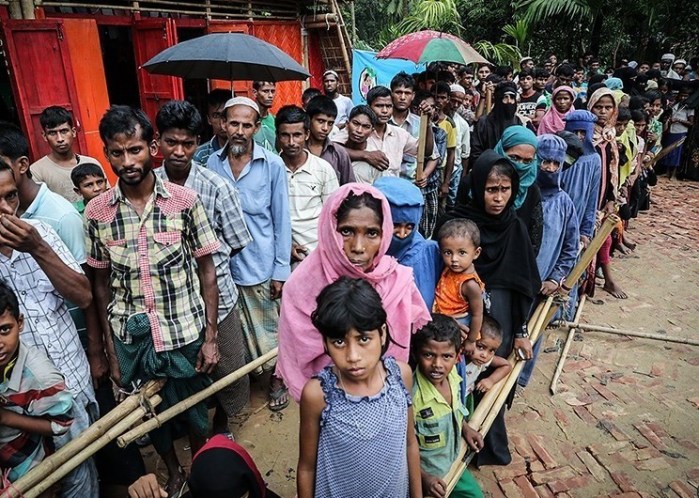
Rohingya Muslims displaced from Myanmar/Burma.

No debemos permitir que el pueblo Rohingya pase al fondo de la agenda internacional

El 2 de diciembre de 2022, un grupo de aproximadamente 180 refugiados Rohingyas abordaron un barco en Cox’s Bazar, Bangladesh.  Su destino previsto era Malasia, donde muchos esperaban reunirse con familiares y seres queridos, o construir una vida mejor que la que tienen en los campamentos superpoblados, insalubres y cada vez más peligrosos de Bangladesh.

Ellos nunca lo lograron

En una declaración emitida el 25 de diciembre, las Naciones Unidas expresaron su preocupación de que el barco se hubiera hundido después de que desapareció en el mar de Andamán.  Los familiares de quienes estaban a bordo dijeron a The Guardian que tenían pocas esperanzas de que sus familiares todavía estuvieran vivos, y si se confirma, el número de refugiados Rohingya que han muerto en travesías marítimas a Malasia en 2022 se acercaría a 400.

Continue reading “No debemos permitir que el pueblo Rohingya pase al fondo de la agenda internacional”
Rohingya Muslims displaced from Myanmar/Burma.

We must not let the Rohingya people slip to the bottom of the international agenda

On 2 December 2022 a group of approximately 180 Rohingya refugees boarded a boat in Cox’s Bazar in Bangladesh. Their intended destination was Malaysia, where many hoped to be reunited with family and loved ones, or to build a better life than the one available to them in the overcrowded, unsanitary and increasingly dangerous camps in Bangladesh.

They never made it.

In a statement issued on 25 December, the United Nations expressed concern that the boat had sank after it went missing in the Andaman Sea. Relatives of those onboard told the Guardian that they had little hope that their family members were still alive, and if confirmed it would bring the number of Rohingya refugees who have died on sea crossings to Malaysia in 2022 close to 400.

Continue reading “We must not let the Rohingya people slip to the bottom of the international agenda”
Bob Chan is beaten inside the grounds of the Chinese consulate in Manchester, UK.

A medida que China, Eritrea, Irán y más extienden la represión más allá de sus propias fronteras, debemos hacer algo mejor

En noviembre del año pasado, Ken McCallum, Director General del Servicio de Seguridad del Reino Unido conocido como MI5, afirmó que su agencia había identificado “al menos diez” amenazas potenciales de secuestrar o incluso matar a individuos británicos o con sede en el Reino Unido percibidos como enemigos del régimen iraní. Agregó que los servicios de inteligencia iraníes “están preparados para tomar medidas temerarias” contra los opositores en Occidente, incluso atrayendo a personas a Irán.

En un momento de intensos disturbios civiles en Irán tras la muerte bajo custodia policial de Mahsa Amini, de 22 años, quien fue arrestada por usar incorrectamente su hijab, los comentarios de McCallum destacaron un tema preocupante que se aplica a varios de los países en los que trabaja CSW: los regímenes represivos tienen cada vez menos miedo de llegar más allá de sus fronteras.

China

Quizás uno de los ejemplos más obvios es China, una superpotencia global que utiliza regularmente su influencia económica y geopolítica para dar forma a las decisiones en  foros internacionales como el Consejo de Derechos Humanos, y rutinariamente impone sanciones contra parlamentarios occidentales y otros que condenan abiertamente las violaciones generalizadas que tienen lugar en el país.

Continue reading “A medida que China, Eritrea, Irán y más extienden la represión más allá de sus propias fronteras, debemos hacer algo mejor”
Bob Chan is beaten inside the grounds of the Chinese consulate in Manchester, UK.

As China, Eritrea, Iran and more extend repression beyond their own borders, we must do better

In November last year, Ken McCallum, the Director General of the UK’s Security Service known as MI5, claimed that his agency had identified “at least ten” potential threats to kidnap or even kill British or UK-based individuals perceived as enemies of the Iranian regime. He added that the Iranian intelligence services “are prepared to take reckless action” against opponents in the West, including by luring individuals to Iran.

Coming at a time of intense civil unrest in Iran following the death in police custody of 22-year-old Mahsa Amini, who was arrested for incorrectly wearing her hijab, McCallum’s comments highlighted a concerning issue that applies to several of the countries CSW works on: repressive regimes are becoming increasingly unafraid to reach beyond their borders.

China

Perhaps one of the most obvious examples is China, a global superpower which regularly uses its economic and geopolitical influence to shape decisions in international fora such as the Human Rights Council, and routinely metes out sanctions against Western parliamentarians and others who openly condemn the widespread violations taking place in the country.

Continue reading “As China, Eritrea, Iran and more extend repression beyond their own borders, we must do better”