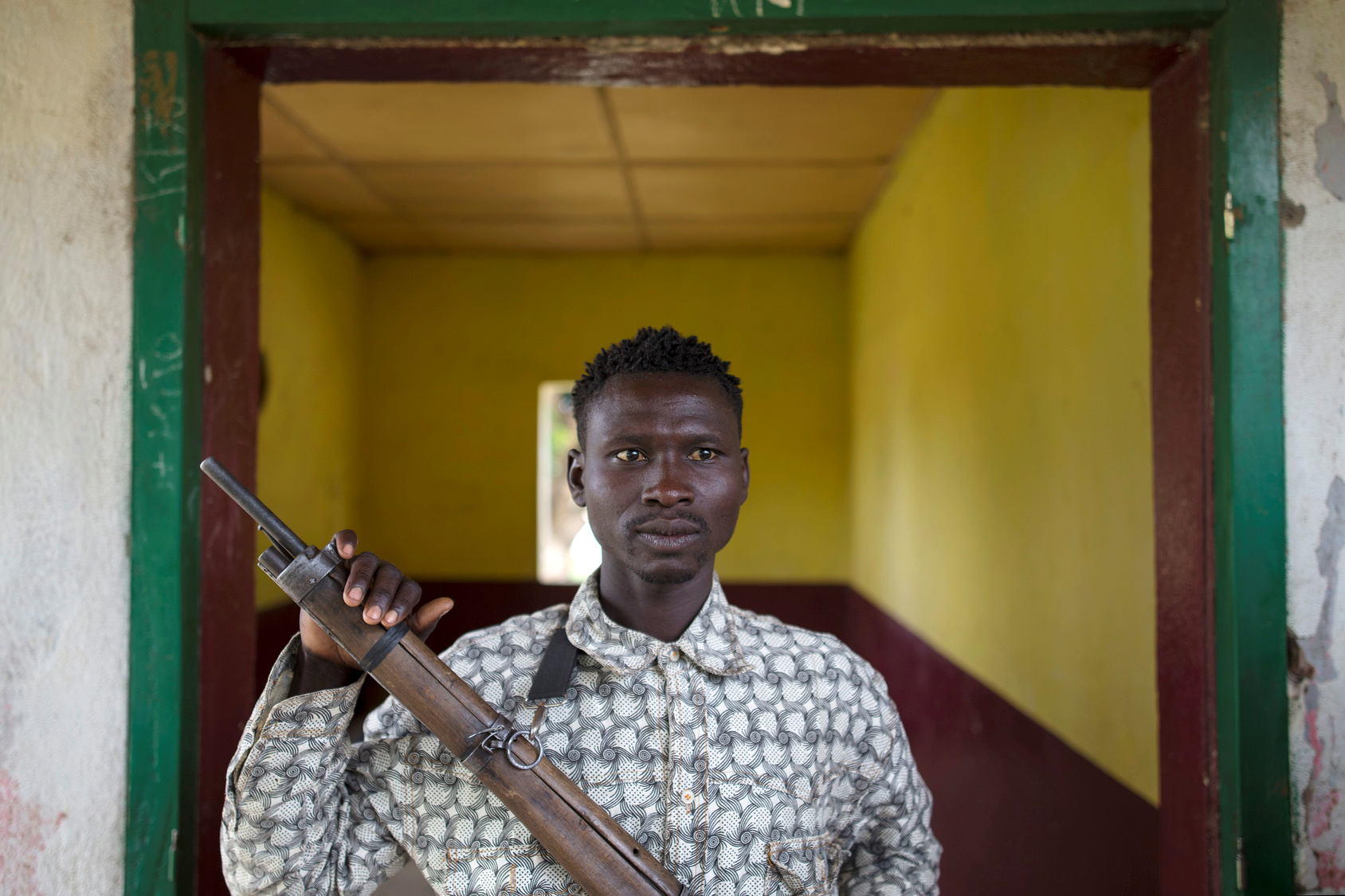
A member of the Anti-Balaka armed militia poses as he displays his weapon in the town of Bocaranga Central African Republic.

Justice at last in the Central African Republic, but the government’s work is not finished yet

In late October the internationally-backed Special Criminal Court in the Central African Republic (CAR) released a verdict in the chamber’s first full trial. The case was brought against three leaders of the armed group Retour, Réclamation et Réhabilitation (3R), who were found guilty of war crimes and crimes against humanity.

Issa Sallet Adoum (alias Bozizé) was sentenced to life imprisonment, and his co-defendants, Mahamat Tahir and Yaouba Ousman, each received 20-year prison sentences.

All three were accused of orchestrating attacks on the northwestern villages of Koundjili and Lomouna on 21 May 2019 in which at least 46 unarmed civilians were killed and dozens more were injured. The men are said to have targeted civilian populations that did not support 3R, tying up and shooting civilians before proceeding to subject women and girls in the villages to mass rape and sexual violence.

Continue reading “Justice at last in the Central African Republic, but the government’s work is not finished yet”
A Dalit manual scavenger in Nasik, Maharashtra, India.

Intolerance towards Christians in many tribal communities in India does not end even in death

Janki Sori’s family were not given much time to grieve. Having laid her to rest in their own land on 1 November, only two days passed before her body was exhumed against her family’s wishes by members of a tribal group known as the Sarv Adivasi Samaj – all because of her conversion to Christianity.

Ms Sori, who was 35 years old when she died, lived in the village of Antagarh in India’s Chhattisgarh state, where the majority of the community are animists who worship nature and spirits, while also drawing some influence from Hinduism.

Those who exhumed her body claimed that their village belongs only to those who follow their religion, and, after burying Ms Sori in a different village on 4 November, the group claimed that they would continue to target converts to Christianity in the same manner until they ‘re-convert’ to the religion or their ancestry and culture.

Continue reading “Intolerance towards Christians in many tribal communities in India does not end even in death”
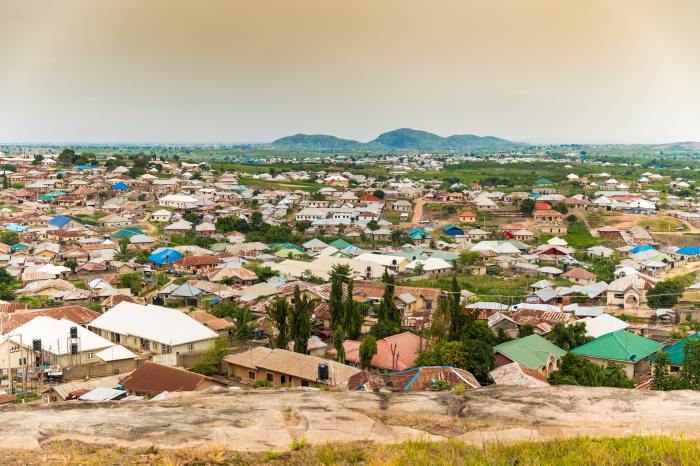
Assorted houses in Abuja, Nigeria.

“We do not sleep with our eyes closed” – how long will the international community fail the people of southern Kaduna?

“We do not sleep with our eyes closed; we take a nap, then wake up and keep watch… we are just depending on the grace of God.”

These are the words of a villager from the Maro Ward of Kajuru Local Government Area (LGA) in the southern part of Nigeria’s Kaduna state. In the absence of effective security or government assistance, this is what targeted communities across the state have been forced into: spending their days and nights on alert patrolling, living in fear of terrorists who destroy their crops, take their lives, and abduct hundreds, if not thousands, for ransom.

Kaduna has been an epicentre of violence and banditry for several years now, with attacks on non-Muslim farming communities in the south increasing exponentially with the advent of the current administration amid a general deterioration in security.

Continue reading “We do not sleep with our eyes closed” – how long will the international community fail the people of southern Kaduna?
A United Nations building in Geneva, Switzerland.

Decepciones en la ONU, pero no debemos dejar que los desafíos oscurezcan el bien que puede lograr

A principios del mes pasado, la Asamblea General de la ONU (AGNU) votó para elegir a 14 nuevos miembros del Consejo de Derechos Humanos (CDH) para servir del año 2023  a  2025. Entre los candidatos se encontraban Sudán y Vietnam.  El primero fue elegido en una elección de pizarra limpia, lo que significa que el número de candidatos igualó el número de escaños disponibles, mientras que el segundo derrotó a Afganistán y la República de Corea (Corea del Sur).

La elección de ambos estados es profundamente decepcionante.

Sudán está dirigido actualmente por un líder militar que tomó el poder ilegalmente el gobierno de transición esta liderado por civiles en un golpe de Estado en  octubre de 2021, y  donde  el año pasado se caracterizó por el asesinato y la brutalidad  en contra de manifestantes pacíficos, y los intentos de revertir los limitados avances en materia de derechos humanos logrados bajo el gobierno de transición, incluso en relación con el derecho a la libertad de religión o creencias.

El Partido Comunista Vietnamita (PCV) ha liderado la parte norte de Vietnam desde 1954, y tomó el control del resto del país en 1975, tras el colapso del gobierno de Vietnam del Sur. Durante ese tiempo, el PCV ha violado repetidas ocaciones los derechos humanos, incluida la LROC y los derechos a la tierra, mientras que continuamente ataca a quienes solicitan o defienden tales derechos con acoso, detención arbitraria, encarcelamiento, violencia física e incluso tortura.

Continue reading Decepciones en la ONU, pero no debemos dejar que los desafíos oscurezcan el bien que puede lograr
A United Nations building in Geneva, Switzerland.

Disappointments at the UN, but we must not let the challenges obscure the good that it can achieve

Earlier this month, the UN General Assembly (UNGA) voted to elect 14 new members to the Human Rights Council (HRC) to serve from 2023 to 2025. Among those elected were Sudan and Vietnam. The former was selected in a clean slate election, meaning that the number of candidates equaled the number of seats available, while the latter defeated Afghanistan and the Republic of Korea (South Korea). 

The election of both of these states is deeply disappointing.  

Sudan is currently led by a military leader who seized power illegally from the civilian-led transitional government in an October 2021 coup, and where the past year has been characterized by the killing and brutalising of peaceful protesters, and attempts to reverse the limited human rights gains made under the transitional government, including in relation to the right to freedom of religion or belief (FoRB). 

The Vietnamese Communist Party (VCP) has led the northern part of Vietnam since 1954, and took control of the rest of the country in 1975, following the collapse of the South Vietnamese government. During that time, the VCP has repeatedly violated human rights, including FoRB and land rights, whilst routinely targeting those who request or advocate for such rights with harassment, arbitrary detention, imprisonment, physical violence and even torture

Continue reading “Disappointments at the UN, but we must not let the challenges obscure the good that it can achieve”