Un nouvel outil: Le régime global de sanctions de l’UE en matière de droits humains

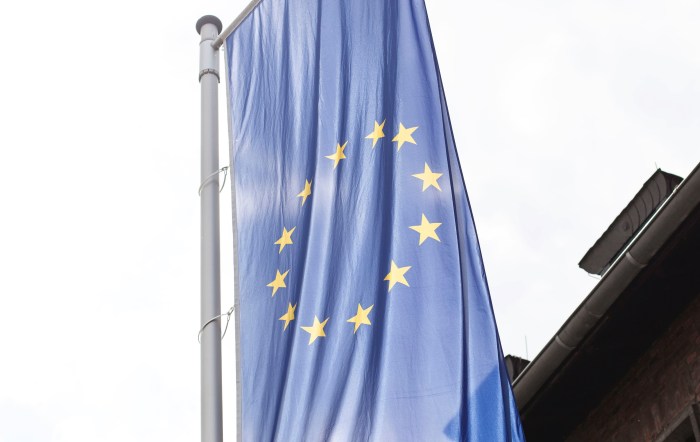
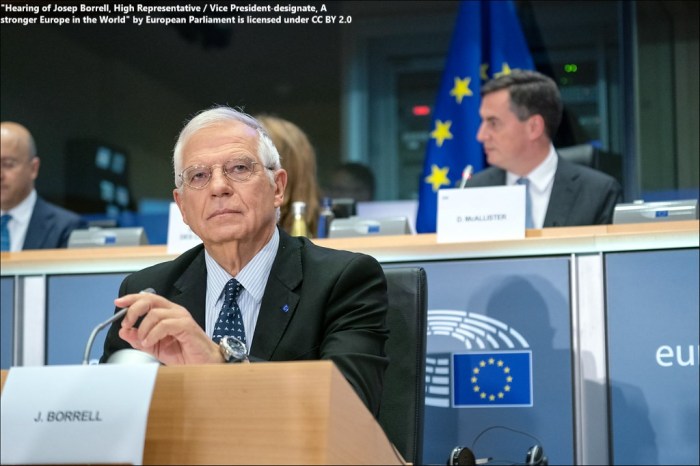
Le 7 décembre, l’UE a officiellement approuvé la création de son tout nouveau mécanisme de défense des droits humains, le régime mondial de sanctions de l’Union européenne (UE) en matière de droits humains.

Il permettra au bloc européen d’imposer des interdictions de voyage à l’échelle de l’UE, de geler les avoirs et d’interdire la mise à disposition de fonds et de ressources économiques aux personnes et entités qui ont commis de graves violations des droits humains ou y ont été associées. Il visera les acteurs étatiques et non étatiques, quel que soit l’endroit où ils se trouvent dans le monde et où ils ont commis leurs crimes.

Ce mécanisme est officieusement connu sous le nom de “Magnitsky Act”, inspiré du modèle américain qui l’a précédé. Le Magnitsky Act américain a été signé par le président Barack Obama en 2012 et a avait été conçu à l’origine pour cibler les fonctionnaires russes responsables de la mort de l’avocat fiscaliste russe Sergei Magnitsky.

Le fait que ce mécanisme permette de cibler des individus spécifiques responsables de violations des droits humains pourrait avoir des implications importantes pour les individus dans de nombreux pays où travaille CSW. Par exemple, la loi américaine Magnitsky a été utilisée pour imposer des sanctions aux responsables de violations dans la région ouïghoure de Chine. Lors de la première désignation dans le cadre de son propre régime de sanctions, le Royaume-Uni a ciblé, entre autres, deux généraux militaires de haut rang du Myanmar (Birmanie) impliqués dans la violence systématique et brutale contre le peuple Rohingya et d’autres minorités ethniques, et deux organisations impliquées dans le travail forcé, la torture et le meurtre qui ont lieu dans les goulags de Corée du Nord.

Continue reading “Un nouvel outil: Le régime global de sanctions de l’UE en matière de droits humains”

World NGO Day: Standing up for those who stand up for others

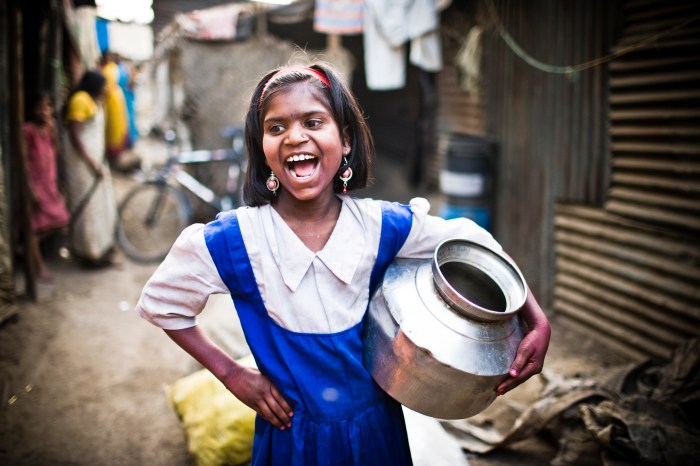
27 February marks World NGO Day – a day to celebrate the work of non-governmental organisations (NGOs) around the world. As a key part of civil society, NGOs help to drive positive change, protecting and promoting fundamental human rights, democracy, and rule of law.

CSW networks and collaborates with hundreds of NGOs around the world, empowering communities whose concerns may often be overlooked, amplifying these issues in international advocacy arenas, and whenever possible, providing a platform for them to address policy makers directly.

Even as the world celebrates the invaluable work of civil society, there are many countries, including several on which CSW focuses, where the work of NGOs is not celebrated, but is instead stifled or shut down by state or non-state actors.

India: Civil society suffocated

Perhaps one of the most restrictive environments for NGOs to operate in is in India. In recent years, the country’s ruling Bharatiya Janata Party (BJP) and other Hindu nationalist groups have increasingly attempted to label dissent as damaging to India’s national interests, arguing that those who speak up about human rights are ‘anti-nationals.’

Continue reading “World NGO Day: Standing up for those who stand up for others”

‘Smoke and mirrors’ in post-revolution Sudan: Lessons from Egypt

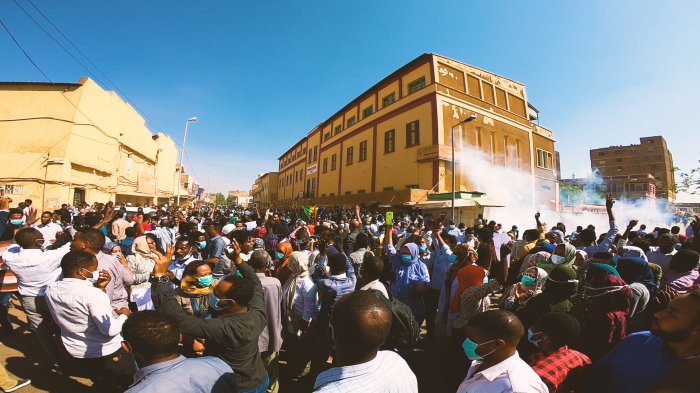
This time two years ago, Sudan was in the midst of an unprecedented revolution. Citizens of all ethnicities, religious beliefs and walks of life across the whole country had come together to call for justice, democracy, human rights, and an end to nearly three decades of repression under President Omar al Bashir. An Islamist army officer, al Bashir had seized power from an elected government in 1989, and had enjoyed support from the Muslim Brotherhood movement both inside and outside the country.

After several months of consistent demonstrations which saw the Sudanese people overcome a repressive and heavy-handed response from the government and its security forces, it seemed as though their vision for an inclusive Sudan was finally within touching distance. President al Bashir was arrested in April 2019, and in August a transitional government was appointed to oversee the country’s progression towards democracy, with the transition period scheduled to end in 2022.

While these welcome developments were praised by many as ushering in a new era for Sudan, progress since then has been frustratingly slow.

Human rights violations, including violations of the right to freedom of religion or belief (FoRB), continue to occur on a regular basis, and there is still a need to ensure that justice is served for atrocity crimes committed under the previous regime, and indeed by members of the current government who are alleged to have been complicit in crackdowns on protesters, including the shocking massacre of demonstrators in Khartoum on 3 June 2019.

Continue reading “‘Smoke and mirrors’ in post-revolution Sudan: Lessons from Egypt”

“We are not safe anymore”: Burma’s coup shatters hopes for democracy, religious tolerance and human rights

By Benedict Rogers

Images of tanks and soldiers on the streets of Burma’s cities, and the sound of gunfire against peaceful protesters take us back in time almost 14 years, and reverse a decade of fragile reform and democratization in the country. From the scenes of her release from house arrest in November 2010 via her talks with Burma’s then-President Thein Sein in August 2011, and through to her subsequent election to Parliament, victory in a nationwide election and the past five years as de facto head of government, Aung San Suu Kyi is now back where she started: in detention.

The generals have remained in power throughout, but now they have abandoned any pretense and seized direct control once more.

The coup on 1 February stunned the world. Although it had been rumoured, few expected the military to really do it. It is true that the army in Burma has a history of staging coups – in 1958, 1962 and 1988 – and it isn’t keen on losing elections, as it showed in 1990 when it refused to accept Suu Kyi’s first victory, consigning her to 15 years under house arrest, and her colleagues to prison or exile. In 2008 it drafted a new constitution designed to keep Suu Kyi out of power, rammed it through in a sham referendum and two years later heavily rigged the country’s first elections in two decades. Nevertheless, since then it had appeared that the military had come to some kind of accommodation with Suu Kyi and her National League for Democracy (NLD).

Continue reading ““We are not safe anymore”: Burma’s coup shatters hopes for democracy, religious tolerance and human rights”

Four years, no answers: The disappearance of Pastor Raymond Koh

On 13 February 2017 Pastor Raymond Koh was abducted in broad daylight. He was on his way to see a friend when he was kidnapped from his car by 15 men in three black SUVs and four other vehicles in Petaling Jaya, Malaysia.  Video footage of the incident, as well as eyewitness reports, appears to indicate that the men were professionally trained.

The abduction incident is infamously known as ‘7-15-40’; seven vehicles, 15 professional men and the whole process took just 40 seconds.

In 2018, I met his wife and son in Kuala Lumpur. The two of them have consistently called for answers regarding the pastor’s whereabouts, but today, over four years since his abduction, these answers remain elusive.

Continue reading “Four years, no answers: The disappearance of Pastor Raymond Koh”