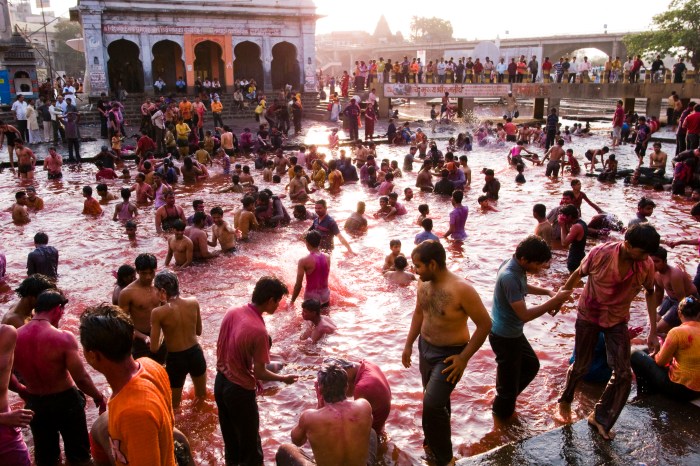
Members of the Dalit community celebrating of the festival of Holi in India.

A Uniform Civil Code: What is it and could it work in India today?

A Uniform Civil Code (UCC) means that all citizens shall be governed by a common law, irrespective of their religious background. This includes personal laws that apply to marriage, divorce, inheritance, succession of property, maintenance and adoption. In India, the debate over a UCC for all citizens of India has been a contentious issue since the colonial era, and has remained so despite independence and the creation of the modern Indian state.

Every few years, the subject is brought to the fore and debated hotly by proponents and opponents before retreating to simmer in the background of public discourse.      

In June 2023, public debate was reignited when the 22nd Law Commission of India solicited public opinion and comments from selected religious organisations on the subject of the UCC. Then, on 27 June Prime Minister Narendra Modi made a strong public pitch for the UCC for all citizens, garnering strong reactions from several opposition parties and religious groups.

Continue reading “A Uniform Civil Code: What is it and could it work in India today?”
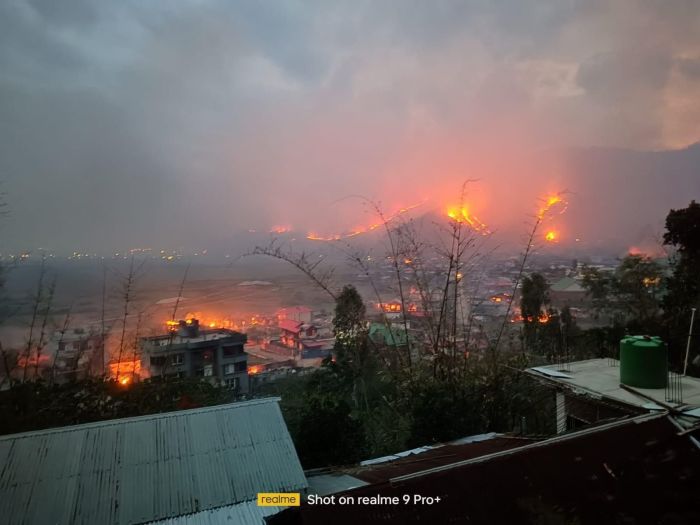
Fires in India's Manipur state.

‘We don’t know how we can restart our lives’ – stories from Manipur

‘On 3 May, around 10pm, we heard people throwing stones at our house. We didn’t understand what was happening. In the morning, we woke up and we were cooking. We saw that there was a frenzy outside. Everyone was walking out of their homes with their bags packed. They asked us why we were still at home and explained the situation. We were scared.’

Runa, Imphal

India’s Manipur State has been engulfed in violence for two and a half months now. Sparked by a protest on 3 May in which an estimated 60,000 people marched in opposition to the Manipur High Court’s request to the state government to send a recommendation to the central government to include the non-tribal Meitei community in the Scheduled Tribe (ST) category, the unrest has claimed at least 100 lives, with local sources suggesting that the death toll is significantly higher.

Thousands of homes have been burned down and tens of thousands of people have been forcibly displaced in a dispute over whether the predominantly Hindu Meitei community should be granted access to the same benefits afforded to the state’s typically more disadvantaged tribal communities.

Continue reading “‘We don’t know how we can restart our lives’ – stories from Manipur”
A sign prohibiting the entry of Protestants into the community of Cuamontax in Huazalingo Municipality of Hidalgo State, Mexico.

Chhattisgarh: A state where religious minorities live in fear

Five months after the mob violence that forced hundreds of Christians from Chhattisgarh’s tribal belt to flee their homes, victims say they are back home and safe for now, but they continue to live in fear.

On 18 December 2022, more than 20 incidents of anti-Christian violence were reported in various villages of Chhattisgarh’s Kondgaon and Narayanpur districts. Locals claimed that they were pressured to leave their religion and if they refused, they were beaten up badly, their homes were vandalised and their crops were destroyed.

According to reports that emerged later, close to a thousand Christians were forced to flee their homes and seek shelter in neighbouring districts. Some had to walk hundreds of kilometres to seek shelter in an indoor stadium.

Continue reading “Chhattisgarh: A state where religious minorities live in fear”
A Narikuravar woman walking through her hometown of Mappedu in Chennai, India.

‘I hope that my husband will let me go to church’: the tension between tradition and religious freedom for women in the Narikuravar community

Every morning after finishing her household chores, 17-year-old Deepa* walks into a small thatched building in Mappedu, Chennai. This is where Christians belonging to the indigenous Narikuravar community in Mappedu have been gathering for prayer meetings and Sunday services for more than a decade.

Deepa has been attending these meetings since she was a child. She loved learning Bible verses, sharing her testimony and singing songs. But there was a huge price to pay. To this day, she has been facing significant opposition from her parents, to the point that she has been physically abused because she continues attending church

Deepa told CSW: ‘My parents used to scold me and beat me up since I started going to church, but I would still go. We had fights at home everyday. They would swear at me, threaten me with dire consequences and beat me up. I would just pour my heart out to God and keep praying. When I told them I was going to get baptised, they were furious. I’ve now decided to wait a little longer to get baptised.’

Continue reading “‘I hope that my husband will let me go to church’: the tension between tradition and religious freedom for women in the Narikuravar community”
A hut in Mappedu, on the outskirts of Chennai, India.

The Narikuravar: A community in need of protection

In January 2023, CSW visited the Narikuravar community in Mappedu, on the outskirts of Chennai, and met with members of a community who for decades have suffered discrimination on the grounds of gender, and more recently on the grounds of religion as well. The following blog offers some reflections on the visit. Please note that the names have been changed for security reasons.

Radhika, a mother of three young girls, sat inside a little room with a thatched roof. With folded hands and a scarf over her head, she knelt down and prayed earnestly before turning to speak with me.  As a woman from a disregarded community who is also subject to restrictive gender-specific traditions, she would be excused for lamenting her circumstances but says that her new-found faith gives her the hope to live each day.

Radhika belongs to the Narikuravar community, a semi-nomadic tribe who were originally hunters and gatherers. She lives with around 30 other Narikuravar families in a tiny colony in Mappedu on the outskirts of Chennai. The Narikuravars have faced and continue to face discrimination in all spheres of life, including education, employment and even in securing accommodation.

Continue reading “The Narikuravar: A community in need of protection”