Christmas in China’s prison cells: Remembering Zhang Zhan and others over the festive period

I love Christmas. I especially love the fact that it comes right in the middle of the darkest part of the year here in the UK. Just when I’ve had about enough of the cold, dark, rainy British wintertime, everything is brightened up by Christmas decorations in my neighbours’ windows, trees along our street festooned with lights, and plans for good times ahead with family and friends. 2020 is sure to be a Christmas like no other, including in the UK, but there are still things we can do to remind us of the festive spirit.

Just last week I received a lovely Christmas card with a heartfelt message. It came at just the right time, as I’d been thinking about friends and activists in China. This always makes me sad, not only because it’s impossible to visit the country right now, but more because so many of them – being Christian leaders, human rights lawyers or citizen journalists – will be spending Christmas and New Year in prison cells far away from their loved ones. Contemplating their situation, and the Chinese government’s crackdown on Christians, it seemed ironic to me that the card I held in my hands was ‘made in China’.

Zhang Zhan. Credit: Twitter/@consultorzhang

Take for example Zhang Zhan, a Christian citizen journalist and human rights defender. Zhang was one of the brave few who attempted to report the truth in the early days of the COVID-19 pandemic.

Continue reading “Christmas in China’s prison cells: Remembering Zhang Zhan and others over the festive period”

Sri Lanka’s Anti-Cattle Slaughter Law: Lessons from India

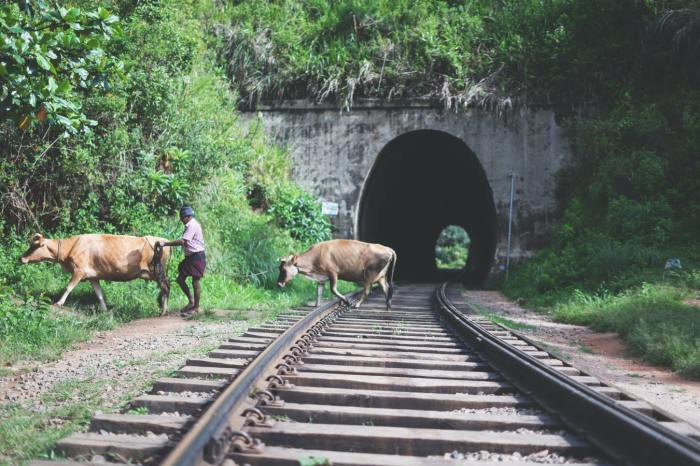
In September 2020, the Sri Lankan cabinet approved Prime Minister Mahinda Rajapaksa’s proposal to ban domestic cattle slaughter. Cabinet spokesman and Mass Media Minister Keheliya Rambukwella announced that the decision would pass into law in ‘due course.’ The move may be considered a way of ‘thanking’ the country’s Buddhist majority, who have long lobbied for a beef ban, or to win support and maintain favour with the same group. Ultimately it is a politically motivated decision designed to appease the island’s majority population of Sinhalese Buddhists.  

According to Mr Rambukwella, the current governments ban follows requests from ‘various quarters’ and was mostly put forward as a ‘good gesture’ toward the Buddhist community. Under the proposed ban, beef imports are still permitted, and would be sold at a concessionary price to those who consume it. In addition to this, a programme will be launched for ageing cattle which can no longer be used for agricultural purposes.

Rampant and rising Islamophobia

Others are less convinced. In 2017, scholars Mohammad Agus Yusoff and Athambawa Sarjoon, of the Universiti Kebangsaan Malaysia and University of Peradeniya respectively, suggested that such campaigns are actually motivated by religious and ethnic concerns:

Continue reading “Sri Lanka’s Anti-Cattle Slaughter Law: Lessons from India”

The Story of the Loc Hung Vegetable Garden, Part 3: “We just want to find a solution”

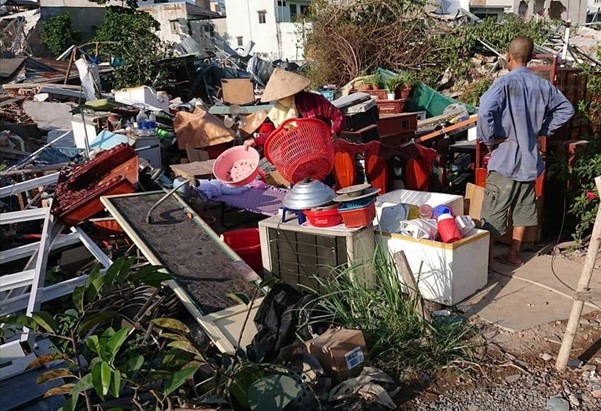
Over the past few weeks we have been looking at the story of the expropriation of the Loc Hung Vegetable Garden in Ho Chi Minh City (Saigon), Vietnam. The operation took place in January 2019 and saw the forcible eviction of thousands of residents and the destruction of over 500 homes. Today, nearly two years later the residents of Loc Hung continue to await justice.

Last week we heard from a 13-year-old resident of the garden who faced harassment at school. This week we are talking to Tran Minh-Thi, a local music teacher, who shares about her own experiences and reflects on the broader situation for children from the garden.

What is your connection with the Loc Hung Vegetable Garden case?

I was born and grew up in the vegetable garden and have lived here for over 40 years. My paternal grandparents migrated south to live and farm on the land. They passed it down to my parents, and myself and all my siblings all worked on the land as well until January 2019, when the demolition happened. My nieces and nephews also live and work on this land, so it has been in my family for four generations now. There are a lot of us – more than 70 in total – my grandparents had five children and my parents had 11, so with extended family it’s almost like one hundred.

Continue reading “The Story of the Loc Hung Vegetable Garden, Part 3: “We just want to find a solution””

The Story of the Loc Hung Vegetable Garden, Part 2: “Even though I was scared, I didn’t comply”

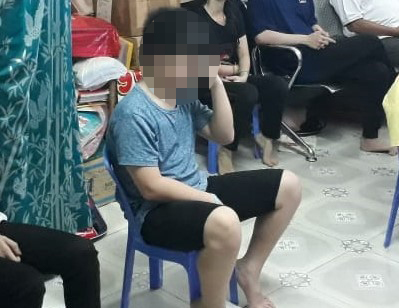
Last week we published the first instalment in our series looking at the story of the Loc Hung Vegetable Garden in Vietnam, in which we interviewed Cao Ha Truc about his experiences. For the second instalment we spoke to a child from the community who told us about his experiences of harassment at his school.

How old are you?

I am 13 years old.

Continue reading “The Story of the Loc Hung Vegetable Garden, Part 2: “Even though I was scared, I didn’t comply””

The Story of the Loc Hung Vegetable Garden, Part 1: “Their whole world collapsed around them”

In January 2019 Vietnamese authorities carried out a massive operation in the Loc Hung Vegetable Garden in Ho Chi Minh City (Saigon), Vietnam, which saw the forcible eviction of thousands of residents and the destruction of over 500 homes. Today, nearly two years later the residents of Loc Hung continue to await justice.

Over the next few weeks, CSW will be telling the story of the Loc Hung Vegetable Garden through a series of interviews with those who lived there. For our first instalment, we spoke to Cao Ha Truc, one of those leading efforts for the residents to receive some form of compensation.

How long have you lived in the Loc Hung Vegetable Garden and how did you come to live there?

My family have lived here for four generations, ever since my grandparents and parents heeded the call from President Ngo Dinh Diem to migrate from the north to the south after the Geneva Accords of 1954. I was born here and so were my children. I farmed on the land here from the day I got married until the day it was taken from my family.

Initially my family made a living from farming vegetables in the garden, but as we grew in size we needed to expand our living space so we built more houses on the land – some to live in and a few more to rent out to subsidise the income from the vegetable garden.

Continue reading “The Story of the Loc Hung Vegetable Garden, Part 1: “Their whole world collapsed around them””