For religious minorities in India, even tragedies turn into trials

Once again a terror attack has left Muslims across India not just shaken like all other Indians, but also defending their very existence. Someone, somewhere, with a gun and an agenda, committed a horrific act — but it was their name, their identity and their faith that suddenly became suspect.

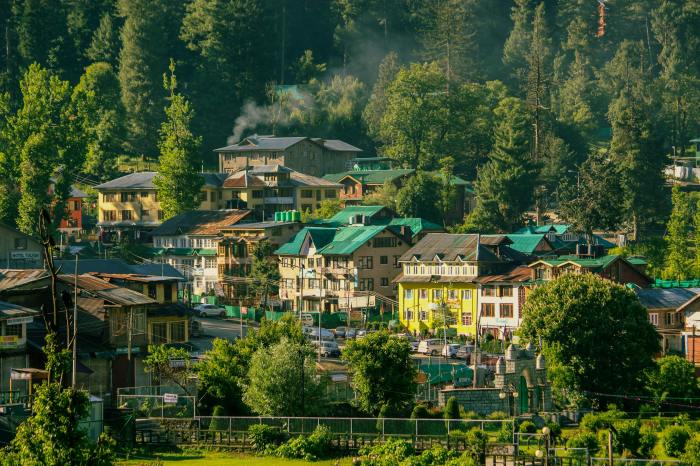
Twenty-six people were killed when terrorists attacked tourists in Pahalgam in Jammu and Kashmir on 22 April. The attackers reportedly singled out non-Muslims, even asking some to recite the Islamic Kalima (Islamic prayers derived from hadiths that are often used to aid South Asia Muslim children to memorise key beliefs) to prove their faith.

It was horrifying. And yet, in the midst of the horror, ordinary Kashmiris—Muslim men and women—risked their lives to save strangers. People like Nazakat Ahmad Shah, a tour guide, and Rayees Ahmad Bhatt, President of the Pony Owners’ Association, pulled survivors from danger. A local pony guide Syed Adil Hussain Shah gave his life while trying to protect a little girl. But instead of being praised for their efforts, the Muslim community, especially the Kashmiri Muslim community, was vilified. Their bravery was quickly forgotten, the national mood shifted from mourning to suspicion—and the blame – as it so often does in India – landed on an entire community.

Continue reading “For religious minorities in India, even tragedies turn into trials”

Pakistan must be made to end its decades-long tolerance and encouragement of the violent persecution of the Ahmadiyya community 

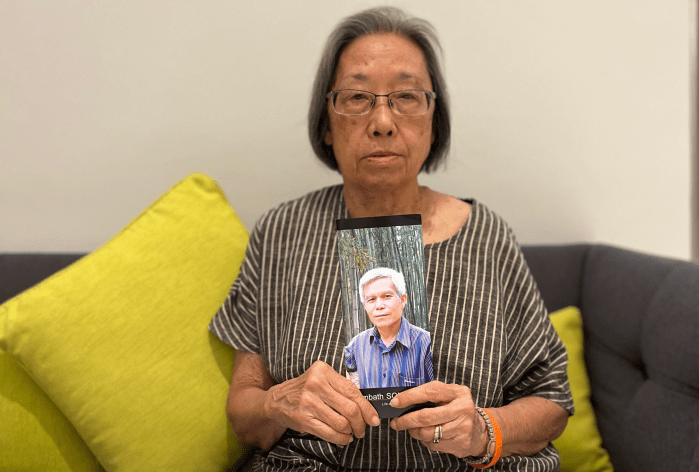
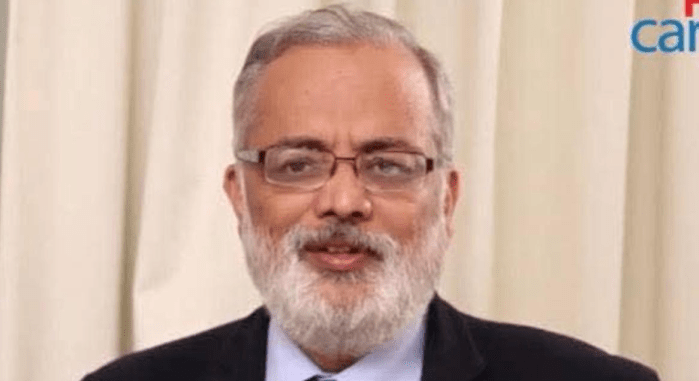
At 2.30pm on 16 May, Dr Sheikh Mahmood arrived at Fatima Hospital in Sargodha, Punjab Province, Pakistan and proceeded to attend to his patients as per his routine. A highly respected gastroenterologist and hepatologist, Dr Mahmood was widely known for his dedication, professional excellence and compassionate nature.  

But on this day – as he walked through the corridor of the hospital that he had worked in for the past seven years – an unidentified gunman opened fire on him from behind before fleeing the scene while openly brandishing a pistol. He sustained two gunshot wounds and was immediately transferred to Civil Hospital Sargodha, where he succumbed to his injuries. He leaves behind a mother, wife, two daughters and two sons. 

Dr Mahmood, 58, had no known personal enmities and Sargodha police have yet to confirm the motive behind the killing, however recent developments in Pakistan give much and highly-concerning reason to believe that he was likely targeted because of his faith – that is, because he was an Ahmadi Muslim.

Continue reading “Pakistan must be made to end its decades-long tolerance and encouragement of the violent persecution of the Ahmadiyya community “

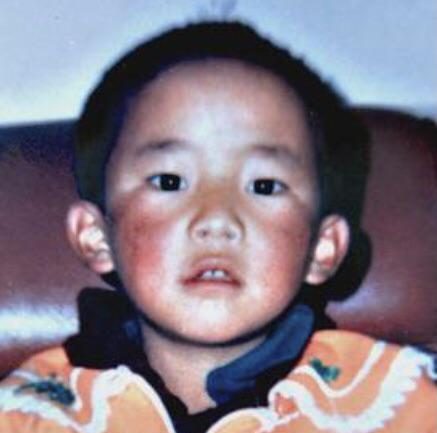
Thirty years since it disappeared Gedhun Choekyi Nyima, the Chinese government must be made to provide the truth about his whereabouts

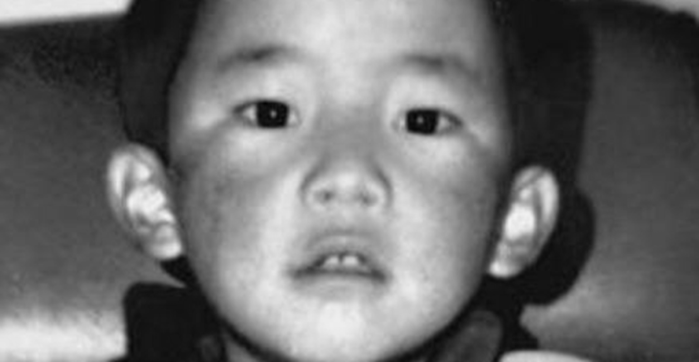
On 14 May 1995 the Dalai Lama publicly announced the six-year-old Gedhun Choekyi Nyima as the 11th Panchen Lama.

Tasked with recognising the next Dalai Lama, the Panchen Lama, or ‘Great Scholar’, is one of the most important figures in the Gelug school of Tibetan Buddhism, with a spiritual authority second only to that of the Dalai Lama. For centuries, successive Panchem Lamas have lived in and led the influential Tashilhunpo Monastery in Tibet’s second largest city Shigatse, playing a key role in the development of Tibetan Buddhist scholarship.

Gedhun Choekyi Nyima

But Nyima has been denied this. Three days after he was recognised as the Panchen Lama, he and his family were abducted by the Chinese Communist Party (CCP). Nyima became the world’s youngest political prisoner, and he has not been seen in public since.

Continue reading “Thirty years since it disappeared Gedhun Choekyi Nyima, the Chinese government must be made to provide the truth about his whereabouts”

Truth matters: How misinformation and sensationalism undermines support for victims of human rights violations

In early March, alarming reports surfaced of the killing of Christians in Syria. As a shocking outbreak of violence claimed the lives of over 1,000 people within just two days, including 745 civilians, many outlets were quick to claim that the country’s Christian community had been the target. 

GB News led with ‘Christians massacred as Syrian jihadist launches killing spree just weeks after toppling Assad’; a writer for the Times of Israel lamented what he identified as the media’s ‘predictable’ disdain for Syrian Christians; the Christian outlet Relevant Magazine claimed that ‘hundreds of Christians’ were among those killed, and countless posts on social media amplified claims of Christians being deliberately targeted and murdered in large numbers. 

Such reporting appeared to confirm the worst fears that many have harboured since December 2024, when President Bashir al-Assad was ousted by a coalition of rebel groups led by the Islamist military organisation Hayat Tahrir al-Sham (HTS), an organisation sanctioned by the US government. In the immediate aftermath of the takeover, many predominantly – though not exclusively – Christian outlets expressed understandable concern over impending threats to the country’s Christian community, with some warning of potential ‘ethnic cleansing’, ‘persecution’ and ‘genocide’. 

Continue reading “Truth matters: How misinformation and sensationalism undermines support for victims of human rights violations”

Pope Francis leaves a legacy of standing up for freedom of religion or belief. His successor must build on it. 

‘There can be no peace without freedom of religion, freedom of thought, freedom of expression and respect for the views of others.’ 

It is both fitting and moving that Pope Francis included these words in what was to be his final public address, delivered on his behalf by Master of Liturgical Ceremonies Archbishop Diego Ravelli to a crowd of over 20,000 people at the Vatican’s St. Peter’s Square on Easter Sunday. 

Throughout his 12-year papacy, Francis was a committed friend to the poor and the marginalised, a vocal advocate for freedom of religion or belief (FoRB) and other fundamental human rights, and a man who spoke truth to power right up to the final days of his pontificate. 

At a time when leaders of such humility and integrity appear to be in increasingly short supply, it is essential that his successor follows his example. 

Continue reading “Pope Francis leaves a legacy of standing up for freedom of religion or belief. His successor must build on it. “