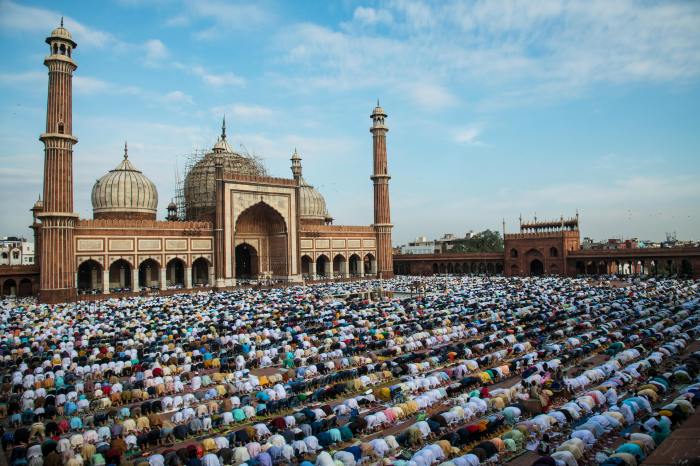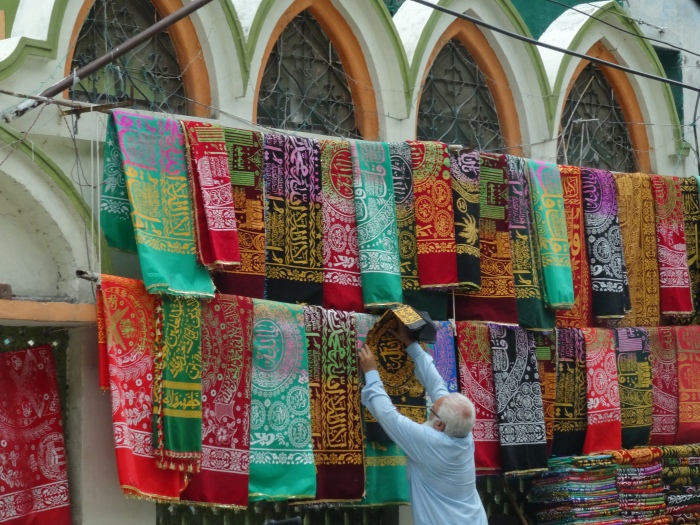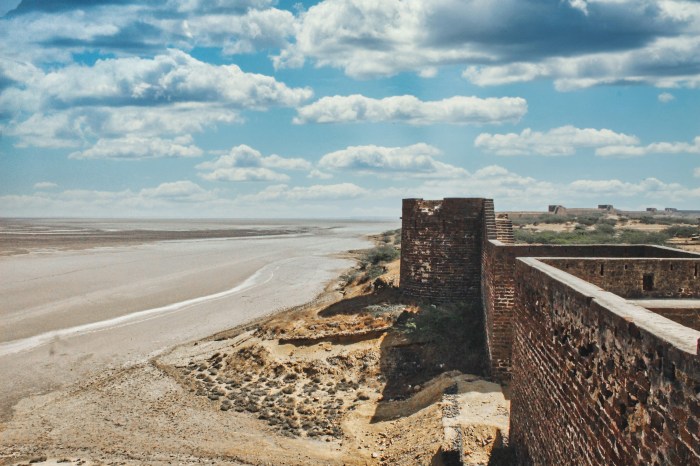
‘More that unites us’: Bridging the border between Indians, Pakistanis, Hindus and Muslims

This month marked 77 years since one of the world’s most violent religious conflicts: the partition of India and Pakistan, which claimed more than a million Hindu and Muslim lives and displaced over 15 million people. A people that once lived together were now forced to choose sides. Families were torn apart.  The bloodshed didn’t end there and neither did the hatred, as the countries fought several more wars in the years to come. 

On either side of the border, my generation grew up hearing the worst of each other. Most of the narratives we read in newspapers or watched in the cinema portrayed the other in bad light. The enmity and hatred was and continues to be so deep rooted that it affects religious groups in both nations. 

I cannot count the number of times I have heard an Indian Muslim being called a Pakistani in a derogatory tone. Ever since the Bharatiya Janata Party (BJP) first came to power in 2014, these slurs have only become more frequent and toxic.

Continue reading “‘More that unites us’: Bridging the border between Indians, Pakistanis, Hindus and Muslims”
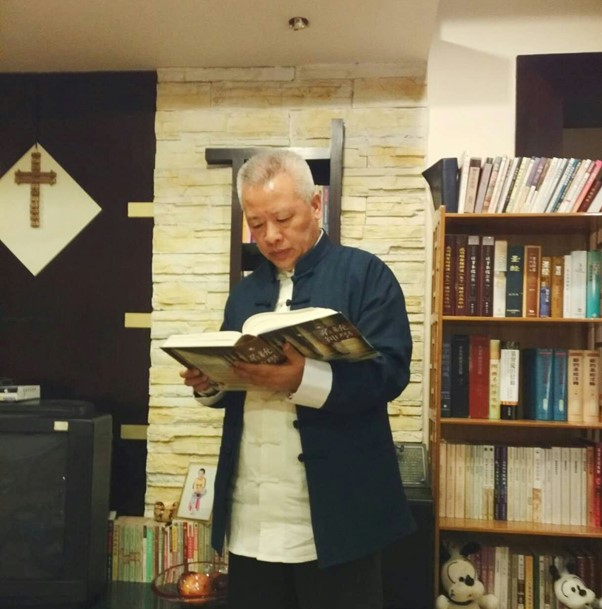
Where the laws don’t apply: Rural Christian communities in Laos and Mexico face similar challenges

Pastor Mum and five members of his church – Liang, Pa, Laen, Lan and Khoon – have been prisoners in their own village since 22 June. 

The six Christians were arrested by the chief of Tahae village, in Laos’ Khammouane Province, after they held a small church service in Pastor Mum’s home, which was deemed ‘illegal’ as their church is not officially registered. 

It has proven challenging to get updates since – perhaps as to be expected of a small remote village in a rural province in central Laos – however when CSW first reported on the arrests five days after they took place, the group had not been formally charged or permitted to see their families or access legal counsel.  

Continue reading “Where the laws don’t apply: Rural Christian communities in Laos and Mexico face similar challenges”

‘In handcuffs, without paper or pen, I rely on others to convey my safety’ – a call for the release of Elder Zhang Chunlei

Zhang Chunlei has been detained by the Chinese authorities since 16 March 2021. An elder of Love (Ren’ai) Reformed Church in Guiyang in Guizhou Province, his detention began when he visited a police station in Guiyang to ask about ten Christians from his church who had been taken away during a police raid on a privately rented property where they were holding a retreat.

Upon his inquiry, police officers raided Zhang’s home, and those of several other church members, subsequently accusing him and three others of ‘illegally operating as an association’. Chen Jianguo, Li Jinzhi and Li Lin were released several days later on 20 March, but Zhang has remained in detention ever since.

Presumably by design, Zhang’s case has proven typically hard to disentangle over the past three years, with the charges against him changing on multiple occasions. On 28 March 2021 reports emerged that he had been criminally detained – meaning that any time he spent in detention from that date on would count towards any jail term if he was convicted – at this point on suspicion of ‘fraud’.

Continue reading “‘In handcuffs, without paper or pen, I rely on others to convey my safety’ – a call for the release of Elder Zhang Chunlei”

India’s Muslims voted for justice and equality, but this remains a distant future

India is home to more than two hundred million Muslims, one of the largest Muslim populations in the world. However, in a crowd of close to 1.5 billion people, even this large community is reduced to a minority, accounting for just 14% of the population. In recent years, the community has been constantly reminded of this fact, having to fight to prove that they are equals and that they deserve the same rights as the Hindu majority.

Although the majority of India’s Muslims are native to the country, with a very small number of them having emigrated there from the Arab world, most Muslims today would agree that they are not made to feel equal to other Indian citizens.

Their plight has deteriorated significantly since India’s ruling Bharatiya Janata Party (BJP) came to power in 2014 under the leadership of Prime Minister Narendra Modi, with Muslims treated largely as second-class citizens by a government that has embraced a dangerous Hindu nationalist rhetoric.

Continue reading “India’s Muslims voted for justice and equality, but this remains a distant future”

Ten long years: Reflections on the Supreme Court ruling that promised much for Pakistan’s religious minorities

On 19 June 2014, the Supreme Court of Pakistan, under the leadership of the then Chief Justice Tassaduq Hussain Jillani, made a historic ruling that significantly advanced the protection and promotion of the rights of religious minorities in the country. This judgment was a pivotal moment in the country’s legal and human rights history, reflecting a commitment to upholding the principles of equality and non-discrimination enshrined within the Constitution of Pakistan.

Since its inception, Pakistan has grappled with issues surrounding the rights and protection of religious minorities. Despite the vision of its founding father, Muhammad Ali Jinnah, who advocated for a secular and inclusive Pakistan, the reality for religious minorities has often been marred by persecution, discrimination, violence, and marginalisation. Incidents of blasphemy accusations, mob attacks, forced conversions, desecration of places of worship, and targeted violence have highlighted the urgent need for robust legal safeguards and proactive measures.

The 2014 judgment stemmed from a Suo motu notice taken by the Supreme Court following the Peshawar church bombing in September 2013, which resulted in the tragic loss of over 80 lives. This incident underscored the vulnerability of religious minorities and the need for the state to ensure their protection.

Continue reading “Ten long years: Reflections on the Supreme Court ruling that promised much for Pakistan’s religious minorities”