No matter how hard it tries, the Nicaraguan government cannot make the evidence of its human rights violations disappear

On 24 February, the United Nations Group of Human Rights Experts on Nicaragua (GHREN) published its latest report to the UN Human Rights Council (HRC).  

The GHREN, tasked with conducting thorough and independent investigations into all alleged human rights violations and abuses committed in Nicaragua since April 2018, focused its report on the institutions and individuals responsible for violations in Nicaragua, complete with an annex of 10 functional diagrams ‘illustrating the de jure and de facto connexions between different State and non-State entities.’  The report also drew attention to the four-phase strategy of the Ortega-Murillo regime designed to gain absolute control of the country and to how the regime’s recent constitutional reforms provide unchecked executive authority.  

The findings of the GHREN’s report are supported by a total of more than 1,500 interviews and 7,500 documents, and are also backed by reports by civil society organisations (CSOs) who have consistently and independently documented human rights violations. CSW, for example, documented 222separate cases involving violations of freedom of religion or belief (FoRB) in 2024 alone, with most involving multiple violations and some affecting thousands of people. 

Continue reading “No matter how hard it tries, the Nicaraguan government cannot make the evidence of its human rights violations disappear”

Pastor Efrén Antonio Vílchez López is one of hundreds of independent voices the Nicaraguan government is desperate to silence

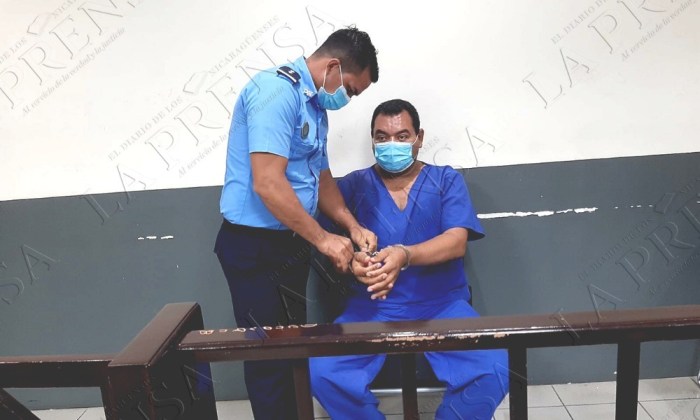
On 15 May 2022 Protestant Christian Pastor Efrén Antonio Vílchez López was beaten and detained as he was leaving the funeral home where he worked in San Rafael del Sur, a town and municipality 50km south-west of the Nicaraguan capital Managua.  

He was not told on what charges he was being arrested, and his family were kept unaware of his whereabouts for three days. He was held at the San Rafael del Sur National Police Station for over two weeks, and then transferred to the notorious Jorge Navarro National Penitentiary System known as ‘La Modelo’. 

While he was in detention the authorities did not provide Pastor Vílchez López, who is diabetic and hypertensive, with his required daily insulin, which ultimately proved life-threatening and resulted in him being sent to a clinic for urgent medical treatment.  

Continue reading “Pastor Efrén Antonio Vílchez López is one of hundreds of independent voices the Nicaraguan government is desperate to silence”

Where are they? Carmen María Sáenz Martínez and Lesbia del Socorro Gutiérrez Poveda are prisoners of a regime solely interested in its own survival

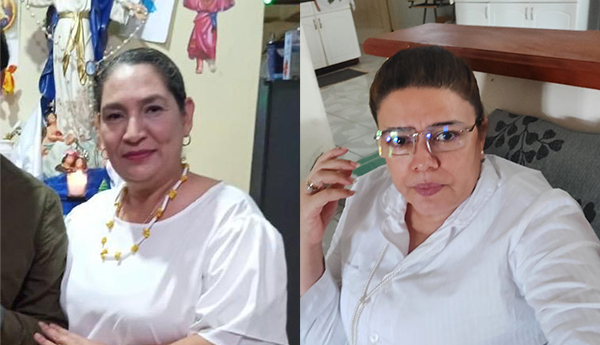
At 6am on 10 August 2024, fifteen police officers wearing ski masks and carrying AK-47s arrested 49-year-old Carmen María Sáenz Martínez at her home in Lomas de Santo Tomas in Matagalpa City, Nicaragua.

Two hours later police in two patrol cars detained Carmen’s colleague Lesbia del Socorro Gutiérrez Poveda, age 58, at the Guadalupana Farm in Samulali in the San Ramón Municipality.

Both women worked with the Roman Catholic Diocese of Matagalpa, formerly led by the now exiled Bishop Rolando José Álvarez Lagos, who spent nearly a year and a half in prison before he was expelled to the Vatican in January 2024. Lesbia had worked with the diocese’s rural and urban credit project since 2006, and Carmen as a justice promoter in marriage annulment cases since 2018.

Their families have not heard from them since.

Continue reading “Where are they? Carmen María Sáenz Martínez and Lesbia del Socorro Gutiérrez Poveda are prisoners of a regime solely interested in its own survival”

‘We go into the streets with fear’: After the murders of two pastors, Christians in northern Colombia no longer feel safe

Many Christians in the north-central part of Colombia encompassing the neighbouring regions of Magdalena and Cesar are on edge after the targeted assassinations of two church leaders in the space of two weeks. On 29 December, an entire family of four – Pastor Marlon Lora, his wife Yurlay, and adult children Ángela and Santiago – was shot to death following a Sunday morning service at the service at the Missionary Bible Church in the Villa Paraguay neighbourhood of Aguachica, Cesar Department.

On the evening of 8 January, Iván García, a 28-year-old church leader and husband of a pastor, died after being shot six times, after leaving a religious service. In both cases, the killings were carried out by masked hitmen on motorcycles.

Mr García was followed by the hitmen as he was walking home along a dark, rural road with his 14-year-old stepdaughter and six other individuals following a spiritual celebration at the People of God Christian Vision Church, where his wife, Pastor Karen Nierles, had been invited to lead a Bible study. Pastor Nierles leads the New Rebirth in Christ Church in the village of Garital, in the Banana Cultivation Zone, in Magdalena. According to the witnesses, after being shot the young preacher fell to his knees and raised his hands in thanks to God. The hitmen left the scene without speaking.

Continue reading “‘We go into the streets with fear’: After the murders of two pastors, Christians in northern Colombia no longer feel safe”

Why don’t they just come here legally?

They are called illegals, migrants, aliens, refugees, immigrants, asylum seekers, invaders, displaced – each word carrying with it a subtext of who they are, what they want, and where they fit. They have been accused of bringing disease, ‘poisoning the blood’ of a nation, participating in a massive invasion that aims to bring about violent anarchy, and even eating people’s beloved pets. In this discourse each of ‘them’ rarely has a face, a name, and much less their own story (unless they do something terrible that pushes their name and face into the headlines).

The question ‘Why don’t they just come here legally?’ is asked over and over. Again, there is a subtext to that question – an implication that if ‘they’ were good people, they would seek out and follow the rules. The question also assumes that there are legal, and presumably safe, channels for those in genuine distress to request and receive asylum in a safe country, as allowed for under international law, primarily under the UN Refugee Convention. However, the reality is that even those countries that recognise and uphold the Refugee Convention, (and there are many which do not), maintain byzantine systems, set up to make it as difficult as possible for someone, especially an asylum seeker, to petition for and be granted the right to start a new life in a safe country.

The vast majority of those ‘safe’ countries require visas for individuals traveling there from much of the world. The quickest way to ensure that a visa is denied, is to respond truthfully – that the motive for travelling is to request asylum upon arrival – and when a visa is denied on those grounds, the individual is almost always put on a blacklist for future requests.

Continue reading “Why don’t they just come here legally?”