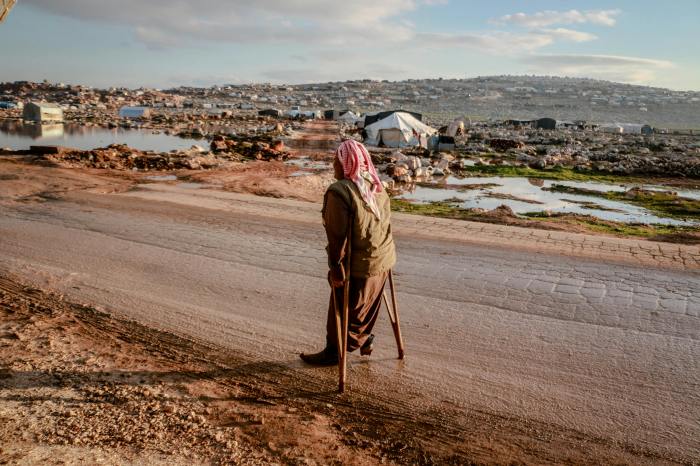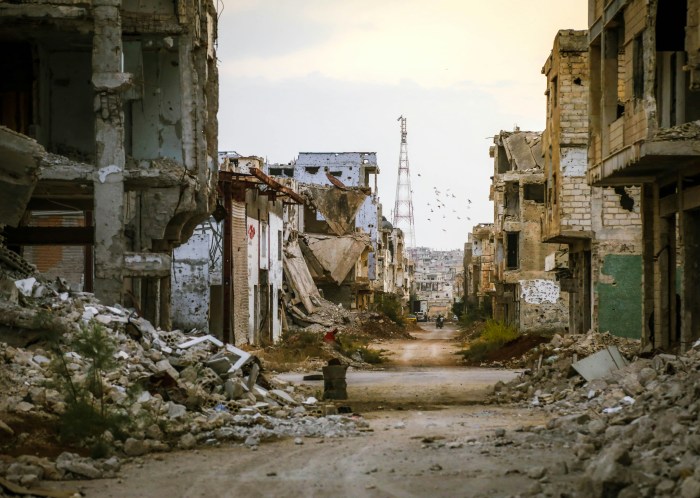
Truth matters: How misinformation and sensationalism undermines support for victims of human rights violations

In early March, alarming reports surfaced of the killing of Christians in Syria. As a shocking outbreak of violence claimed the lives of over 1,000 people within just two days, including 745 civilians, many outlets were quick to claim that the country’s Christian community had been the target. 

GB News led with ‘Christians massacred as Syrian jihadist launches killing spree just weeks after toppling Assad’; a writer for the Times of Israel lamented what he identified as the media’s ‘predictable’ disdain for Syrian Christians; the Christian outlet Relevant Magazine claimed that ‘hundreds of Christians’ were among those killed, and countless posts on social media amplified claims of Christians being deliberately targeted and murdered in large numbers. 

Such reporting appeared to confirm the worst fears that many have harboured since December 2024, when President Bashir al-Assad was ousted by a coalition of rebel groups led by the Islamist military organisation Hayat Tahrir al-Sham (HTS), an organisation sanctioned by the US government. In the immediate aftermath of the takeover, many predominantly – though not exclusively – Christian outlets expressed understandable concern over impending threats to the country’s Christian community, with some warning of potential ‘ethnic cleansing’, ‘persecution’ and ‘genocide’. 

Continue reading “Truth matters: How misinformation and sensationalism undermines support for victims of human rights violations”
Pope Francis leaves a legacy of standing up for freedom of religion or belief. His successor must build on it. 

‘There can be no peace without freedom of religion, freedom of thought, freedom of expression and respect for the views of others.’ 

It is both fitting and moving that Pope Francis included these words in what was to be his final public address, delivered on his behalf by Master of Liturgical Ceremonies Archbishop Diego Ravelli to a crowd of over 20,000 people at the Vatican’s St. Peter’s Square on Easter Sunday. 

Throughout his 12-year papacy, Francis was a committed friend to the poor and the marginalised, a vocal advocate for freedom of religion or belief (FoRB) and other fundamental human rights, and a man who spoke truth to power right up to the final days of his pontificate. 

At a time when leaders of such humility and integrity appear to be in increasingly short supply, it is essential that his successor follows his example. 

Continue reading “Pope Francis leaves a legacy of standing up for freedom of religion or belief. His successor must build on it. “

Citizenship and conflict: How the militaries of Israel and Myanmar are taking advantage of displaced persons

There are currently around 30,000 asylum seekers in Israel. Most have fled severe repression, including religious persecution, under a government responsible for decades of widespread crimes against humanity in Eritrea, or come from Sudan, where a gruelling 18-month conflict between the Rapid Support Forces and Sudan Armed Forces is the latest in a series of calamities to cause a severe humanitarian crisis.

Most will have travelled through Egypt before arriving there, typically with the help of people smugglers, and at great risk of assault, extortion, gender-based violence, or arrest and possible refoulement. The majority of those who complete this journey are young men, together with some young women who have likely endured unimaginable atrocities en route.

Upon their arrival, these asylum seekers find themselves in legal limbo; according to the Hotline for Refugees and Migrants, Israel’s leading refugee advocacy organisation, Israel approves less than 1% of the asylum claims it receives, with many cases pending for over five or even ten years.

Continue reading “Citizenship and conflict: How the militaries of Israel and Myanmar are taking advantage of displaced persons”

Syria: Ten years on, why does it matter?

June 2024 marked ten years since the Islamic State (IS) declared a caliphate in Syria. Years of brutal conflict including flagrant and well-documented human rights violations, including atrocity crimes, by a complex web of aggravators resulted in one of the highest death counts of any recent war and the highest number of displaced persons in modern history.

Yet in May of last year, Syria was welcomed back into the Arab League, the same government invited to participate in talks to further international cooperation that, just a decade earlier, had deployed chemical weapons against its own civilians. Furthermore, in summer 2023, Russia vetoed the renewal of a mechanism that had enabled the UN to deliver aid without the Syrian government’s consent to parts of north-west Syria not under its control – a resolution that had been in place for nine years. The year rounded out four months later with Syria present at the COP28 climate conference even as France issued an arrest warrant for President Bashar al-Assad over alleged  complicity in the chemical gas attacks.

Additionally, the Turkish president currently appears to be working towards normalising relations with Syria, despite opposing the Assad regime for over a decade and the ongoing occupation of parts of northern Syria by Turkish forces and allied Islamist militia.

It is clear that the world is beginning to forget the atrocities of the Syrian Civil War as well as the chaotic campaign of IS that saw whole cities reduced to rubble, wreaking havoc on the nation. But beyond the short clips of media coverage that defined our news cycles for years, what exactly happened between 2012 and 2014, and why does it matter today?

Continue reading “Syria: Ten years on, why does it matter?”

International Women’s Day: A plea to end conflict-related sexual and gender-based violence  

Warning: This blog contains details some readers may find distressing. 

‘They destroyed my life; they sold and bought me like a sheep.’ 

Kofan was 14 years old when Islamic State (IS) terrorists abducted her from her village in Sinjar in northern Iraq in 2014.  

Over the subsequent decade she was sold as a sex slave multiple times, and at one point she was ‘owned’, along with six other women, by an elderly man called Abou Jaafar. The group of women were all brutally beaten and repeatedly raped while in captivity. 

Continue reading “International Women’s Day: A plea to end conflict-related sexual and gender-based violence  “