Pope Francis leaves a legacy of standing up for freedom of religion or belief. His successor must build on it. 

‘There can be no peace without freedom of religion, freedom of thought, freedom of expression and respect for the views of others.’ 

It is both fitting and moving that Pope Francis included these words in what was to be his final public address, delivered on his behalf by Master of Liturgical Ceremonies Archbishop Diego Ravelli to a crowd of over 20,000 people at the Vatican’s St. Peter’s Square on Easter Sunday. 

Throughout his 12-year papacy, Francis was a committed friend to the poor and the marginalised, a vocal advocate for freedom of religion or belief (FoRB) and other fundamental human rights, and a man who spoke truth to power right up to the final days of his pontificate. 

At a time when leaders of such humility and integrity appear to be in increasingly short supply, it is essential that his successor follows his example. 

Continue reading “Pope Francis leaves a legacy of standing up for freedom of religion or belief. His successor must build on it. “
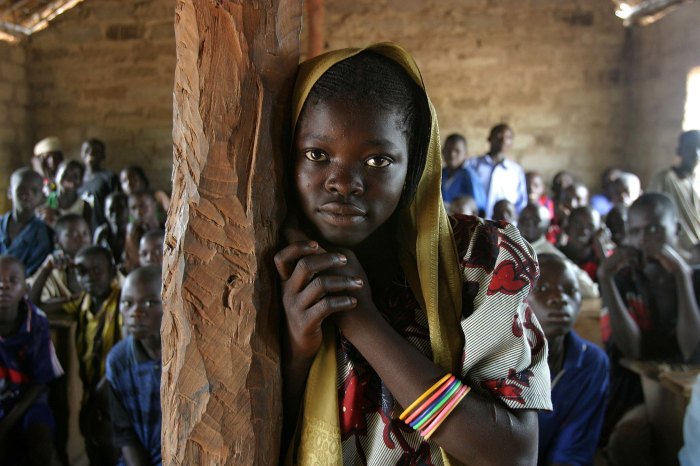
School children in the Central African Republic.

Ten years on from coup in the Central African Republic; armed alliances shift but civilians continue suffering

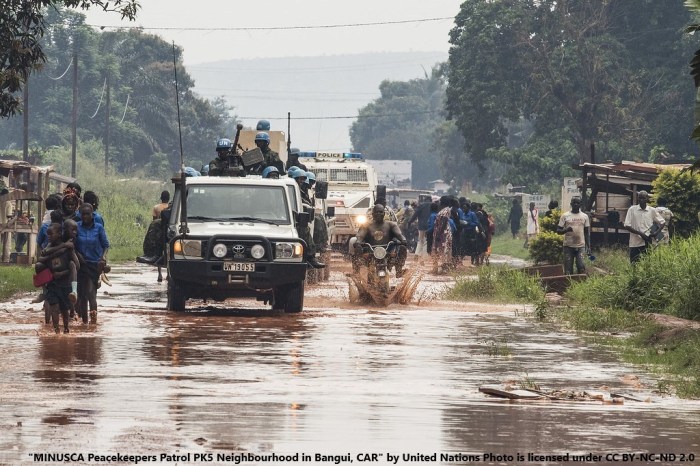
On 23 March 2013 the world awoke to the news that President François Bozizé of the Central African Republic (CAR) had fled the country and a rebel coalition had taken the capital. The somewhat automatic response from the African Union (AU) condemning the unconstitutional handover of power was matched by ensuing chaos in the country as a loose coalition of rebel groups, predominantly from the north of the country and broadly Muslim, battled over who would become president. Eventually it was Michael Dijotida who took the helm and oversaw the country for nine months.

It was during that first nine months that some of the most serious human rights abuses were perpetrated, while global leaders pondered their response. As the rebel coalition, known as the Seleka, advanced on the capital, they left death and destruction in their wake. Meanwhile, religious leaders of all faiths would travel to communities, where at times bodies still lay on the ground, to comfort mourners and urge them not to take revenge.

The AU largely led the global response, with the exception of France, which decided to put troops on the ground while the UN negotiated the creation of a peacekeeping mission.

Continue reading “Ten years on from coup in the Central African Republic; armed alliances shift but civilians continue suffering”
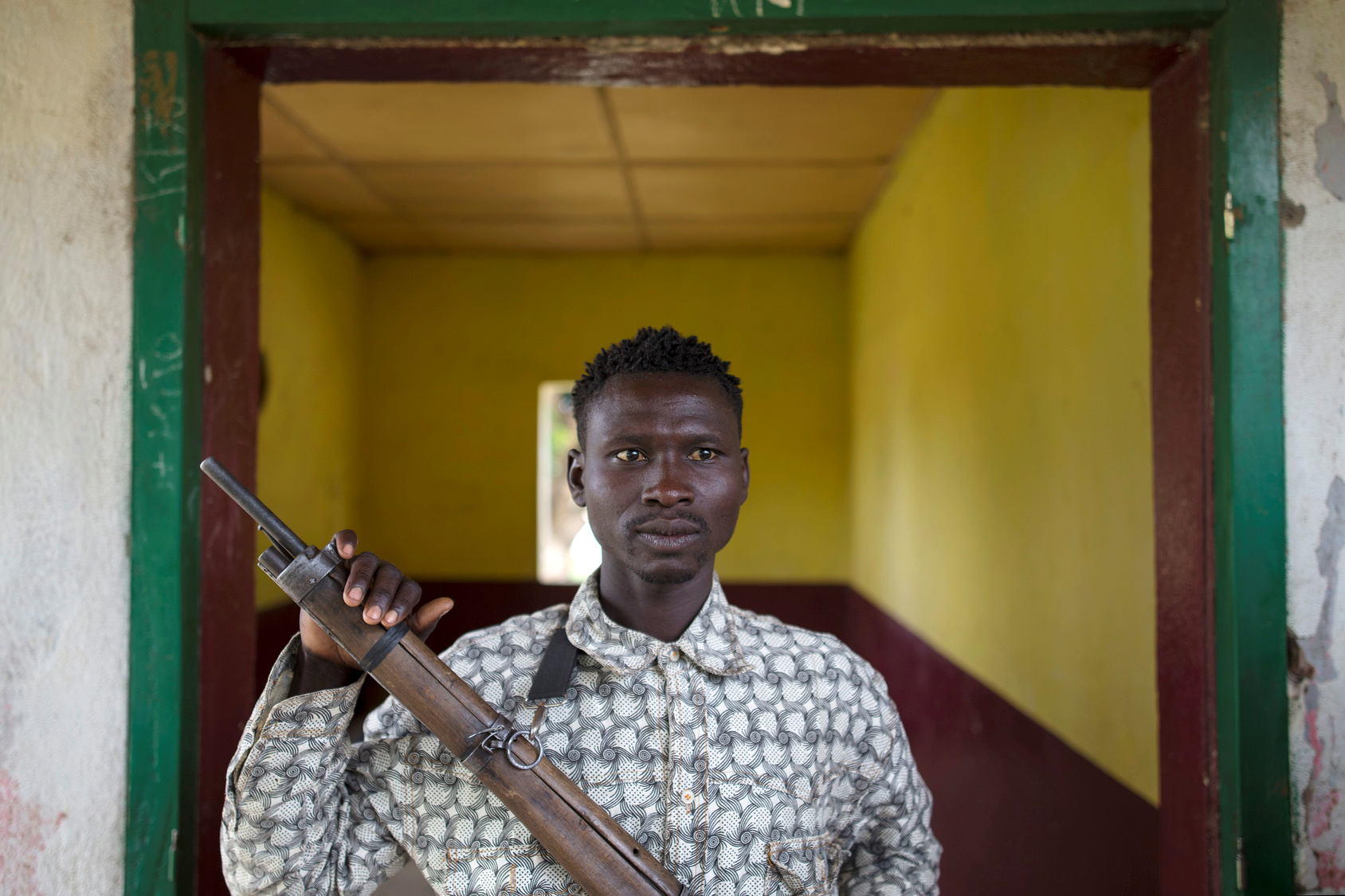
A member of the Anti-Balaka armed militia poses as he displays his weapon in the town of Bocaranga Central African Republic.

Justice at last in the Central African Republic, but the government’s work is not finished yet

In late October the internationally-backed Special Criminal Court in the Central African Republic (CAR) released a verdict in the chamber’s first full trial. The case was brought against three leaders of the armed group Retour, Réclamation et Réhabilitation (3R), who were found guilty of war crimes and crimes against humanity.

Issa Sallet Adoum (alias Bozizé) was sentenced to life imprisonment, and his co-defendants, Mahamat Tahir and Yaouba Ousman, each received 20-year prison sentences.

All three were accused of orchestrating attacks on the northwestern villages of Koundjili and Lomouna on 21 May 2019 in which at least 46 unarmed civilians were killed and dozens more were injured. The men are said to have targeted civilian populations that did not support 3R, tying up and shooting civilians before proceeding to subject women and girls in the villages to mass rape and sexual violence.

Continue reading “Justice at last in the Central African Republic, but the government’s work is not finished yet”

Central African Republic: is justice being sacrificed for the illusion of peace?

On 21 May, over 26 people were killed and dozens injured when an armed group attacked two villages in the north west of the Central African Republic (CAR). The attacks were reported by the UN peacekeeping mission in CAR, MINUSCA, which confirmed that twelve people were killed in Koundjili village and 14 in Djoumjoum village. 

Whilst reports of violent and devastating attacks on civilians in CAR are not new, these attacks represent a new challenge for the recently re-constituted government following the latest peace agreement between the government and armed groups.

The alleged perpetrator of the attacks on the two villages is the rebel group known as 3R (Return, Reclamation and Reconciliation). The group was formerly part of the Seleka alliance that took over the country following a coup in March 2013.  The alliance was subsequently disbanded, but armed groups fragmented and seized territories outside of the capital, Bangui.

Continue reading “Central African Republic: is justice being sacrificed for the illusion of peace?”

Attacks on places of worship: Armed groups raise the stakes in the Central African Republic

Attacks on places of worship in the Central African Republic (CAR) are not a new phenomenon.

In March 2013, the predominantly Muslim rebel alliance, Seleka, seized power, and in the crisis that followed, there were reports of looting and attacks on worshipers in churches initially, spreading to mosques and other places of worship as the conflict assumed an increasingly religious dimension.

Even after the election of President Faustin-Archange Touadéra three years later, attacks on places of worship continue at a disturbing rate.

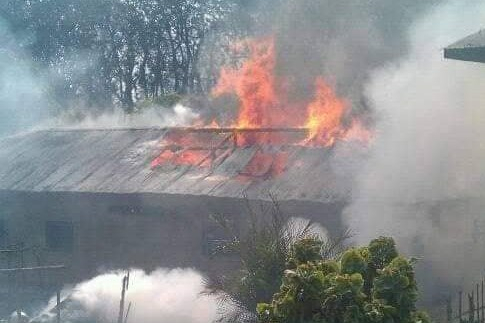
In the capital city Bangui, tensions flare periodically near the KM5 district. In May 2018, at least 15 people, including a clergyman, were killed and 100 injured in an attack on the Our Lady Fatima Catholic Church. On 7 February 2017, three churches were burned and a pastor killed in the same district.

Attacks such as these have taken a new and alarming turn since November 2018.

Continue reading “Attacks on places of worship: Armed groups raise the stakes in the Central African Republic”