Fang Bin with his wife and son in an undated photo.

A family shattered for 24 years – the story of Falun Gong activist Fang Bin

Crowded hospital halls, frantic doctors and nurses in protective suits, patients lying in the corridors, body bags piled up in a funeral van outside a hospital… In early February 2020, 57-year-old businessman Fang Bin drove around Wuhan and documented what he saw in five hospitals. The short videos he posted on social media gave a rare glimpse into what was happening in the epicentre of the pandemic under lockdown.

Mr Fang was detained by police briefly on 1 February 2020. In the next few days, he became more outspoken. Videos were widely shared on social media in which he commented that ‘tyranny lies at the root of this virus’. Then, on 9 February 2020, he vanished after calling ‘all citizens to resist’ tyranny and the government to ‘return the power to the people’ on YouTube, a platform banned in China.

The disappearances of Fang Bin, Zhang Zhan and at least two other citizen journalists drew the attention of world media. Although Mr Fang and his wife are known to the authorities as veteran Falun Gong activists, people who are familiar with him hesitated in mentioning his faith background when calling for his release. They may have been conscious of the social stigma attached to this belief group in China, or feared that he might be jailed not for his online speech but for his faith, or even that he might face mistreatment for it in police custody.
Continue reading “A family shattered for 24 years – the story of Falun Gong activist Fang Bin”
Fang Bin with his wife and son in an undated photo.

一个破碎了24年的家庭——法轮功维权人士方斌的故事

拥挤的医院大厅、奔忙的穿戴全身防护的医护人员、躺在走廊里的病人、堆放在医院外殡葬车上的尸袋……2020 年 2 月初,57 岁的商人方斌驾车在武汉市内转悠,记录下了他在五家医院的所见所闻。他在社交媒体上发布的短视频让人们难得一见地看到疫情中心地带发生的一切。

2020 年 2 月 1 日,方斌被警方短暂拘留。获释后,他变得更加敢言。在社交媒体上广泛传播的视频中,他直言不讳地说:“病毒的根源是暴政!” 几天后,2 月 9 日,他在 YouTube(一个在中国被禁止的社交媒体平台)上呼吁“全民反抗”、要求当局“还政于民”后消失。

方斌、张展和另外至少两名公民记者的先后失踪引起了全世界媒体的关注。尽管当局知道方斌及其妻子是资深法轮功维权人士,但很多熟悉的朋友在呼吁释放方斌时,选择不提他的信仰背景。他们可能意识到中国社会仍对法轮功这一信仰团体存在某种歧视,或者担心当局对方斌抓捕判刑可能不基于其网络言论而基于其信仰,他甚至可能因之遭到当局酷刑。

Continue reading “一个破碎了24年的家庭——法轮功维权人士方斌的故事”
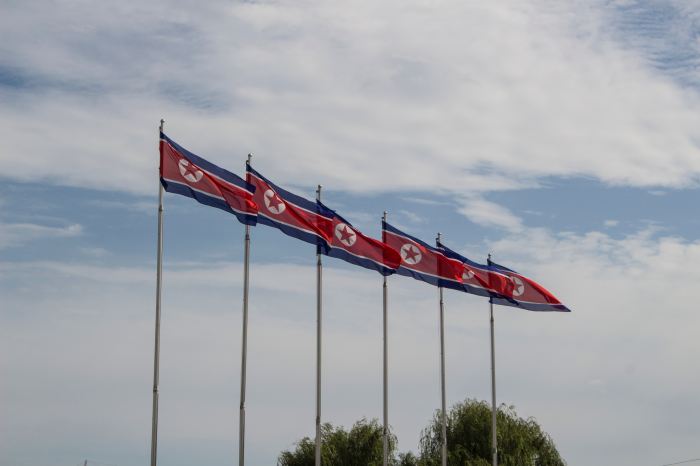
North Korea flags.

With echoes of ‘the most difficult time in North Korean history’, the international community must do more to bring about change

Earlier this month, the BBC released information gathered from exclusive interviews with three individuals living inside North Korea. Their reports have brought the country back into the headlines, revealing the devastating reality of the situation for North Korean citizens since the COVID-19-triggered border closure in January 2020. They describe widespread starvation and brutal repression, without feasible means of escape.

Hanna Song from the North Korean Database Centre for Human Rights (NKDB) said in an interview with the BBC ‘This [report] takes us back to the most difficult time in North Korean history.’

Song is referring here to the widespread famine of the 1990s known as the arduous march.

The Democratic People’s Republic of Korea (DPRK) was founded in 1948 under the leadership of Kim Il-Sung. The communist nation’s economy was built on a system of state control: a public distribution system for food and material goods, and a state-assigned job system dictating citizen employment.

Continue reading “With echoes of ‘the most difficult time in North Korean history’, the international community must do more to bring about change”

‘I fear they will normalise this’ – Restrictions combine to make life even more difficult for religion and belief groups in China

The COVID-19 pandemic has had profound effects on the functions of nearly every religion or belief group in every country in the world over the past two years. While many have now emerged from lockdowns and measures imposed to curb the spread of the virus are being lifted in most countries, arguably some of the strictest restrictions remain in the country where the virus was first detected: China.

Since December 2021, China has been wrestling with the spread of the omicron variant, with many cities, including Beijing, Shanghai, Tianjin and Xi’an, having been placed under lockdowns at various points over the past six months. Even as lockdowns have been lifted in some places, they remain in effect in others, and there is no telling from one week to the next whether more severe measures will be enforced in any one place.

Meanwhile, for religious groups in these and other cities remaining restrictions designed to limit the spread of the virus have combined with new regulations on online religious activities to make everything from online meetings to day-to-day communication extremely difficult.

Continue reading “‘I fear they will normalise this’ – Restrictions combine to make life even more difficult for religion and belief groups in China”

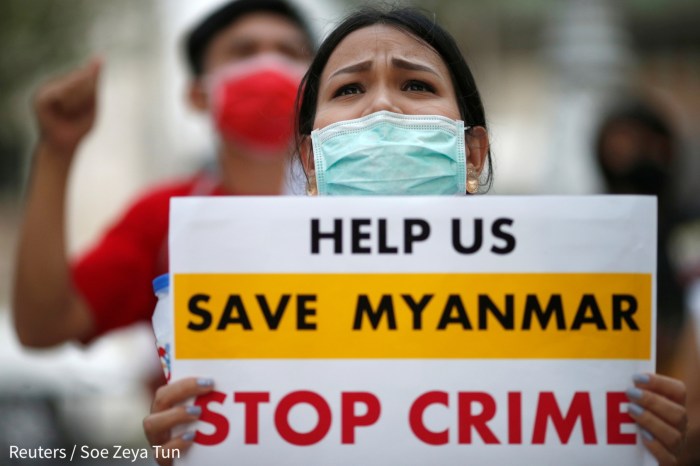
Six months after the coup, what are we going to do about Myanmar’s new nightmare?

By Benedict Rogers

Exactly six months ago yesterday, Myanmar, otherwise known as Burma, was plunged into yet another dark chapter in its history – perhaps one of the darkest yet.

On 1 February the army’s Commander-in-Chief, General Min Aung Hlaing, seized power in a bloody coup that overthrew the democratically elected civilian government, led to the arrest of most pro-democracy leaders, and ushered in a new era of brutal repression which many of us hoped had been consigned to Myanmar’s history.

Relentless repression

In the past six months, according to the Assistance Association for Political Prisoners, the junta has killed 940 civilians, arrested 6,994 and currently holds 5,444 political prisoners in jail. Among them are many of my friends – including the incredible Thin Thin Aung, Myawaddy Sayadaw and others.

Continue reading “Six months after the coup, what are we going to do about Myanmar’s new nightmare?”