How the education system perpetuates religious intolerance in Pakistan, and how it could be a route to change 

‘No one is born hating another person because of the colour of his skin, or his background, or his religion. People must learn to hate.’ 

These oft-quoted words of Nelson Mandela have proven all too true in far too many contexts throughout human history, as indeed they do in a very literal sense in Pakistan today. 

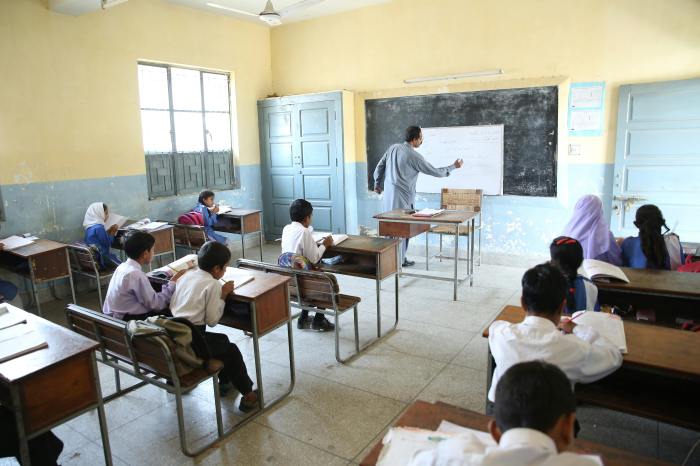
While hatred can be ‘learned’ in many ways – from one’s family, or cultural background, or even from negative experiences with the object of said hatred – in Pakistan the teaching of hatred, specifically religious intolerance, is embedded in various forms into the very fibre of the country’s education system. 
Continue reading “How the education system perpetuates religious intolerance in Pakistan, and how it could be a route to change “

Ten long years: Reflections on the Supreme Court ruling that promised much for Pakistan’s religious minorities

On 19 June 2014, the Supreme Court of Pakistan, under the leadership of the then Chief Justice Tassaduq Hussain Jillani, made a historic ruling that significantly advanced the protection and promotion of the rights of religious minorities in the country. This judgment was a pivotal moment in the country’s legal and human rights history, reflecting a commitment to upholding the principles of equality and non-discrimination enshrined within the Constitution of Pakistan.

Since its inception, Pakistan has grappled with issues surrounding the rights and protection of religious minorities. Despite the vision of its founding father, Muhammad Ali Jinnah, who advocated for a secular and inclusive Pakistan, the reality for religious minorities has often been marred by persecution, discrimination, violence, and marginalisation. Incidents of blasphemy accusations, mob attacks, forced conversions, desecration of places of worship, and targeted violence have highlighted the urgent need for robust legal safeguards and proactive measures.

The 2014 judgment stemmed from a Suo motu notice taken by the Supreme Court following the Peshawar church bombing in September 2013, which resulted in the tragic loss of over 80 lives. This incident underscored the vulnerability of religious minorities and the need for the state to ensure their protection.

Continue reading “Ten long years: Reflections on the Supreme Court ruling that promised much for Pakistan’s religious minorities”
Rosh Hashanah celebrations at the Heliopolis Synagogue in Cairo, Egypt. Credit: Facebook/JCC Cairo

An encouragement to President Sisi to go further in the promotion of freedom of religion or belief in Egypt

Earlier this month, on 15 September, the Jewish community in Cairo gathered at the Heliopolis Synagogue in Cairo to celebrate Rosh Hashanah.

The occasion, which marks the start of the Jewish New Year, is always significant, but in this context it was even more meaningful, as it marked the first time in 70 years that the community has been free to publicly celebrate it in all of Egypt.

It had been a while coming, as in recent years the Egyptian government has implemented a number of initiatives to benefit the Jewish community. For example, just over two weeks before the community gathered for Rosh Hashanah in Cario, the Egyptian Prime Minister, Mostafa Madbouly, joined Tourism Minister Ahmed Issa to re-open the Ben Ezra Synagogue – also in the capital – after years of careful restoration.

Continue reading “An encouragement to President Sisi to go further in the promotion of freedom of religion or belief in Egypt”

You are my other me: The importance of educating the Mexican women of the future 

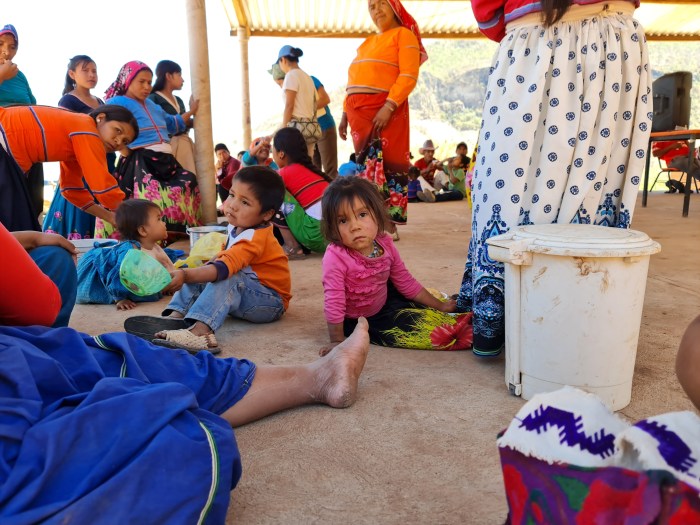
Florinda was just 11 years old when her family was displaced from the community of San José Yashtinín, San Cristóbal de las Casas Municipality, in Mexico’s Chiapas State in 2012. She was unable to continue with her studies for around two years following her family’s displacement because the paperwork and certificates she needed to enrol in a new school were left behind. In 2019 she told CSW she hoped to finish her studies in order to teach other children. 

Another woman, Alma, was 17 years old when her education was interrupted after her family was forcibly displaced from their village of Tuxpan de Bolaños, Bolaños Municipality, Jalisco State, in December 2017. She was subsequently unable to enrol in a new school, derailing her plans to become a nurse. 

Three years ago, to mark Children’s Day in the country, Alma travelled to Mexico City to meet with government officials. She also met with the National Council to Prevent Discrimination (CONAPRED) who expressed regret for what had happened: “We owe you an apology, this country owes you an apology…We have certainly failed in the process but we are here to protect you, so that your trajectory in life is what you want it to be.” 

This year, as Mexico observes Children’s Day, we call for more than an apology; we call for action.  

Continue reading “You are my other me: The importance of educating the Mexican women of the future “

New Education Policy 2020: A subtle attempt to reshape India’s collective thinking

In July 2020, Indian Prime Minister Narendra Modi and his government released a 62-page ‘New Education Policy’ (NEP) to much excitement. It had been 34 years since the last education policy was rolled out, so the excitement was understandable.

On the surface, the policy looks grand and attractive. It speaks of reformation and becoming a ‘Global Knowledge Superpower’. However, India’s religious minorities are dissatisfied. In the 18 months since its release, there have been several protests against it by Muslim and Christian groups, claiming that they have been left out of the central government’s glorious vision for the future. 

Here are some of the key concerns. 

Lack of representation of religious minorities

While the 1986 education policy focused on giving minorities and women access to education, reducing child drop out rates and introducing education for adults, the NEP 2020 seems to focus more on technology, new-age curricula and innovation, with hardly any specific agenda to uplift members of minority communities. In fact, the word ‘minority’ is only mentioned twice and ‘Muslim’ is mentioned once – ironically to admit that they are under-represented. 

Continue reading “New Education Policy 2020: A subtle attempt to reshape India’s collective thinking”