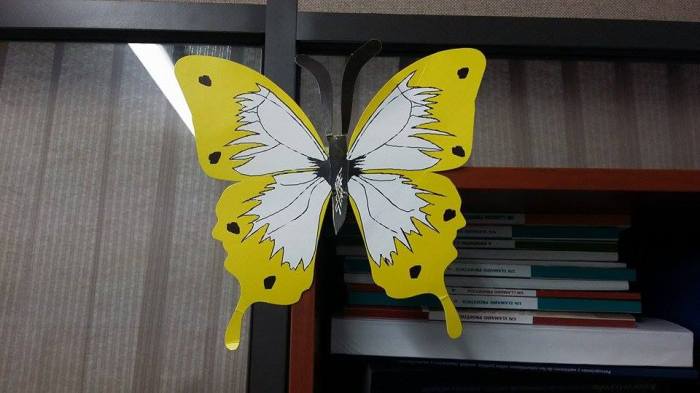
Yellow butterflies covered every wall in the office of one of our partner organisations in Colombia.
The first butterfly was cut out and hung on a wall immediately following the signing of the peace agreement between the government of Colombia and the Revolutionary Armed Forces of Colombia (FARC) on 26 September 2016 in Cartagena on the northern coast of the country.
In their speeches on this momentous occasion, both President Juan Manuel Santos and Timochenco, the commander and Chief of the FARC, referred to the yellow butterflies from celebrated Colombian author Gabriel Garcia Marquez’ famous novel ‘One Hundred Years of Solitude’: Gabriel Garcia Marquez is remembered for his love of yellow butterflies and flowers, which signify that nothing bad will happen.
“The war is over, we are starting to build peace” – Timochenko, Commander and Chief of the FARC
During his speech, Timochenko, stated, “war is over, we are starting to build peace’’ followed by a reference to a character in the novel, Mauricio Babilonia, who is constantly followed by yellow butterflies wherever he goes, as a symbol of infinite love and hope. Ivan Marquez, the FARC’s lead negotiator stated at a national FARC conference, “Tell Mauricio Babilonia he can release the yellow butterflies,” as a direct quote from the novel.
An Unexpected Outcome
These butterflies were a clear example of the hopeful expectancy that surrounded me in Bogota. Everyone was discussing what the peace agreement would mean for the country, especially for the regions most affected by the 52 year long conflict, especially the more rural areas of Colombia.
During the 53 years of internal conflict, hundreds of thousands of lives have been lost. All actors during the conflict have been responsible for major human rights violations; armed actors have also been responsible for a wide range of violations of religious freedom as hundreds of religious leaders have been the victims of targeted assassinations since 2000 and many have received threats, including death threats, by neo-paramilitary groups and guerrillas. Many churches have faced extortion from armed groups or have been forcibly closed.
However, at this point in time, the national plebiscite which was due to be held on 2 October 2016 had not yet taken place and was the final step required to bring the peace agreement into force.
Continue reading “For Some, Yellow Butterflies Symbolise Hope in the Midst of Colombia’s Uncertainty”