For religious minorities in India, even tragedies turn into trials

Once again a terror attack has left Muslims across India not just shaken like all other Indians, but also defending their very existence. Someone, somewhere, with a gun and an agenda, committed a horrific act — but it was their name, their identity and their faith that suddenly became suspect.

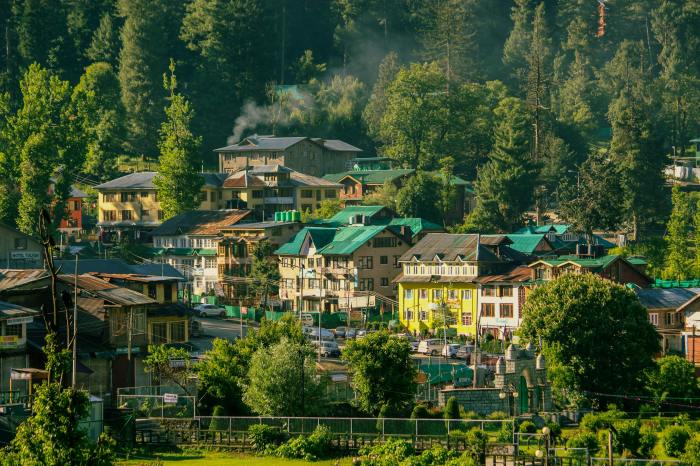
Twenty-six people were killed when terrorists attacked tourists in Pahalgam in Jammu and Kashmir on 22 April. The attackers reportedly singled out non-Muslims, even asking some to recite the Islamic Kalima (Islamic prayers derived from hadiths that are often used to aid South Asia Muslim children to memorise key beliefs) to prove their faith.

It was horrifying. And yet, in the midst of the horror, ordinary Kashmiris—Muslim men and women—risked their lives to save strangers. People like Nazakat Ahmad Shah, a tour guide, and Rayees Ahmad Bhatt, President of the Pony Owners’ Association, pulled survivors from danger. A local pony guide Syed Adil Hussain Shah gave his life while trying to protect a little girl. But instead of being praised for their efforts, the Muslim community, especially the Kashmiri Muslim community, was vilified. Their bravery was quickly forgotten, the national mood shifted from mourning to suspicion—and the blame – as it so often does in India – landed on an entire community.

Continue reading “For religious minorities in India, even tragedies turn into trials”
‘Hope is resistance’: An interview with CSW’s India Researcher

CSW relies extensively on the documenters, journalists, experts and activists that gather first-hand evidence of violations of the right to freedom of religion or belief (FoRB) in the countries we work on.

Last month, our Advocacy Intern Anna Shannon spoke with CSW’s India Researcher, whose name has been withheld for security reasons, to discuss what her work entails, the state of FoRB in India, and where she sees hope for the future.

As CSW’s India Researcher, what does your work entail?

My work entails documenting and reporting on violations of religious freedom across India, particularly against Muslims and Christians. So, whenever there are any attacks or any instances of discrimination against Muslims or Christians, I speak to victims, eyewitnesses, sometimes the lawyers who are working on these cases and I write the report.

Continue reading “‘Hope is resistance’: An interview with CSW’s India Researcher”

‘More that unites us’: Bridging the border between Indians, Pakistanis, Hindus and Muslims

This month marked 77 years since one of the world’s most violent religious conflicts: the partition of India and Pakistan, which claimed more than a million Hindu and Muslim lives and displaced over 15 million people. A people that once lived together were now forced to choose sides. Families were torn apart.  The bloodshed didn’t end there and neither did the hatred, as the countries fought several more wars in the years to come. 

On either side of the border, my generation grew up hearing the worst of each other. Most of the narratives we read in newspapers or watched in the cinema portrayed the other in bad light. The enmity and hatred was and continues to be so deep rooted that it affects religious groups in both nations. 

I cannot count the number of times I have heard an Indian Muslim being called a Pakistani in a derogatory tone. Ever since the Bharatiya Janata Party (BJP) first came to power in 2014, these slurs have only become more frequent and toxic.

Continue reading “‘More that unites us’: Bridging the border between Indians, Pakistanis, Hindus and Muslims”

India’s Muslims voted for justice and equality, but this remains a distant future

India is home to more than two hundred million Muslims, one of the largest Muslim populations in the world. However, in a crowd of close to 1.5 billion people, even this large community is reduced to a minority, accounting for just 14% of the population. In recent years, the community has been constantly reminded of this fact, having to fight to prove that they are equals and that they deserve the same rights as the Hindu majority.

Although the majority of India’s Muslims are native to the country, with a very small number of them having emigrated there from the Arab world, most Muslims today would agree that they are not made to feel equal to other Indian citizens.

Their plight has deteriorated significantly since India’s ruling Bharatiya Janata Party (BJP) came to power in 2014 under the leadership of Prime Minister Narendra Modi, with Muslims treated largely as second-class citizens by a government that has embraced a dangerous Hindu nationalist rhetoric.

Continue reading “India’s Muslims voted for justice and equality, but this remains a distant future”
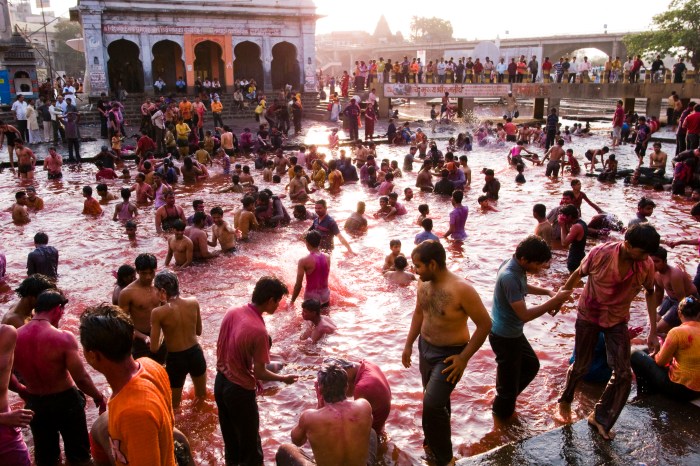
Members of the Dalit community celebrating of the festival of Holi in India.

Un Código Civil General: ¿Qué es y podría funcionar en la India hoy en día?

Un Código Civil Uniforme (UCC) significa que todos los ciudadanos se regirían por una ley común, independientemente de su origen religioso. Esto incluye las leyes personales que se aplican al matrimonio, el divorcio, las herencias, la sucesión de bienes, la manutención y la adopción. En la India, el debate sobre un UCC para todos los ciudadanos de la India ha sido un tema polémico desde la época colonial, y ha seguido siéndolo a pesar de la independencia y la creación del Estado indio moderno.

Cada pocos años, el tema se pone en primer plano y es debatido acaloradamente por defensores y opositores antes de retirarse a hervir a fuego lento en el fondo del discurso público.      

En junio de 2023, el debate público se reavivó cuando la 22ª Comisión Jurídica de la India solicitó la opinión pública y comentarios de organizaciones religiosas seleccionadas sobre el tema de la UCC. Luego, el 27 de junio, el primer ministro Narendra Modi hizo un fuerte discurso público a favor de la UCC para todos los ciudadanos, lo que generó fuertes reacciones de varios partidos de la oposición y grupos religiosos.

Continue reading “Un Código Civil General: ¿Qué es y podría funcionar en la India hoy en día?”