Why don’t they just come here legally?

They are called illegals, migrants, aliens, refugees, immigrants, asylum seekers, invaders, displaced – each word carrying with it a subtext of who they are, what they want, and where they fit. They have been accused of bringing disease, ‘poisoning the blood’ of a nation, participating in a massive invasion that aims to bring about violent anarchy, and even eating people’s beloved pets. In this discourse each of ‘them’ rarely has a face, a name, and much less their own story (unless they do something terrible that pushes their name and face into the headlines).

The question ‘Why don’t they just come here legally?’ is asked over and over. Again, there is a subtext to that question – an implication that if ‘they’ were good people, they would seek out and follow the rules. The question also assumes that there are legal, and presumably safe, channels for those in genuine distress to request and receive asylum in a safe country, as allowed for under international law, primarily under the UN Refugee Convention. However, the reality is that even those countries that recognise and uphold the Refugee Convention, (and there are many which do not), maintain byzantine systems, set up to make it as difficult as possible for someone, especially an asylum seeker, to petition for and be granted the right to start a new life in a safe country.

The vast majority of those ‘safe’ countries require visas for individuals traveling there from much of the world. The quickest way to ensure that a visa is denied, is to respond truthfully – that the motive for travelling is to request asylum upon arrival – and when a visa is denied on those grounds, the individual is almost always put on a blacklist for future requests.

Continue reading “Why don’t they just come here legally?”
Ciudadanía y conflicto: Los ejércitos de Israel y Myanmar se están aprovechando de las personas desplazadas

Actualmente hay alrededor de 30,000 solicitantes de asilo en Israel. La mayoría han huido de la severa represión, incluida la persecución religiosa, bajo un gobierno responsable de décadas de crímenes de lesa humanidad generalizados  en Eritrea, o procedentes de Sudán, donde un agotador conflicto de mas de 18 meses entre las Fuerzas de Apoyo Rápido y las Fuerzas Armadas de Sudán es la última de una serie de calamidades que han causado una grave crisis humanitaria.

La mayoría ha viajado a través de Egipto antes de llegar allí, por lo general con la ayuda de traficantes de personas, y corren un gran riesgo de agresión, extorsión, violencia de género o arresto y posible deportación . La mayoría de los que completan este viaje son hombres jóvenes, junto con algunas mujeres jóvenes que probablemente han soportado atrocidades inimaginables en el camino.

A su llegada, estos solicitantes de asilo se encuentran en un limbo legal; según la Línea Directa para Refugiados y Migrantes, la principal organización de defensa de los refugiados de Israel, Israel aprueba menos del 1% de las solicitudes de asilo que recibe, con muchos casos pendientes desde hace más de cinco o incluso diez años.

Continue reading “Ciudadanía y conflicto: Los ejércitos de Israel y Myanmar se están aprovechando de las personas desplazadas”

Citizenship and conflict: How the militaries of Israel and Myanmar are taking advantage of displaced persons

There are currently around 30,000 asylum seekers in Israel. Most have fled severe repression, including religious persecution, under a government responsible for decades of widespread crimes against humanity in Eritrea, or come from Sudan, where a gruelling 18-month conflict between the Rapid Support Forces and Sudan Armed Forces is the latest in a series of calamities to cause a severe humanitarian crisis.

Most will have travelled through Egypt before arriving there, typically with the help of people smugglers, and at great risk of assault, extortion, gender-based violence, or arrest and possible refoulement. The majority of those who complete this journey are young men, together with some young women who have likely endured unimaginable atrocities en route.

Upon their arrival, these asylum seekers find themselves in legal limbo; according to the Hotline for Refugees and Migrants, Israel’s leading refugee advocacy organisation, Israel approves less than 1% of the asylum claims it receives, with many cases pending for over five or even ten years.

Continue reading “Citizenship and conflict: How the militaries of Israel and Myanmar are taking advantage of displaced persons”
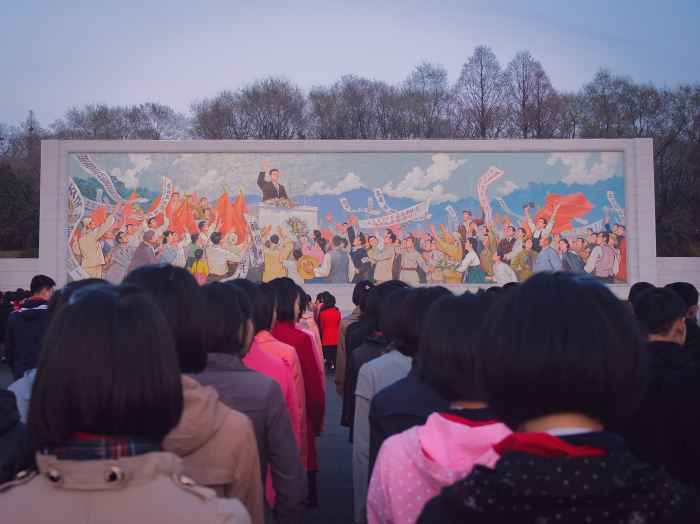
Women in front of a mural in North Korea.

Sisters separated for decades – the story of Kyu Li and Cheol-Ok

‘Every day I just miss her, I will find her. One day I will find her. If she’s alive.’

Kyu Li Kim hasn’t seen her younger sister Cheol-Ok since 1997. Like so many others who have fled rampant poverty, starvation and human rights violations in North Korea, her family has been separated for decades, often with little or no idea as to their whereabouts or wellbeing.

Kyu Li was just 20 years old when she left North Korea. She fled to China where she was sold to a Chinese Korean man for 3,000 Yuan. She told CSW that she was lucky that the family she was sold to were kind to her and had some money, and that they lived further from the border which meant she was less likely to be caught and returned to North Korea.

Continue reading “Sisters separated for decades – the story of Kyu Li and Cheol-Ok”
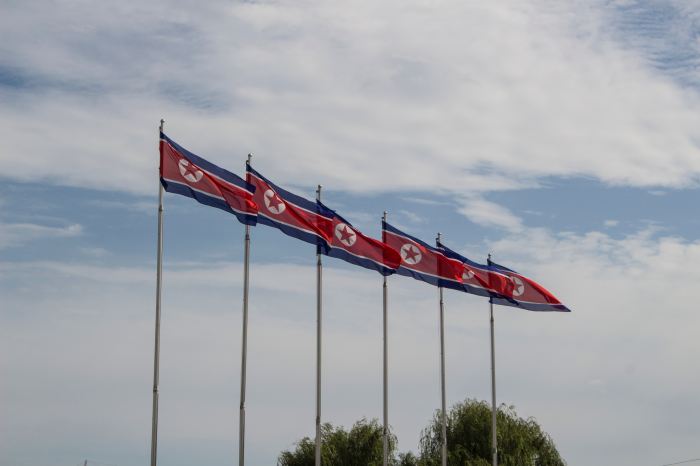
North Korea flags.

With echoes of ‘the most difficult time in North Korean history’, the international community must do more to bring about change

Earlier this month, the BBC released information gathered from exclusive interviews with three individuals living inside North Korea. Their reports have brought the country back into the headlines, revealing the devastating reality of the situation for North Korean citizens since the COVID-19-triggered border closure in January 2020. They describe widespread starvation and brutal repression, without feasible means of escape.

Hanna Song from the North Korean Database Centre for Human Rights (NKDB) said in an interview with the BBC ‘This [report] takes us back to the most difficult time in North Korean history.’

Song is referring here to the widespread famine of the 1990s known as the arduous march.

The Democratic People’s Republic of Korea (DPRK) was founded in 1948 under the leadership of Kim Il-Sung. The communist nation’s economy was built on a system of state control: a public distribution system for food and material goods, and a state-assigned job system dictating citizen employment.

Continue reading “With echoes of ‘the most difficult time in North Korean history’, the international community must do more to bring about change”