For religious minorities in India, even tragedies turn into trials

Once again a terror attack has left Muslims across India not just shaken like all other Indians, but also defending their very existence. Someone, somewhere, with a gun and an agenda, committed a horrific act — but it was their name, their identity and their faith that suddenly became suspect.

Twenty-six people were killed when terrorists attacked tourists in Pahalgam in Jammu and Kashmir on 22 April. The attackers reportedly singled out non-Muslims, even asking some to recite the Islamic Kalima (Islamic prayers derived from hadiths that are often used to aid South Asia Muslim children to memorise key beliefs) to prove their faith.

It was horrifying. And yet, in the midst of the horror, ordinary Kashmiris—Muslim men and women—risked their lives to save strangers. People like Nazakat Ahmad Shah, a tour guide, and Rayees Ahmad Bhatt, President of the Pony Owners’ Association, pulled survivors from danger. A local pony guide Syed Adil Hussain Shah gave his life while trying to protect a little girl. But instead of being praised for their efforts, the Muslim community, especially the Kashmiri Muslim community, was vilified. Their bravery was quickly forgotten, the national mood shifted from mourning to suspicion—and the blame – as it so often does in India – landed on an entire community.

Continue reading “For religious minorities in India, even tragedies turn into trials”

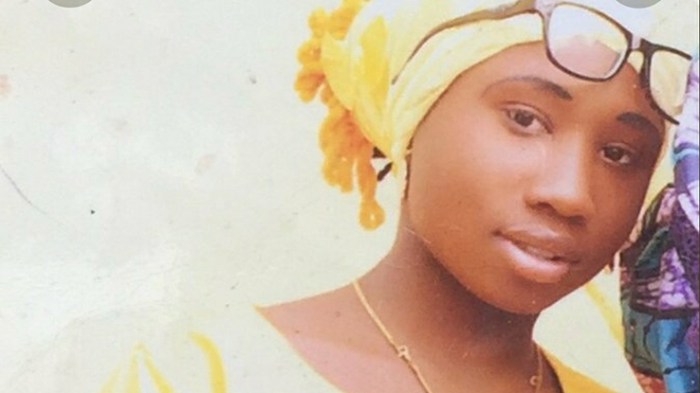
The international community must not allow the Nigerian government to fail Leah Sharibu any longer

Today is Leah Sharibu’s 22nd birthday. 

Anyone who has been following the work of CSW for some time will likely be familiar with some of the details surrounding her case: the fact that this is the eighth consecutive birthday that she has marked as a prisoner of the Islamic State West Africa Province (ISWAP); the fact that she was one of 110 girls abducted from the Government Girls Science and Technical College in Dapchi in Nigeria’s Yobe State on 19 February 2018; the fact that she was the sole Christian among them and was therefore denied her freedom because she refused to convert to Islam as a pre-condition for release – even as government negotiations saw all of her surviving classmates returned to their families in March 2018. 

Over the past seven years, successive administrations have failed to deliver on official promises to secure Leah’s release, including a personal pledge by former President Muhammadu Buhari made directly to Leah’s mother Rebecca. In January 2022 – over three years ago – Nigeria’s then Chief of Defence Staff General Lucky Irabor assured Nigerian media that there were plans and processes in place ‘to ensure that not just Leah Sharibu but every other person held captive is released.’  

And yet she remains in captivity, having been declared a ‘slave for life’, renamed, forcibly ‘married’ to ISWAP fighters, and given birth to three children. 

Continue reading “The international community must not allow the Nigerian government to fail Leah Sharibu any longer”

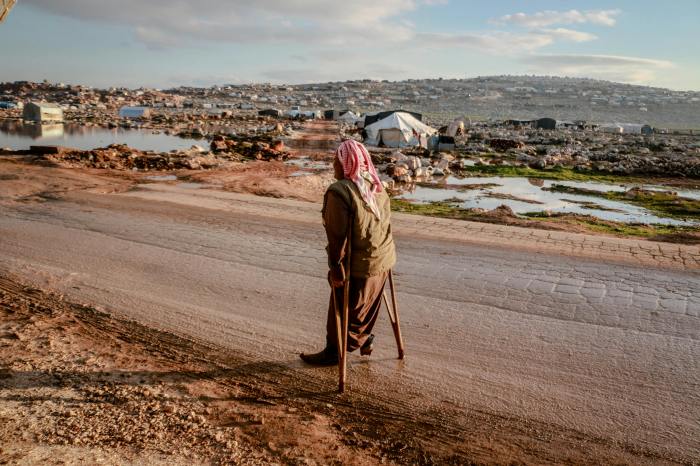
Syria: Ten years on, why does it matter?

June 2024 marked ten years since the Islamic State (IS) declared a caliphate in Syria. Years of brutal conflict including flagrant and well-documented human rights violations, including atrocity crimes, by a complex web of aggravators resulted in one of the highest death counts of any recent war and the highest number of displaced persons in modern history.

Yet in May of last year, Syria was welcomed back into the Arab League, the same government invited to participate in talks to further international cooperation that, just a decade earlier, had deployed chemical weapons against its own civilians. Furthermore, in summer 2023, Russia vetoed the renewal of a mechanism that had enabled the UN to deliver aid without the Syrian government’s consent to parts of north-west Syria not under its control – a resolution that had been in place for nine years. The year rounded out four months later with Syria present at the COP28 climate conference even as France issued an arrest warrant for President Bashar al-Assad over alleged  complicity in the chemical gas attacks.

Additionally, the Turkish president currently appears to be working towards normalising relations with Syria, despite opposing the Assad regime for over a decade and the ongoing occupation of parts of northern Syria by Turkish forces and allied Islamist militia.

It is clear that the world is beginning to forget the atrocities of the Syrian Civil War as well as the chaotic campaign of IS that saw whole cities reduced to rubble, wreaking havoc on the nation. But beyond the short clips of media coverage that defined our news cycles for years, what exactly happened between 2012 and 2014, and why does it matter today?

Continue reading “Syria: Ten years on, why does it matter?”

‘They realised their guns weren’t fast enough’

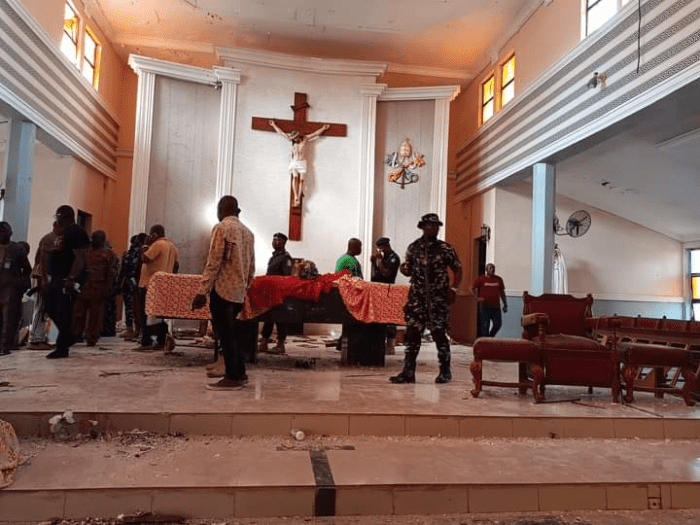
As we mark the second anniversary of the Pentecost Sunday massacre in Ondo State, Nigeria, the UK government needs to be doing more to advance FoRB through its foreign policy commitments. 

As Margaret is invited to speak, the room falls silent. We are in Parliament, off the side of Westminster Hall. It is the day of the Autumn budget and the news is flooded with discussion on whether a tax cut of 1% will be announced, how it will happen, and who it will benefit. Experts are pontificating on inflation and Conservative Party posing ahead of the 2024 general election. Seats to watch PMQs and the Chancellor’s statement are fully booked. The overflow queue stretches past the lobby and into St Stephen’s Chapel. There is no real possibility of those at the end of the queue getting in before the Chancellor is back at No. 11; but there is a small glimmer of hope, and so they stay. 

But Margaret is not standing in the queue. In fact, she couldn’t if she’d wanted to. Margaret lost her legs in the massacre at St Francis Xavier Catholic Church in Owo, Ondo State, Nigeria, on 5 June 2022 in the first ever terror attack on a church in the south of the country. This is her first time in the UK. She is supported by her husband Dominic to give a face to this year’s Red Wednesday, an event coordinated by Aid to the Church in Need aimed at raising awareness of Christian persecution. 

Continue reading “‘They realised their guns weren’t fast enough’”

Después de diez años del secuestro de las niñas de Chibok, el gobierno nigeriano debe por fin proteger a las comunidades vulnerables  

El mes pasado, 137 familias de Kuriga, en el estado de Kaduna, Nigeria, dieron un suspiro colectivo de alivio cuando sus hijos e hijas regresaron a casa después de más de dos semanas de cautiverio terrorista. 

Los niños fueron secuestrados en su escuela el 7 de marzo, cuando asaltantes armados invadieron el plantel justo cuando las clases estaban a punto de comenzar. La escuela informó que se llevaron a 287 estudiantes; sin embargo, el gobernador del estado de Kaduna, Uba Sani, ha intentado desde entonces descartar la cifra como “producto de la imaginación de alguien”, a pesar de que inicialmente él mismo citó la misma cifra. 

De esto surgen algunas preguntas: ¿qué se está haciendo para confirmar que todos los estudiantes han sido efectivamente liberados? ¿Qué pasa con los miles de personas que han sido secuestradas por grupos terroristas en los últimos años? Y, por último, ¿cómo es posible que esto siga sucediendo una década después de que los secuestros masivos en Nigeria aparecieran por primera vez en la agenda internacional?  

Continue reading “Después de diez años del secuestro de las niñas de Chibok, el gobierno nigeriano debe por fin proteger a las comunidades vulnerables  “