All posts

Afghan refugees in Pakistan.

Forced to flee Afghanistan, the struggle of many refugees does not end there

‘The return of the Taliban meant a return of terror for the Hazara people.’

Surraya, whose name means ‘Brightest Star’, is a 33-year-old Afghan Hazara woman currently living as a refugee in Pakistan. Born to refugee parents who fled to Iran following the Soviet invasion of Afghanistan in 1980, Surraya and her family returned to their country in 2004 in hope of peace, security and development.

And, for a decade and a half, while she and members of her fellow Hazara community did face some challenges and discrimination, those hopes seemed genuinely within reach.

Continue reading “Forced to flee Afghanistan, the struggle of many refugees does not end there”
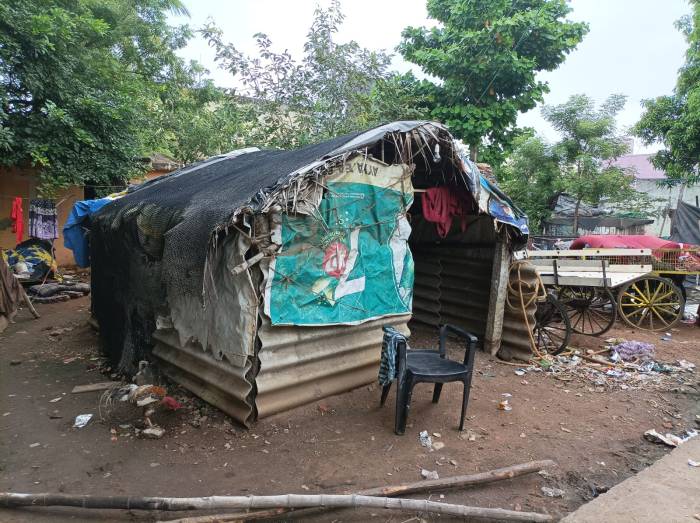
A hut in Mappedu, on the outskirts of Chennai, India.

Los Narikuravar: Una comunidad que necesita protección

En enero de 2023, CSW visitó la comunidad de Narikuravar en Mappedu, en las afueras de Chennai, y se reunió con miembros de una comunidad que durante décadas ha sufrido discriminación por motivos de género y, más recientemente, también por motivos de religión. El siguiente blog ofrece algunas reflexiones sobre la visita. por razones de seguridad los nombres han sido cambiados.

Radhika, madre de tres niñas, se sentó en una pequeña habitación con techo de paja. Con las manos cruzadas y un pañuelo sobre la cabeza, se arrodilló y oró fervientemente antes de volverse para hablar conmigo. Como mujer de una comunidad ignorada que también está sujeta a tradiciones restrictivas específicas de género, normalmente se lamentaría por su lamentable circunstancia, pero dice que su nueva fe le da la esperanza de vivir cada día.

Radhika pertenece a la comunidad Narikuravar, una tribu seminómada que originalmente eran cazadores y recolectores. Vive con otras 30 familias de Narikuravar en una pequeña colonia en Mappedu, en las afueras de Chennai. Los Narikuravar se han enfrentado y siguen enfrentándose a la discriminación en todas las esferas de la vida, incluida la educación, el empleo e incluso en la búsqueda de un lugar donde vivir.

Continue reading “Los Narikuravar: Una comunidad que necesita protección”
A hut in Mappedu, on the outskirts of Chennai, India.

The Narikuravar: A community in need of protection

In January 2023, CSW visited the Narikuravar community in Mappedu, on the outskirts of Chennai, and met with members of a community who for decades have suffered discrimination on the grounds of gender, and more recently on the grounds of religion as well. The following blog offers some reflections on the visit. Please note that the names have been changed for security reasons.

Radhika, a mother of three young girls, sat inside a little room with a thatched roof. With folded hands and a scarf over her head, she knelt down and prayed earnestly before turning to speak with me.  As a woman from a disregarded community who is also subject to restrictive gender-specific traditions, she would be excused for lamenting her circumstances but says that her new-found faith gives her the hope to live each day.

Radhika belongs to the Narikuravar community, a semi-nomadic tribe who were originally hunters and gatherers. She lives with around 30 other Narikuravar families in a tiny colony in Mappedu on the outskirts of Chennai. The Narikuravars have faced and continue to face discrimination in all spheres of life, including education, employment and even in securing accommodation.

Continue reading “The Narikuravar: A community in need of protection”
A protester holds a sign that reads 'Woman Life Freedom' during demonstrations following the following the death of Iranian woman Zhina ‘Mahsa’ Amini.

‘Woman, Life, Freedom’ – Iran faces a crisis with freedom of religion or belief and gender equality at its core

Iran is enduring its most turbulent period since the 2019-2020 pro-democracy protests, with gender equality and a lack of freedom of religion or belief at its very core. 

Since September 2022 distressing news reports have been emerging of violence meted out on Iranian citizens protesting for change – the arbitrary application of the death penalty, extrajudicial killings (including of minors),  maiming, excessive sentencing, and the suspicious deaths of several protestors after being released from detention, to highlight a few.

In the face of these violations an initially slow and largely reactive international response accelerated, and a special session of the UN Human Rights Council in November 2022 which established an independent, international fact-finding mission to investigate alleged human rights violations related to the protests, was followed by Iran’s expulsion from the UN Commission on the Status of Women in December 2022. Then in January 2023 the United States, the United Kingdom and the European Union announced sanctions on 10 additional Iranian individuals and one additional Iranian entity.

Continue reading “‘Woman, Life, Freedom’ – Iran faces a crisis with freedom of religion or belief and gender equality at its core”
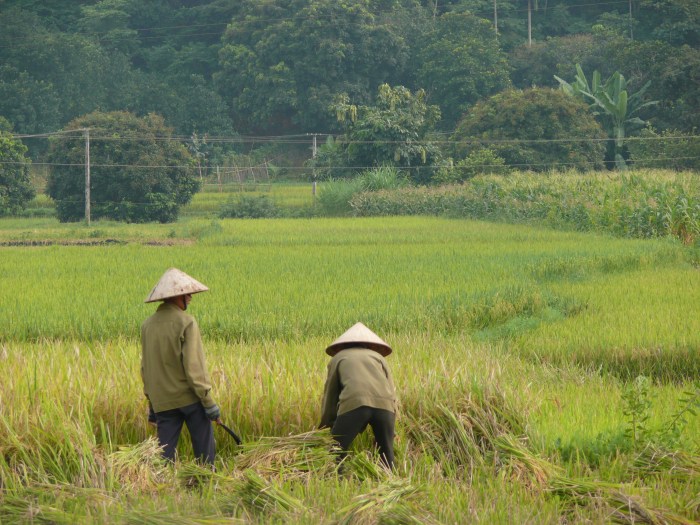
Farmers in Vietnam.

Una brecha entre la política y la práctica: en Vietnam, muchas comunidades indígenas tienen prohibido usar su propio idioma

“Tuvimos una celebración navideña con pancartas en diferentes idiomas como Jarai y Ede. A las autoridades no les gustó, así que nos prohibieron usar las pancartas en nuestros idiomas”.

Cristiano de un grupo indígena en Vietnam

El artículo 5 de la constitución de Vietnam establece que “cada grupo étnico tiene derecho a usar su propio idioma y sistema de escritura, para preservar su identidad nacional y promover sus buenas costumbres, hábitos, tradiciones y cultura”.

Y el Pacto Internacional de Derechos Civiles y Políticos, del que Vietnam es parte, establece que a las personas pertenecientes a grupos minoritarios no se les negará el derecho, en conjunto con los demás miembros de su grupo, a disfrutar de su propia cultura, a profesar y practicar su propia religión, o utilizar su propio idioma».

Continue reading “Una brecha entre la política y la práctica: en Vietnam, muchas comunidades indígenas tienen prohibido usar su propio idioma”