All posts

A holistic response to forced migration

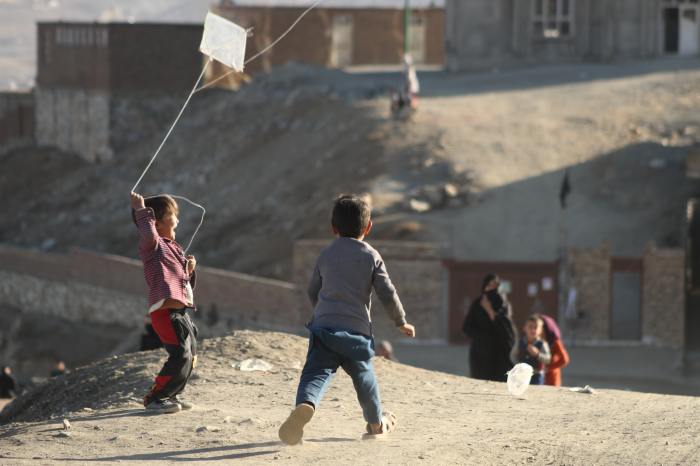
Displacement due to adverse circumstances has existed for as long as humankind has walked the earth. Yet in a stark contrast to those fleeing the violence in Ukraine, others genuinely seeking refuge in Europe from dangerous situations today are increasingly dismissed as economic migrants on the grounds of their ethnicity or religious identity. What, or rather who deserves to find refuge and make a country their home is continually being contested. 

Statistically speaking, the world is facing the largest displacement crisis since the Second World War, with close to three million people having fled the war in Ukraine in a matter of weeks. Other individuals and communities are fleeing from some of the most dangerous areas of the world in search of a new life – or to put it bluntly, life at all.

Western countries only host 14% of the world’s refugees

The vast majority of the world’s refugees flee to neighbouring countries, for example to Lebanon in the case of Syrians, or to Bangladesh in the case of Rohingyas from Myanmar/Burma. However, Western nations, where fears of ‘mass migration’ are exploited in populist ethnic and religion-laced politics and loom large on the media landscape, host just 14% of the world’s refugees.

Continue reading “A holistic response to forced migration”
‘A new front’ in the pursuit of justice in Cuba

On the night of 28 February, Cuban police and State Security agents carried out a raid, capturing a man who they had been searching for 44 days. He was taken to an interrogation center and given an ultimatum: leave the country within the week or spend the next 30 years in a maximum-security prison. In early March, the man said good-bye to his wife and baby daughter and boarded a plane to Europe. Eighteen hours later, he submitted a formal request for asylum in Switzerland.

The man had committed no act of violence, nor had he stolen anything. He is a pastor. His only crime was to have extended his pastoral work to reach out to and pray with the families of political prisoners.

The Cuban government has long been fearful of any link between religious groups and political dissidents and has, for decades, gone to great effort to keep both as separate as possible. This is in part a general strategy to socially isolate all those it considers to be dissidents, including political activists, human rights defenders and independent journalists, in order to weaken and ultimately neutralise them. However, it is also, whether any of the Cuban Communist Party leadership would admit it or not, a recognition of the power in the combination of spirituality with the fight for justice and freedom.

Continue reading “‘A new front’ in the pursuit of justice in Cuba”

“Un nuevo frente” en búsqueda de la justicia en Cuba

En la noche del 28 de febrero, la policía cubana y agentes de la Seguridad del Estado realizaron un allanamiento, apresando a un hombre al que buscaban desde hacía 44 días. Lo llevaron a un centro de interrogatorios y le dieron un ultimátum: Abandonar el país en una semana o pasar los próximos 30 años en una prisión de máxima seguridad. A principios de marzo, el hombre se despidió de su esposa y de su pequeña hija y abordó un avión rumbo a Europa. Dieciocho horas después, presentó una solicitud formal de asilo en Suiza.

El hombre no había cometido ningún acto de violencia, ni había robado nada. Él es un pastor. Su único delito fue haber extendido su labor pastoral para alcanzar y orar con las familias de los presos políticos.

El gobierno cubano ha temido durante mucho tiempo cualquier vínculo entre grupos religiosos y disidentes políticos y, durante décadas, ha hecho un gran esfuerzo para mantener a ambos lo más separados posible. Esta es en parte, una estrategia general para aislar socialmente a todos aquellos que considera disidentes, incluidos activistas políticos, defensores de los derechos humanos y periodistas independientes, con el fin de debilitarlos y, en última instancia, neutralizarlos. Sin embargo, es también, lo admita o no alguna dirigencia del Partido Comunista de Cuba, un reconocimiento del poder que se produce por la combinación de la espiritualidad con la lucha por la justicia y la libertad.

Continue reading ““Un nuevo frente” en búsqueda de la justicia en Cuba”

India’s hijab controversy is forcing Muslim girls to choose between their education and their faith

Over the past month, the Indian state of Karnataka has been in the news as protests related to a ban on Muslim students wearing the hijab (headscarf) in the classroom escalated and spread across the state. 

The tensions led to violent clashes between those supporting the ban and those against it, drastically affecting the education of students who have already been hit by the pandemic. 

Background

The controversy began on 28 December 2021 when authorities of an educational institution in Udipi, Karnataka banned six Muslim girls from entering with their hijabs (headscarves) on. One of the students filed a petition in the Karnataka High court demanding the right to wear the hijab under Article 14 of the Indian constitution, which recognises equality and equal protection under the law, and Article 25, which stipulates that all citizens have the right to freely profess, practise and propagate religion. 

Continue reading “India’s hijab controversy is forcing Muslim girls to choose between their education and their faith”

«La iglesia se quedó sin templo» – La historia de Alain Toledano Valiente.

«Nos desalojaron por primera vez en el año 2007. Los del Gobierno irrumpieron en nuestra casa [y] nos echaron a la calle – tomaron todo lo que nos pertenecía y lo arrojaron a la calle. Nos quedamos sin hogar. Al mismo tiempo, el Gobierno demolió nuestro templo, nuestra Iglesia Emanuel. Destruyeron el suelo y se lo llevaron. Dejaron todo el lugar en ruinas. Confiscaron nuestro terreno. Esta fue la primera agresión de esa escala. Destruyeron y tomaron todo lo que nos pertenecía, nuestras posesiones familiares, nuestro equipo de sonido e instrumentos musicales. Todo lo que la iglesia tenía nos fue arrebatado a la fuerza, se llevaron todos nuestros aparatos tecnológicos. La iglesia fue despojada de su terreno, su propiedad y posesiones, se quedó sin un templo y nosotros nos quedamos en la calle sin hogar».

Pastor Alain Toledo Valiente en una entrevista con CSW, septiembre de 2020.

Menos de diez años después, la iglesia Emanuel en Santiago de Cuba fue sometida a un segundo gran ataque. A las cinco de la madrugada del cinco de febrero de 2016, militares, agentes de seguridad del Estado y agentes policiales rodearon la propiedad donde la iglesia estaba ubicada y donde la familia Toledano vivía. El pastor Toledano se encontraba en el extranjero en ese momento, pero su esposa fue llevada bajo custodia por las autoridades gubernamentales y la mantuvieron incomunicada durante el tiempo que duró la demolición —desde las cinco de la mañana hasta las siete de la tarde— También fueron detenidos alrededor de 40 miembros, y la iglesia junto con la casa fueron demolidas.

Estos incidentes —las demoliciones de noviembre de 2007 y de febrero de 2016— constituyen dos hilos sombríos del gran entramado perturbador de avasallamientos por parte de las autoridades cubanas hacia el pastor Toledano, que han continuado a lo largo de dos décadas. Más de seis años después de la segunda demolición que sufrió la iglesia, los ataques hacia el pastor Toledano, su iglesia y su derecho como congregación a un templo continuaron acrecentándose.

Continue reading “«La iglesia se quedó sin templo» – La historia de Alain Toledano Valiente.”