Fang Bin with his wife and son in an undated photo.

一个破碎了24年的家庭——法轮功维权人士方斌的故事

拥挤的医院大厅、奔忙的穿戴全身防护的医护人员、躺在走廊里的病人、堆放在医院外殡葬车上的尸袋……2020 年 2 月初,57 岁的商人方斌驾车在武汉市内转悠,记录下了他在五家医院的所见所闻。他在社交媒体上发布的短视频让人们难得一见地看到疫情中心地带发生的一切。

2020 年 2 月 1 日,方斌被警方短暂拘留。获释后,他变得更加敢言。在社交媒体上广泛传播的视频中,他直言不讳地说:“病毒的根源是暴政!” 几天后,2 月 9 日,他在 YouTube(一个在中国被禁止的社交媒体平台)上呼吁“全民反抗”、要求当局“还政于民”后消失。

方斌、张展和另外至少两名公民记者的先后失踪引起了全世界媒体的关注。尽管当局知道方斌及其妻子是资深法轮功维权人士,但很多熟悉的朋友在呼吁释放方斌时,选择不提他的信仰背景。他们可能意识到中国社会仍对法轮功这一信仰团体存在某种歧视,或者担心当局对方斌抓捕判刑可能不基于其网络言论而基于其信仰,他甚至可能因之遭到当局酷刑。

Continue reading “一个破碎了24年的家庭——法轮功维权人士方斌的故事”
European External Action Service Headquarters in Brussels.

The Myanmar junta should have no place at the ASEAN-EU Human Rights Dialogue

Last week, soldiers of the Myanmar/Burma military reportedly beheaded three men in Pale Township in the Sagaing Region of Myanmar. Two of them were civilians, and the third a member of a People’s Defense Force in Nyaunggon Village.

A witness told The Irrawaddy news website that the men had been killed as they returned to their village on 27 September, thinking that the junta troops who had occupied it for the past two and half weeks had left. One man’s head was hung on a fence, another placed on a chair, and the third ‘had his abdomen cut open, intestines taken out, limbs cut off and [then] put into his abdomen.’

The same day, at least 19 children and their teacher were injured when the regime shelled a monastic school in Wuntho Towsnhip, also in the Sagaing Region. Most were aged between five and eight, and seven of them were critically wounded.

Continue reading “The Myanmar junta should have no place at the ASEAN-EU Human Rights Dialogue”
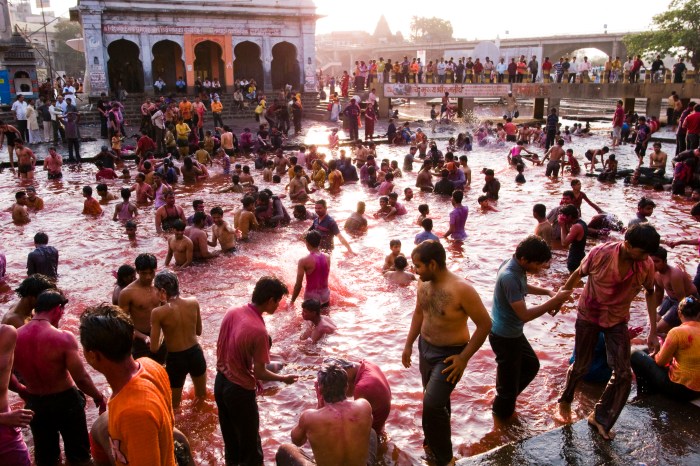
Members of the Dalit community celebrating of the festival of Holi in India.

A Uniform Civil Code: What is it and could it work in India today?

A Uniform Civil Code (UCC) means that all citizens shall be governed by a common law, irrespective of their religious background. This includes personal laws that apply to marriage, divorce, inheritance, succession of property, maintenance and adoption. In India, the debate over a UCC for all citizens of India has been a contentious issue since the colonial era, and has remained so despite independence and the creation of the modern Indian state.

Every few years, the subject is brought to the fore and debated hotly by proponents and opponents before retreating to simmer in the background of public discourse.      

In June 2023, public debate was reignited when the 22nd Law Commission of India solicited public opinion and comments from selected religious organisations on the subject of the UCC. Then, on 27 June Prime Minister Narendra Modi made a strong public pitch for the UCC for all citizens, garnering strong reactions from several opposition parties and religious groups.

Continue reading “A Uniform Civil Code: What is it and could it work in India today?”
Rosh Hashanah celebrations at the Heliopolis Synagogue in Cairo, Egypt. Credit: Facebook/JCC Cairo

An encouragement to President Sisi to go further in the promotion of freedom of religion or belief in Egypt

Earlier this month, on 15 September, the Jewish community in Cairo gathered at the Heliopolis Synagogue in Cairo to celebrate Rosh Hashanah.

The occasion, which marks the start of the Jewish New Year, is always significant, but in this context it was even more meaningful, as it marked the first time in 70 years that the community has been free to publicly celebrate it in all of Egypt.

It had been a while coming, as in recent years the Egyptian government has implemented a number of initiatives to benefit the Jewish community. For example, just over two weeks before the community gathered for Rosh Hashanah in Cario, the Egyptian Prime Minister, Mostafa Madbouly, joined Tourism Minister Ahmed Issa to re-open the Ben Ezra Synagogue – also in the capital – after years of careful restoration.

Continue reading “An encouragement to President Sisi to go further in the promotion of freedom of religion or belief in Egypt”
Iván Daniel Calás Navarro teaching a class on freedom of religion or belief in Cuba.

Cuba’s political police threaten young evangelical Christian because of his leadership

By Yoe Suárez

7 September, the day on which 19-year-old YouTuber Iván Daniel Calás Navarro was to celebrate his 20th birthday was going to be an unforgettable day, and it was, but in a very different way. That day, he received a summons, delivered to his house in Havana, for 8 September 2023, to present himself at a police station known for imprisoning and punishing political dissidents.

Although this was the first time he had received an official summons, Calás Navarro is certain that he became a target of the political police beginning in 2017, when, at the age of 14, he decided to share his faith and created the ‘Voz De Verdad’ [Voice Of Truth]’ YouTube channel – which now has 7000 followers – and when a few years later he began to work as a youth leader in his congregation, the Nazareth Baptist Church, which is part of the Baptist Convention of Western Cuba, a registered denomination with a historic presence on the island.

Surveillance of Calás Navarro became even more intense after the peaceful protests of 11 July 2021 when, in less than a month, the Cuban regime announced Legal Decree 35, which regulates social media. According to FRANCE 24, the law prompted concern in Cuba because of its implication for freedom of expression. The law punishes any content that is critical of the government, or which the authorities deem to be ‘fake news’, or which incites protests. The government maintains that the law is meant to fight cyber-terrorism, however members of Cuban independent civil society believe that the law is nothing more than the formalisation of the censorship that has spread across the island since internet use has grown more widespread.

Continue reading “Cuba’s political police threaten young evangelical Christian because of his leadership”