Li Heping’s Release – A Moment to Celebrate or a Continuing Case of Concern?

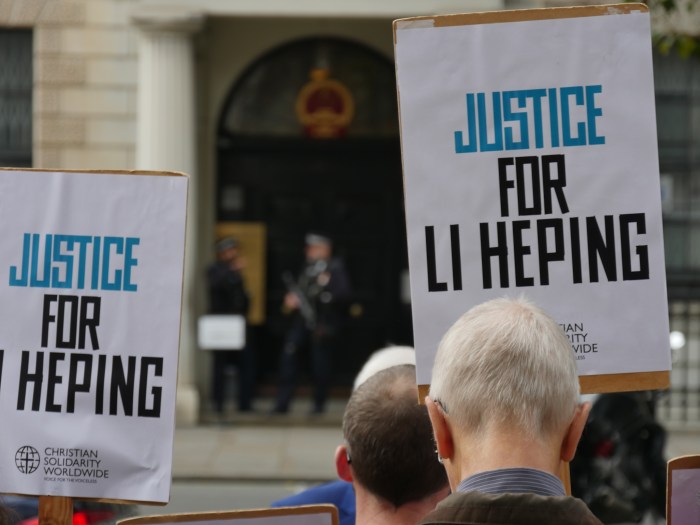
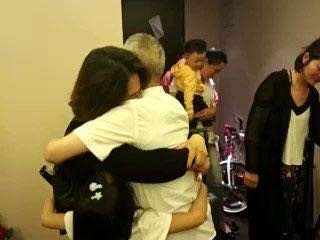
Li Heping’s reunion with his family on 9 May 2017 was a moment for celebration; the celebration of an innocent man’s reunion with his long-suffering family and the celebration of the end of a period of torture, interrogation and imprisonment. But the joy of Li Heping’s reunion with his family is tempered by continuing concerns for his safety, and the injustice of his situation.

Who is Li Heping?

Li Heping is one of China’s most experienced and high profile human rights lawyers. He began working on sensitive cases around 2002 and is well known for defending the human rights of religious minorities, including Christians and Falun Gong practitioners, as well as activists and victims of torture.

His work on these cases led to a confrontation with the state. A Chinese security agent reportedly once told him that, in the eyes of Beijing, Li had become “more dangerous than Bin Laden”. In September 2007, Li was abducted, stripped and tortured by security forces. He then had his lawyers’ license revoked in 2009, and continued to be consistently monitored.

Continue reading “Li Heping’s Release – A Moment to Celebrate or a Continuing Case of Concern?”

Dignitaries Sign Letter Supporting Appeal For CSW’s UN Accreditation

Member States of the United Nations Economic and Social Council (ECOSOC)

Re: CSW’s application for UN ECOSOC Consultative Status

Excellencies,

We are writing to you requesting that you vote in favour of Christian Solidarity Worldwide’s (CSW’s) appeal for UN ECOSOC consultative status in April 2017.

CSW is a human rights advocacy organisation with almost 40 years’ experience of promoting the right to Freedom of Religion or Belief (FoRB) in over 20 countries worldwide. Its advocacy work is firmly rooted in Article 18 of the Universal Declaration of Human Rights (UDHR), which states that “Everyone has the right to freedom of thought, conscience and religion.”

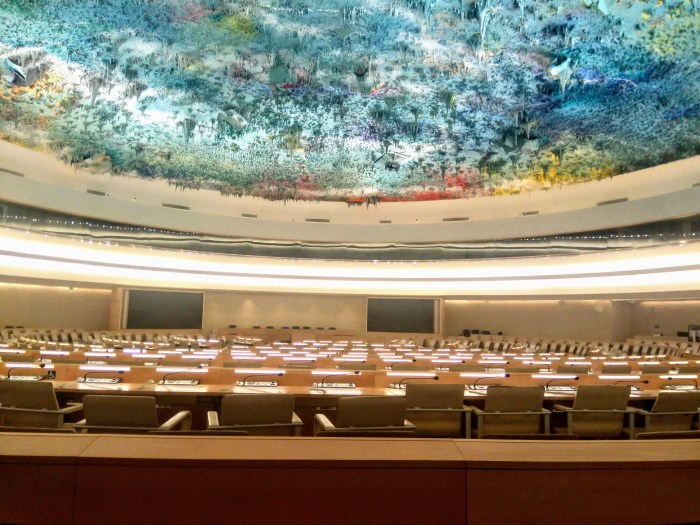
CSW engages regularly with United Nations mechanisms providing evidence-based analysis. It applied in 2009 for consultative status in order to broaden the scope of its work with key human rights advocacy platforms, including the Human Rights Council and General Assembly.

On 3 February 2017, the UN Committee on NGOs voted to reject CSW’s application after repeated deferrals. Since 2009, CSW has provided timely and comprehensive answers to over 80 questions from the Committee, to no avail.

We, the undersigned, are disappointed at the Committee’s decision and deeply concerned about the wider message that the rejection of CSW’s application sends regarding the Committee’s commitment to facilitating NGO access to UN mechanisms.

CSW’s situation is not unique. In May 2016, over 230 NGOs raised concerns about the Committee’s repeated deferral and denial of NGO applications for consultative status, which effectively blocks a number of NGOs from participating fully in UN processes.

Continue reading “Dignitaries Sign Letter Supporting Appeal For CSW’s UN Accreditation”

From Deferral to Denial: CSW Continues to be Blocked from the UN by the NGO Committee

“Without the participation of non-governmental organisations and civil society groups, no initiative, however visionary, can be fully achieved” – Former UN Secretary General, Ban Ki Moon

Civil society participation at the United Nations (UN) is not an ‘add-on’. Rather, inclusive and genuine NGO engagement increases accountability and strengthens the work of the UN, making it more effective and better-informed. This has been flagged numerous times by many of the key human rights experts within the UN.

The importance of the contribution of civil society actors to the capacity, efficiency and impact of the UN Special Procedures and other human rights mechanisms was stressed in the latest report by the UN Special Rapporteur on Freedom of Religion or Belief, Dr Ahmed Shaheed. The UN High Commissioner for Human Rights, meanwhile, has pointed out the significant obligation international human rights law places on Member States to respect the freedoms which enable civil society to develop and operate.

Given the role civil society has to play in the protection and promotion of human rights, the recent decision by the UN NGO Committee to deny Christian Solidarity Worldwide’s access to the UN – after arbitrary deferral of its application since 2009 – sends a controversial and troubling message to civil society. Far from being just an administrative hurdle or minor oversight, the decision is effectively an attempt to silence the voice of an NGO promoting FoRB– thus undermining the protection of FoRB within the UN system.

Continue reading “From Deferral to Denial: CSW Continues to be Blocked from the UN by the NGO Committee”

Latent Justice: The Unfinished Gujarat Story

“The Gujarat Carnage 2002, is certainly one of the bloodiest chapters of post-independent India. The painful reality is, that those responsible for it, are now at the helm of power in India” – Father Cedric Prakash (Human Rights Activist)

Confronting past crimes is unsettling, particularly when the perpetrators continue to enjoy political immunity. Fifteen years ago on 28 February 2002, violence in Gujarat, India covered the news headlines as an estimated 2,000 Muslims were massacred over several months across 16 districts in the country.

Continue reading “Latent Justice: The Unfinished Gujarat Story”

Shifting Alliances in Northwest Syria Make a Political Solution More Remote

In northwest Syria, religious minorities have suffered multiple attacks on their properties, places of worship and unknown numbers have been killed. The rights of small Christian and Druze communities that remain are likely to be further restricted by the rapidly changing political and military landscape in the area.

Talks in Astana, Kazakhstan

The Kazakh capital, Astana, has been the site of several rounds of talks organised by Russia, Iran and Turkey aimed at finding a political solution to the Syrian crisis. However, shifting power play between the different armed groups that constitute the rebel movement continues to throw up hurdles in the path towards peace.

Continue reading “Shifting Alliances in Northwest Syria Make a Political Solution More Remote”