A Narikuravar woman walking through her hometown of Mappedu in Chennai, India.

‘I hope that my husband will let me go to church’: the tension between tradition and religious freedom for women in the Narikuravar community

Every morning after finishing her household chores, 17-year-old Deepa* walks into a small thatched building in Mappedu, Chennai. This is where Christians belonging to the indigenous Narikuravar community in Mappedu have been gathering for prayer meetings and Sunday services for more than a decade.

Deepa has been attending these meetings since she was a child. She loved learning Bible verses, sharing her testimony and singing songs. But there was a huge price to pay. To this day, she has been facing significant opposition from her parents, to the point that she has been physically abused because she continues attending church

Deepa told CSW: ‘My parents used to scold me and beat me up since I started going to church, but I would still go. We had fights at home everyday. They would swear at me, threaten me with dire consequences and beat me up. I would just pour my heart out to God and keep praying. When I told them I was going to get baptised, they were furious. I’ve now decided to wait a little longer to get baptised.’
Continue reading “‘I hope that my husband will let me go to church’: the tension between tradition and religious freedom for women in the Narikuravar community”
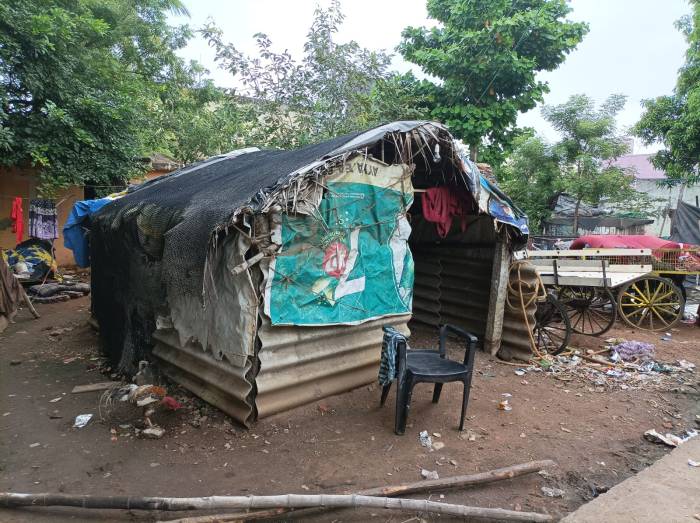
A hut in Mappedu, on the outskirts of Chennai, India.

The Narikuravar: A community in need of protection

In January 2023, CSW visited the Narikuravar community in Mappedu, on the outskirts of Chennai, and met with members of a community who for decades have suffered discrimination on the grounds of gender, and more recently on the grounds of religion as well. The following blog offers some reflections on the visit. Please note that the names have been changed for security reasons.

Radhika, a mother of three young girls, sat inside a little room with a thatched roof. With folded hands and a scarf over her head, she knelt down and prayed earnestly before turning to speak with me.  As a woman from a disregarded community who is also subject to restrictive gender-specific traditions, she would be excused for lamenting her circumstances but says that her new-found faith gives her the hope to live each day.

Radhika belongs to the Narikuravar community, a semi-nomadic tribe who were originally hunters and gatherers. She lives with around 30 other Narikuravar families in a tiny colony in Mappedu on the outskirts of Chennai. The Narikuravars have faced and continue to face discrimination in all spheres of life, including education, employment and even in securing accommodation.

Continue reading “The Narikuravar: A community in need of protection”
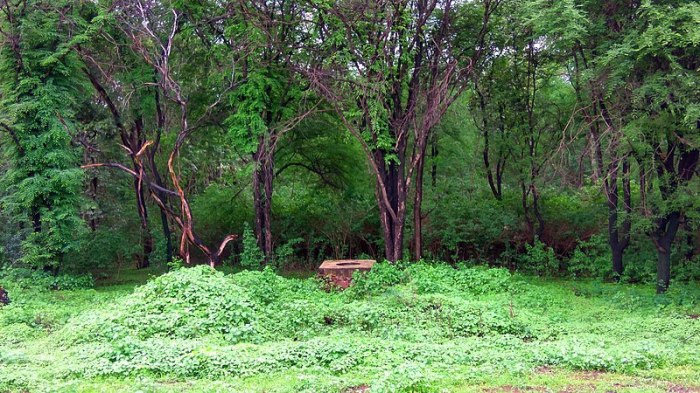
A restricted area in Chhattisgarh, India.

Chhattisgarh’s tribal Christian communities continue to live in fear

For tribal Christian communities in India’s Chhattisgarh State, the new year hasn’t really come with hopes of a better or safer future.

On 2 January a Hindu nationalist mob barged into the Vishwa Dipti Christian School campus in Narayanpur district and vandalised a church located within the premises of the school. Videos of the mob repeatedly hitting statues of Jesus and Mary, and scattering furniture surfaced on the internet. Both members of the mob and the churchgoers belonged to local tribes in Narayanpur, the two most prominent of which are the Gond and Muria tribes.

But what grabbed national headlines and went viral on social media was the image of a bleeding senior police official who was attacked by the mob when he tried to intervene. Narayanpur’s Superintendent of Police Sadanand Kumar was soon rushed to the hospital after suffering a serious head injury. Christians in Chhattisgarh have suffered attacks like these for several months with hardly any interest from the media, but it was only when a person of power was injured that anyone paid any attention.

Continue reading “Chhattisgarh’s tribal Christian communities continue to live in fear”
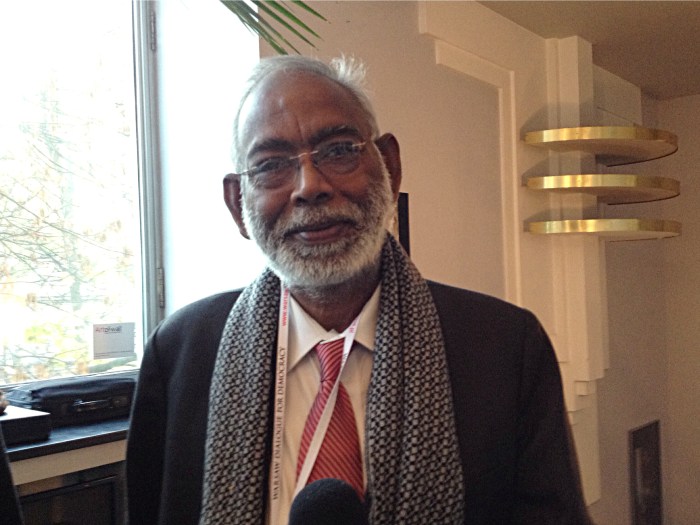
Indian human rights activist John Dayal.

‘Freedom of expression and the courage to express oneself go hand in hand’ – an interview with John Dayal

Indian human rights activist, senior journalist and former president of the All India Catholic Union John Dayal is this year’s winner of the prestigious annual Louis Careno Award for Excellence in Journalism, awarded to an individual or institution for their outstanding contribution to the press by the Indian Catholic Press Association (ICPA). Dayal has spent over four decades as a champion of minority rights and the right to freedom of religion or belief in India and is a household name within the Indian Christian community.

The award will be conferred by the ICPA on 10 December, Human Rights Day, which follows International Human Rights Defenders Day, during the 27th National Convention of Christian Journalists in Chennai. The ICPA described Dayal as “a prophet of our times who is among India’s foremost voices against human rights violations, particularly on the persecution of religious minorities.”

Last month, CSW spoke to Dayal about his early years as a journalist, the state of freedom of religion and belief in India today, role of the press and more.

Continue reading “‘Freedom of expression and the courage to express oneself go hand in hand’ – an interview with John Dayal”
A Dalit manual scavenger in Nasik, Maharashtra, India.

Intolerance towards Christians in many tribal communities in India does not end even in death

Janki Sori’s family were not given much time to grieve. Having laid her to rest in their own land on 1 November, only two days passed before her body was exhumed against her family’s wishes by members of a tribal group known as the Sarv Adivasi Samaj – all because of her conversion to Christianity.

Ms Sori, who was 35 years old when she died, lived in the village of Antagarh in India’s Chhattisgarh state, where the majority of the community are animists who worship nature and spirits, while also drawing some influence from Hinduism.

Those who exhumed her body claimed that their village belongs only to those who follow their religion, and, after burying Ms Sori in a different village on 4 November, the group claimed that they would continue to target converts to Christianity in the same manner until they ‘re-convert’ to the religion or their ancestry and culture.

Continue reading “Intolerance towards Christians in many tribal communities in India does not end even in death”