International Day of the Victims of Enforced Disappearances – Stories from China

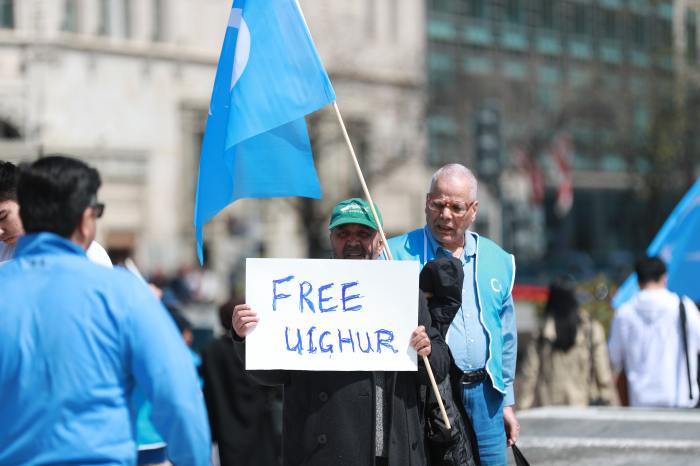
Gao Zhisheng has been kidnapped, tortured and detained on and off by the Chinese Communist Party (CCP) regime since 2006. In 2019, his wife Geng He told the International Service for Human Rights that being disappeared has become “the norm in his life”.

In that same interview, she added, “My children and I have never experienced the common happiness of united families… We only have one wish, which is that Gao Zhisheng is alive and that he can come back home alive.”

Ms Geng, who has been in exile along with her and Gao’s children since 2009, has just marked another sad anniversary: the fifth anniversary of her husband’s most recent disappearance.

Continue reading International Day of the Victims of Enforced Disappearances – Stories from China

India at 75: A nation under siege

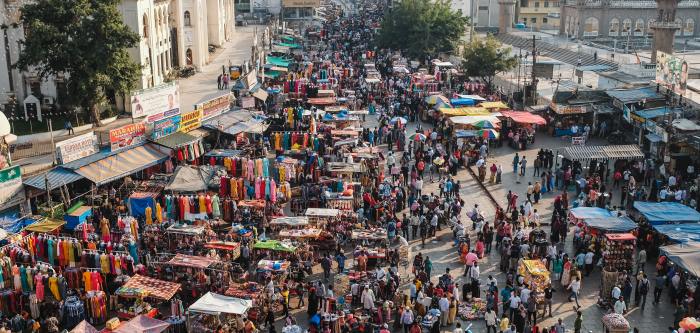
India celebrates its 75th year of independence from the British on 15 August. Every year this day is commemorated by remembering the innumerable sacrifices Indians made in their pursuit of freedom and self-rule. But year after year the question of whether this is the vision of India that the nation’s forefathers and freedom fighters gave their lives for becomes ever more pressing.

Even as there was much to celebrate on 15 August 1947, independence came with a heavy price. Just a day before, on 14 August, India was torn into two; the painful partition of India and Pakistan along the lines of religion has continued to have profound effects on the lives of people on both sides.

If anything, 75 years later, these communal divides seem to be growing bigger. There has been much debate on the partition in the intervening decades – who is to blame, what went wrong and what could have been done. But just as the debates continue, the hatred continues to grow.

Continue reading India at 75: A nation under siege

‘I fear they will normalise this’ – Restrictions combine to make life even more difficult for religion and belief groups in China

The COVID-19 pandemic has had profound effects on the functions of nearly every religion or belief group in every country in the world over the past two years. While many have now emerged from lockdowns and measures imposed to curb the spread of the virus are being lifted in most countries, arguably some of the strictest restrictions remain in the country where the virus was first detected: China.

Since December 2021, China has been wrestling with the spread of the omicron variant, with many cities, including Beijing, Shanghai, Tianjin and Xi’an, having been placed under lockdowns at various points over the past six months. Even as lockdowns have been lifted in some places, they remain in effect in others, and there is no telling from one week to the next whether more severe measures will be enforced in any one place.

Meanwhile, for religious groups in these and other cities remaining restrictions designed to limit the spread of the virus have combined with new regulations on online religious activities to make everything from online meetings to day-to-day communication extremely difficult.

Continue reading “‘I fear they will normalise this’ – Restrictions combine to make life even more difficult for religion and belief groups in China”

From Nicaragua to India: The global community must stand up for the work of independent civil society 

On 28 June, the Nicaraguan parliament stripped the Missionaries of Charity – the order founded by Mother Teresa – of its legal status. Days later, they were expelled from the country entirely, with local media reporting that 18 nuns were driven to the border by migration officials and police officers before crossing on foot into neighbouring Costa Rica. 

No doubt the incident drew particular attention as a result of the high profile of the organisation in question, however the targeting of the Missionaries of Charity in this manner marks just the tip of the iceberg in a nationwide crackdown on civil society and non-governmental organisations (NGOs) which has been ongoing for several years. 

Ever since protests erupted across the country in April 2018, and particularly since the re-election of Daniel Ortega as president in November 2021, the Nicaraguan government has acted with increasing antagonism towards anyone it perceives as critical of the current regime. This has included the Roman Catholic Church, to which the Missionaries of Charity belong, and which in February 2022 saw a number of its affiliate private universities and aid organisations targeted in a similar manner. 

Continue reading “From Nicaragua to India: The global community must stand up for the work of independent civil society “

Human rights advocacy in a world of interests: why the EU fell short at India’s Raisina Dialogue

India’s Minister of External Affairs, Subrahmanyam Jaishankar, was recently asked how he saw the country’s role in defending free societies globally – a diplomatic way of confronting India on its failure to condemn Russia’s invasion of Ukraine.

His answer was, if not reassuring to human rights proponents, certainly honest: “Countries evolve a combination of values, interests […] and all of us would like to find the right balance”.

This has always been the tension at the heart of foreign policy. And the European Union (EU) is no exception. Article 2 of the Lisbon Treaty (which forms the constitutional basis for the bloc) reads: “In its relations with the wider world, the Union shall uphold and promote its values and interests”.

In our interactions with the EU, human rights organisations repeatedly appeal to the Union’s stated values. Whilst, in general, the EU is a benevolent global actor on human rights, there are instances where an appeal to values alone is not sufficient to galvanise action.

Continue reading “Human rights advocacy in a world of interests: why the EU fell short at India’s Raisina Dialogue”