Ten long years: Reflections on the Supreme Court ruling that promised much for Pakistan’s religious minorities

On 19 June 2014, the Supreme Court of Pakistan, under the leadership of the then Chief Justice Tassaduq Hussain Jillani, made a historic ruling that significantly advanced the protection and promotion of the rights of religious minorities in the country. This judgment was a pivotal moment in the country’s legal and human rights history, reflecting a commitment to upholding the principles of equality and non-discrimination enshrined within the Constitution of Pakistan.

Since its inception, Pakistan has grappled with issues surrounding the rights and protection of religious minorities. Despite the vision of its founding father, Muhammad Ali Jinnah, who advocated for a secular and inclusive Pakistan, the reality for religious minorities has often been marred by persecution, discrimination, violence, and marginalisation. Incidents of blasphemy accusations, mob attacks, forced conversions, desecration of places of worship, and targeted violence have highlighted the urgent need for robust legal safeguards and proactive measures.

The 2014 judgment stemmed from a Suo motu notice taken by the Supreme Court following the Peshawar church bombing in September 2013, which resulted in the tragic loss of over 80 lives. This incident underscored the vulnerability of religious minorities and the need for the state to ensure their protection.

Continue reading “Ten long years: Reflections on the Supreme Court ruling that promised much for Pakistan’s religious minorities”

Reflections on my beloved India in an election year

India is currently holding general elections in seven phases which are due to run from 19 April to 1 June 2024. CSW’s India Researcher, whose name has been withheld for security reasons, lives in Tamil Nadu state in the south of the country. Here she offers some reflections on what is at stake for the future of the nation.

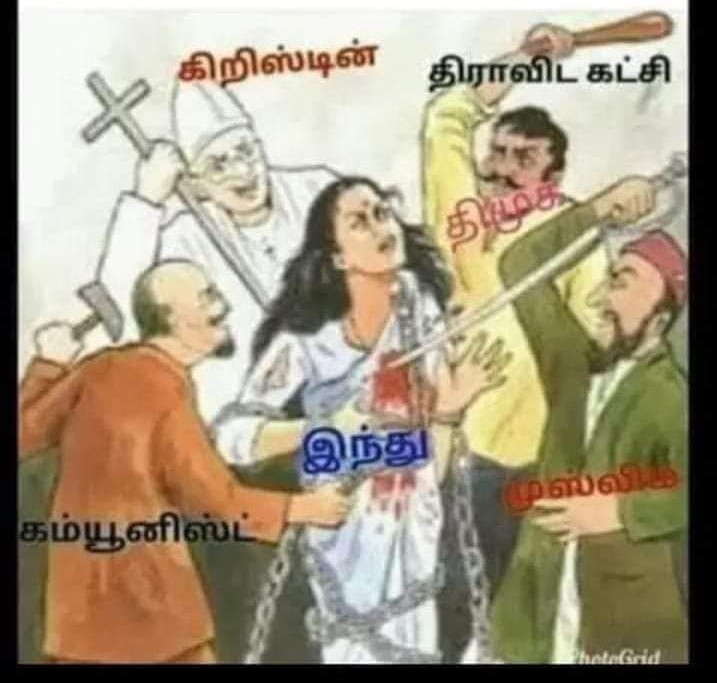
A day before my state Tamil Nadu went to elections, I was browsing social media when I noticed an image posted by an old friend of mine who studied with me in a Christian school. The image was of a women dressed in a white sari who represented an Indian Hindu. Around her were four other men – a Christian, a communist, a Muslim and a member of the Dravidian political party – all with weapons in their hand trying to stab a visibly scared Hindu woman. The caption said ‘vote wisely’ – an apparent warning message to all the Hindus in his friend list that they are in danger and they need to vote for the party that claims to protect them.

I was quite surprised. Yes, I know thousands of radical Hindus in India genuinely believe that their religion is under threat. But to see someone who I knew, who had his whole education in a Christian school and still remained a Hindu, actually succumb to the false narrative that Hinduism is under threat – that was surprising. In the last few years, I have sadly come across many other Hindu friends and acquaintances who have come to believe that.

Continue reading “Reflections on my beloved India in an election year”

The world must honour the memory of Cao Shunli by standing up for human rights defenders in China

Ten years ago today, Cao Shunli died in a military hospital in Beijing.

A prominent human rights activist, Ms Cao fought injustice in China for over a decade prior to her passing at the age of 53. In 2002, she was fired from a government job after she raised concerns about corruption in her department. Over the next 12 years she became a vocal advocate for human rights and anti-corruption, her work often specifically focused on the mistreatment of human rights defenders and petitioners (citizens who petition authorities for the redress of their grievances) by the Chinese authorities.

As is the case for so many others like her in China, Ms Cao’s work frequently put her at odd with the Chinese Communist Party (CCP). She was regularly subjected to arbitrary detention, house arrest and enforced disappearance, and served two stints in the country’s notorious labour camps for a total of 27 months.

Continue reading “The world must honour the memory of Cao Shunli by standing up for human rights defenders in China”

International Women’s Day: A plea to end conflict-related sexual and gender-based violence  

Warning: This blog contains details some readers may find distressing. 

‘They destroyed my life; they sold and bought me like a sheep.’ 

Kofan was 14 years old when Islamic State (IS) terrorists abducted her from her village in Sinjar in northern Iraq in 2014.  

Over the subsequent decade she was sold as a sex slave multiple times, and at one point she was ‘owned’, along with six other women, by an elderly man called Abou Jaafar. The group of women were all brutally beaten and repeatedly raped while in captivity. 

Continue reading “International Women’s Day: A plea to end conflict-related sexual and gender-based violence  “

Indonesia’s presidential elections: How have human rights fared under Jokowi?

Indonesia’s presidential election is imminent; on 14 February President Joko Widodo, popularly known as Jokowi, will step down after two terms in office and the world’s third-largest democracy and largest Muslim-majority nation will head to the polls to elect their next leader. National and local parliamentary representatives and senators will also be voted on.

The election carries with it significant implications for human rights including freedom of religion or belief (FoRB). How have religious minorities fared under Widodo’s presidency and what must be addressed by the incoming president to improve the FoRB for all in the country?

The instrumentalization of religion in politics

Jokowi is a popular figure in Indonesia, with 97% of non-Muslims voting for him in the 2019 elections, but his election promises of addressing past human rights abuses, inequalities and bolstering rights protections remained largely unrealised. Under Jokowi’s presidency, discriminatory practices and violent assaults on ethnic and religious minorities have persisted.

Continue reading “Indonesia’s presidential elections: How have human rights fared under Jokowi?”