Fang Bin with his wife and son in an undated photo.

A family shattered for 24 years – the story of Falun Gong activist Fang Bin

Crowded hospital halls, frantic doctors and nurses in protective suits, patients lying in the corridors, body bags piled up in a funeral van outside a hospital… In early February 2020, 57-year-old businessman Fang Bin drove around Wuhan and documented what he saw in five hospitals. The short videos he posted on social media gave a rare glimpse into what was happening in the epicentre of the pandemic under lockdown.

Mr Fang was detained by police briefly on 1 February 2020. In the next few days, he became more outspoken. Videos were widely shared on social media in which he commented that ‘tyranny lies at the root of this virus’. Then, on 9 February 2020, he vanished after calling ‘all citizens to resist’ tyranny and the government to ‘return the power to the people’ on YouTube, a platform banned in China.

The disappearances of Fang Bin, Zhang Zhan and at least two other citizen journalists drew the attention of world media. Although Mr Fang and his wife are known to the authorities as veteran Falun Gong activists, people who are familiar with him hesitated in mentioning his faith background when calling for his release. They may have been conscious of the social stigma attached to this belief group in China, or feared that he might be jailed not for his online speech but for his faith, or even that he might face mistreatment for it in police custody.

Continue reading “A family shattered for 24 years – the story of Falun Gong activist Fang Bin”
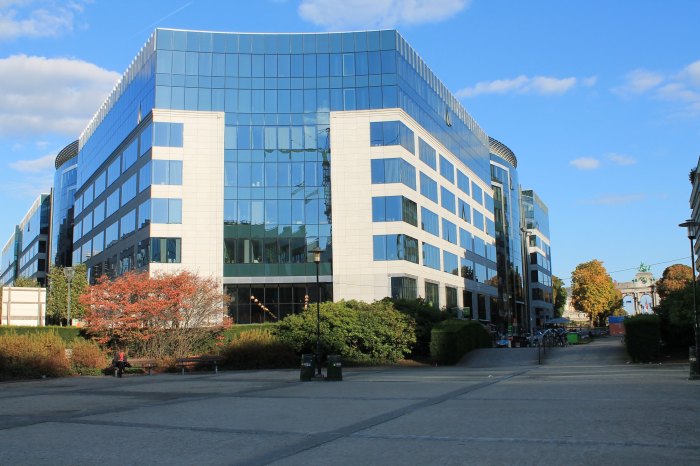
European External Action Service Headquarters in Brussels.

The Myanmar junta should have no place at the ASEAN-EU Human Rights Dialogue

Last week, soldiers of the Myanmar/Burma military reportedly beheaded three men in Pale Township in the Sagaing Region of Myanmar. Two of them were civilians, and the third a member of a People’s Defense Force in Nyaunggon Village.

A witness told The Irrawaddy news website that the men had been killed as they returned to their village on 27 September, thinking that the junta troops who had occupied it for the past two and half weeks had left. One man’s head was hung on a fence, another placed on a chair, and the third ‘had his abdomen cut open, intestines taken out, limbs cut off and [then] put into his abdomen.’

The same day, at least 19 children and their teacher were injured when the regime shelled a monastic school in Wuntho Towsnhip, also in the Sagaing Region. Most were aged between five and eight, and seven of them were critically wounded.

Continue reading “The Myanmar junta should have no place at the ASEAN-EU Human Rights Dialogue”
Members of the Dalit community celebrating of the festival of Holi in India.

A Uniform Civil Code: What is it and could it work in India today?

A Uniform Civil Code (UCC) means that all citizens shall be governed by a common law, irrespective of their religious background. This includes personal laws that apply to marriage, divorce, inheritance, succession of property, maintenance and adoption. In India, the debate over a UCC for all citizens of India has been a contentious issue since the colonial era, and has remained so despite independence and the creation of the modern Indian state.

Every few years, the subject is brought to the fore and debated hotly by proponents and opponents before retreating to simmer in the background of public discourse.      

In June 2023, public debate was reignited when the 22nd Law Commission of India solicited public opinion and comments from selected religious organisations on the subject of the UCC. Then, on 27 June Prime Minister Narendra Modi made a strong public pitch for the UCC for all citizens, garnering strong reactions from several opposition parties and religious groups.

Continue reading “A Uniform Civil Code: What is it and could it work in India today?”
Ruins of Nan Lan Village in Myanmar. Credit: Free Burma Rangers.

The brutal ‘Four Cuts’ strategy is causing untold suffering in Myanmar, yet the international community remains slow to react

The ‘Four Cuts’ strategy, designed to sever insurgents’ supplies of food, funds, information and recruits, is an approach that has been used for decades by a series of military dictatorships in Myanmar/Burma. This devastating tactic is once again being employed, but in one of its bloodiest forms yet.  

Breaking society 

In a remarkable piece of reporting, in a country where foreign journalists have no official access to the true story of Myanmar’s civil war, Sky News recently released details of an undercover mission deep into southeastern Myanmar. Chief correspondent Stuart Ramsay encountered first-hand the Myanmar military regime’s devastating campaign of violence. 

Ramsay and his team discovered shocking evidence of sustained attacks on civilian homes and infrastructure, including daily artillery and aerial bombardment as well as arson attacks, which are forcing people from their homes with over 1.5 million people currently displaced and in desperate need of humanitarian assistance. 

Continue reading “The brutal ‘Four Cuts’ strategy is causing untold suffering in Myanmar, yet the international community remains slow to react”
Chinese human rights lawyer Jiang Tianyong and his wife Jin Bianling and daughter. Source: Twitter @jinbianling

‘Worse than physical torture’ – how China uses exit bans to inflict suffering on human rights defenders and their loved ones

‘Today, I received terrible news that our dream of reunion has once again been dashed.’

On 22 May 2023, Jin Bianling learnt that her husband Jiang Tianyong’s applications for a passport and a travel pass for Hong Kong and Macau had been turned down again. It had been ten years since the disbarred award-winning human rights lawyer was separated from his wife and daughter.

Being blocked from leaving China by the authorities has become common under Xi Jinping’s rule. Some have had their passport applications or renewals turned down, others have been stopped at the airport by police, such as the exiled activist Lin Shengliang’s 12-year-old daughter, while still others have had their boarding passes torn up by airport security guards. In the case of 80-year-old historian and writer Zhang Yihe, just a word from one of the government departments was enough to bar her from leaving China. She revealed on 8 June 2023 that she had become ‘a prisoner of the state’ as of the day before, unable to travel abroad.

Continue reading “‘Worse than physical torture’ – how China uses exit bans to inflict suffering on human rights defenders and their loved ones”