A Welcome Surprise: The First EU Special Envoy on Freedom of Religion or Belief Outside the EU

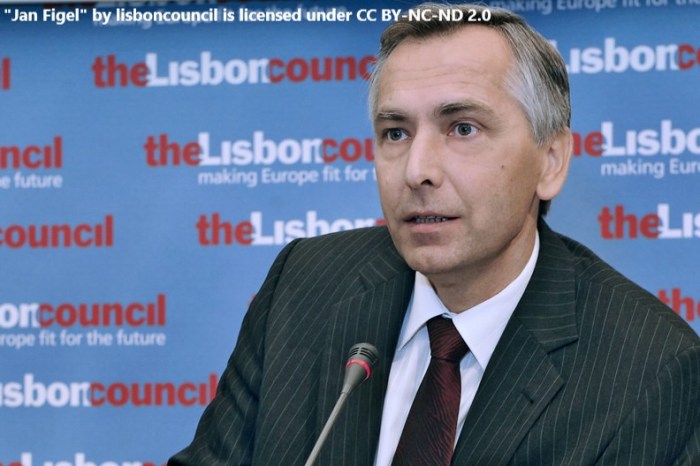
On Friday 6 May, whilst Brussels was enjoying a bank holiday, European Commission president Jean-Claude Juncker announced the appointment of ex-Commissioner Jan Figel as the first EU Special Envoy on Freedom of Religion or Belief (FoRB) outside the EU.

Why has this appointment been made?

This appointment followed a little noticed paragraph in the European Parliament (EP) resolution on the systematic mass murder of religious minorities by the so-called ‘ISIS/Daesh’, which had called in paragraph 10 for such a posting. Calls made in EP resolutions are notoriously under-implemented; even the European External Action Service (EEAS) staff seemed to be taken by surprise by the announcement, which as it concerns FoRB outside the EU, falls under their remit.

The appointment, thus, has left many in Brussels wondering what it will actually mean in practice.  During his speech to the Vatican, President Juncker said that “Freedom of religion or belief is a fundamental right which is part of the foundation of the European Union.” This is consistent with a growing importance being given to FoRB over the past couple of years; the EU Guidelines on this topic emerged in June 2013. In 2015, the European Parliament established an EP Intergroup on Freedom of Religion or Belief and Religious Tolerance and the commission appointed coordinators on anti-Semitism and anti-Islamophobia within the EU.

What is clear is that Jan Figel will act as a special advisor to Neven Mimicia, the European Commissioner for International Development. Whereas other advisors to commissioners have clearly defined mandates on the EC website, the fact that Jan Figel only has a title indicates that he will have some flexibility to shape his work.

Why is it important?

The will to mainstream freedom of religion or belief into the EU’s wider external agenda is a very welcome sign. Given the increasing number of FoRB violations taking place both inside and outside of Europe, there needs to be a push for an increased awareness of the need for FoRB and the way that it benefits communities. Pew’s most recent study on religious hostility worldwide found that 5.5 billion people worldwide live in countries with high or very high overall restrictions on religion. Several of these countries are recipients of EU development aid.

Continue reading “A Welcome Surprise: The First EU Special Envoy on Freedom of Religion or Belief Outside the EU”

The Elephant in the Room: Raising Human Rights in Bilateral Talks

Since October 2015, the UK has hosted a state visit for the President of China and the first official UK visits of the President of Egypt and the Prime Minister of India.

While it is the responsibility of any government to foster good bilateral relationships, this should include full and frank discussions about human rights. The Conservative party committed to this in its 2015 manifesto where it stated:

“Our long-term security and prosperity depend on a stable international system that upholds our values… We will stand up for the freedom of people of all religions – and non-religious people – to practise their beliefs in peace and safety, for example by supporting persecuted Christians in the Middle East… and we will continue to support universal human rights.”  2015 Conservative Party Manifesto

During these visits, CSW made calls for the Prime Minister and his Government to honour their manifesto commitment and to raise the religious freedom situation in all three countries as part of bilateral talks. The Government was disappointingly quiet on human rights during all three visits, prompting many to question whether trade was being prioritised above human rights.

Continue reading “The Elephant in the Room: Raising Human Rights in Bilateral Talks”

Will the Foreign Office’s New Approach Strengthen the UK Government’s Human Rights Work?

Following the Conservative party’s election win in 2015, the Foreign and Commonwealth Office (FCO) took the opportunity to ‘re-configure’ their work in order to ensure the UK’s promotion of Universal Human Rights had the most impact.

Focus on Freedom of Religion or Belief under the Coalition Government

Under the Coalition Government in 2010-2015 the FCO undertook encouraging work on human rights, with freedom of religion or belief (FoRB) forming a significant part of the overall human rights programme as one of eight main thematic priorities.

Baroness Warsi, then the Minister responsible for Human Rights at the FCO, established the advisory group on FoRB, a group of experts from all faiths and none to advise the Minster on how to best protect and promote FoRB worldwide. After Baroness Warsi left her post, FoRB remained a human rights priority and the advisory group continued to meet and advise the new Minister.

Human Rights Work Reconfigured

The most significant part of the FCO reconfiguration was changing the eight thematic human rights priorities to three human rights ‘themes’. The rationale behind this was not to relegate nor promote any of the existing priorities, but instead to create overarching themes that encompassed everything the FCO human rights work does, while allowing for that work to be prioritised and developed in locally appropriate ways.

The themes are:

  • Democratic Values and the Rule of Law,
  • Strengthening the Rules Based International System,
  • Human Rights for a Stable World.
Continue reading “Will the Foreign Office’s New Approach Strengthen the UK Government’s Human Rights Work?”

Religious Leaders as Human Rights Defenders?

In the early hours of 1 July 2015, Pastor Hafiz Mengisto, senior minister of the Khartoum Bahri Evangelical Church in Sudan, was arrested after trying to prevent police officers from demolishing a building on church property, which they did not have authorisation to do. While in police custody, he sustained injuries to his head and ear that required medical attention upon his release. Pastor Mengisto was only acquitted of ‘obstructing a public servant from performing the duties of his office’ on 29 December 2015.

While his acquittal is welcome, his case is not an isolated incidence of harassment but is indicative of a continued and wide crackdown on human rights defenders (HRDs) – including religious leaders or members of faith communities making a stand for human rights within their community. HRDs face various challenges ranging from de jure discrimination and bureaucratic hassles to harassment, violence, torture and murder.

Is the international community waking up to reprisals against HRDs?

In his report to the UN General Assembly in 2015, the Special Rapporteur on the situation of human rights defenders, Michel Forst drew attention to the “disturbing increase in the number of reprisals and acts of intimidation reported by defenders.” Today, thousands of human rights activists across the world face severe intimidation and harassment. One of the most difficult countries for human rights defenders is China where at least half of the country’s most prominent human rights lawyers – many of them Christians – have been interrogated, detained and in some cases disappeared since 9 July 2015. At least 30 of the over 300 HRD’s interrogated during this period, as well as others connected to them, have vanished into China’s detention system.

Since the adoption of the UN Declaration on Human Rights Defenders (1998), the international community has increasingly recognised the role of HRDs in promoting human rights. The work of the UN Special Rapporteur on the situation of human rights defenders has been instrumental in this. Moreover, the adoption of UN resolutions on human rights defenders has ensured that their situation remains visible in international human rights platforms.

In November 2015, the UN General Assembly passed an important resolution calling for states to adopt strong and effective measures to protect human rights defenders. The resolution was passed with 117 countries voting for it and 14 countries – including several Human Rights Council members such as Pakistan, China, Russia, Saudi Arabia – voting against. A further 40 countries abstained from the vote. It’s clear that many countries, including several members of the Human Rights Council, still remain uncomfortable with the work of HRDs.

Continue reading “Religious Leaders as Human Rights Defenders?”

The UN at 70: Will Freedom of Religion or Belief Continue to be Sidelined?

In October 2015, the United Nations – the most significant global human rights project serving seven billion people in 193 member states – turned seventy.

There is no doubt that the last 70 years have witnessed significant positive development with regards to the legal framework protecting freedom of religion or belief, however, when it comes to the actual realisation of freedom of religion or belief (FoRB) across the world, the situation on the ground in many countries remains challenging.

FoRB in International Law

Although religious freedom does not have its own convention, Article 18 of the International Covenant on Civil and Political Rights (ICCPR), a core human rights treaty with 169 state parties and ratified by 169 states, as well as Article 18 of the Universal Declaration of Human Rights (UDHR) provide strong, legal protection of FoRB These legal protections also cover those with non-religious beliefs. Furthermore, the UN Special Rapporteur on Freedom of Religion or Belief has reported a number of violations of freedom of religion or belief to the UN Human Rights Council and provided a wealth of interpretative information and normative analysis of FoRB.

In practice: the global realisation of FoRB

However, if you base the assessment of the success of the UN on the actual realisation of religious freedom across the world, the performance of the UN remains discouraging.  According to PEW Research Centre, about 5.5 billion people (77% of the world’s population) were living in countries with high or very high overall levels of restrictions on religion in 2013. CSW has reported a wide variety of FoRB violations from 26 countries including Eritrea, Sudan, Burma, China, Pakistan, Cuba, Iran and Egypt. Violations range from violence, killings, imprisonment and sexual violence to discrimination in employment or education and restrictions on the construction of places of worship. Given this background, it is obvious that the implementation of FoRB for all faiths and none remains on a rocky road.

Continue reading “The UN at 70: Will Freedom of Religion or Belief Continue to be Sidelined?”